
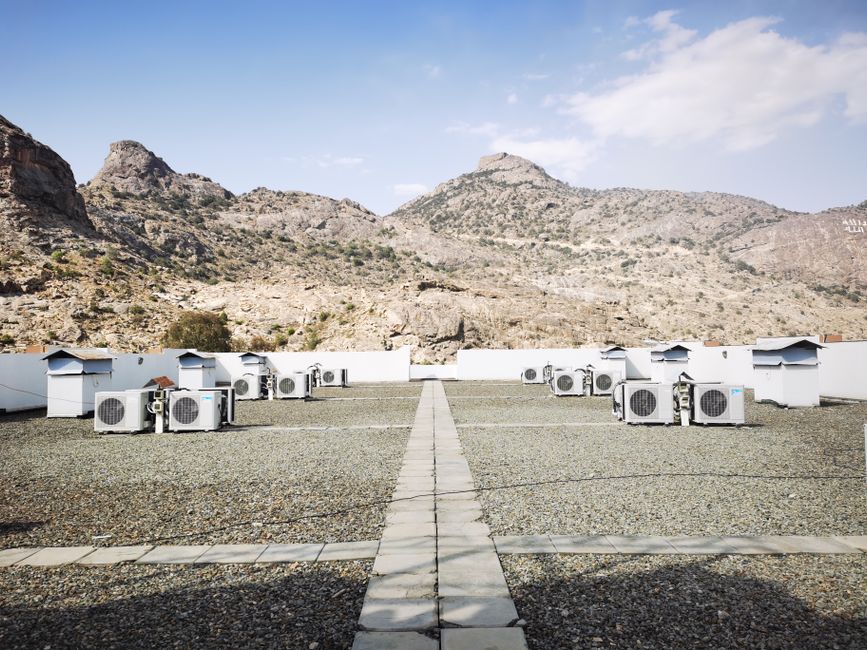
Looking for Commercial HVAC Maintenance Tips for Your Business in King, Pierce, Thurston, or Kitsap County?
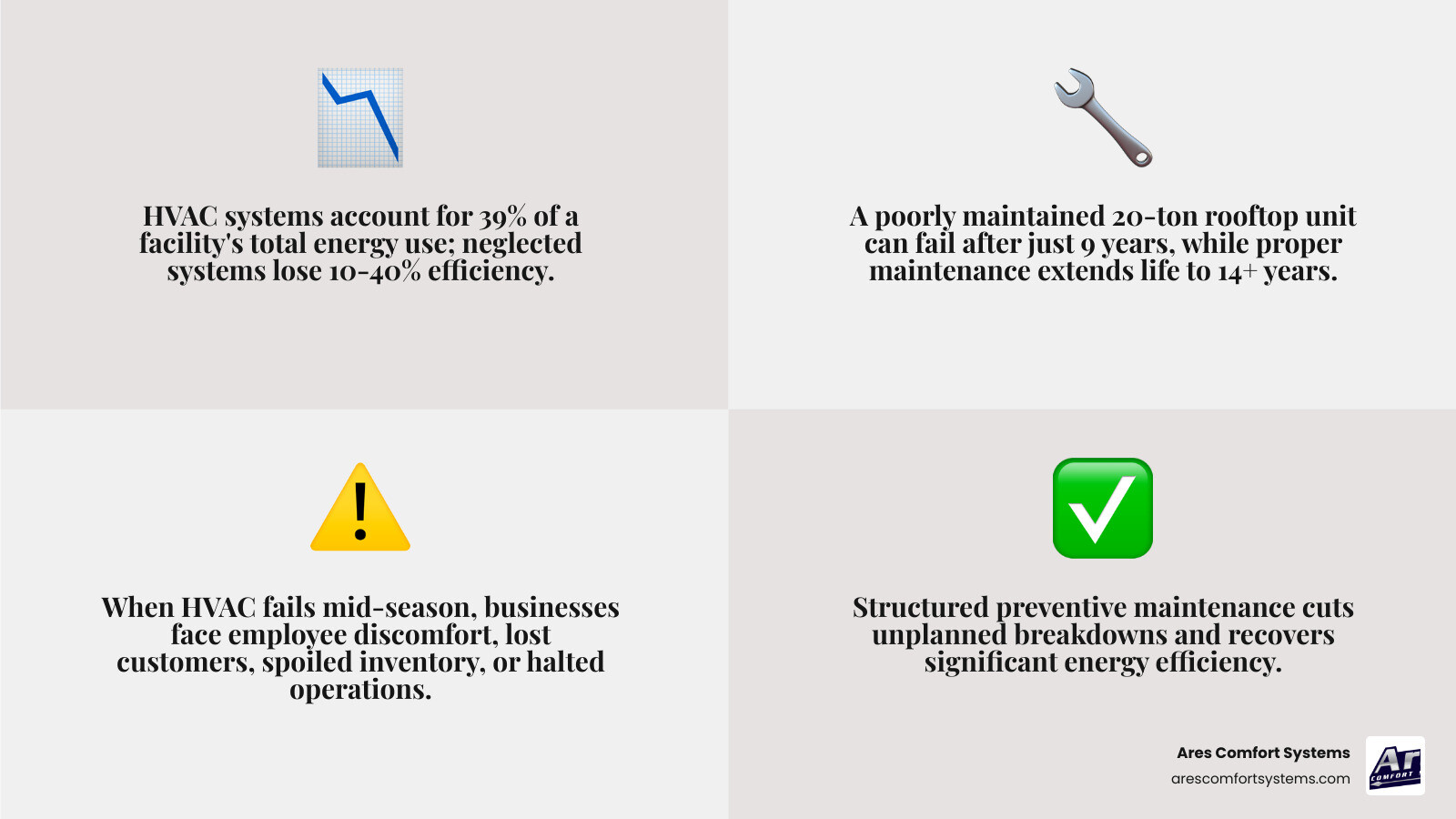
Following the right commercial HVAC maintenance tips for businesses can mean the difference between smooth daily operations and an unexpected shutdown. HVAC systems account for roughly 39% of a facility’s total energy use — and when they’re neglected, that number climbs fast. A poorly maintained 20-ton rooftop unit can fail after just nine years. A well-maintained one can reach 14 years or beyond.
Here’s a quick summary of the most important commercial HVAC maintenance tips for businesses in 2026:
- Inspect and replace air filters monthly — every 1 to 3 months depending on your environment
- Clean condenser and evaporator coils at least once or twice per year
- Check refrigerant levels and inspect for leaks quarterly
- Inspect belts, motors, and electrical connections quarterly
- Clear condensate drain lines to prevent water damage and mold
- Schedule professional seasonal tune-ups before cooling season (spring) and heating season (fall)
- Log every service visit with dates, readings, parts replaced, and technician notes
- Use a CMMS or maintenance software to track tasks, flag overdue work, and monitor trends
- Know when to call a licensed HVAC professional — refrigerant work, combustion testing, and electrical diagnostics are never DIY tasks
- Match your maintenance plan to your system type — rooftop units, chillers, VRF systems, and boilers each have different needs
The stakes are real. When an HVAC system goes down mid-summer, employees become uncomfortable, customers leave, and production stalls. In food service or manufacturing, it can mean spoiled inventory or halted operations entirely. The good news: research consistently shows that structured preventive maintenance cuts unplanned breakdowns dramatically and recovers 10 to 40% of energy efficiency that neglected systems lose.
This guide walks through everything — checklists, schedules, system types, compliance rules, and how to measure performance — so your business can build a maintenance plan that actually works.
1. Follow These Commercial HVAC Maintenance Tips for Businesses to Prevent Common System Failures
Preventing commercial HVAC system failures is all about staying ahead of wear and tear. Commercial systems are complex networks with over 100 interconnected parts working around the clock. When one small component fails, it can trigger a domino effect that compromises the entire system. Understanding how these systems operate is the first step, which you can explore further in our guide on Commercial HVAC 101 for Savvy Business Owners.
How commercial hvac maintenance tips for businesses reduce breakdown risk
By keeping up with routine tasks—such as checking filter loading, keeping coils clean, adjusting belt tension, clearing condensate lines, and monitoring refrigerant levels—you eliminate the root causes of major mechanical failures. Tightening loose electrical connections prevents electrical arcing, while regular calibration ensures your thermostat isn’t forcing the system to work harder than necessary.
The most common causes of commercial HVAC failure
- Dirty Filters and Coils: Restrict airflow, forcing blower motors to work harder, which can lead to overheating and compressor failure.
- Electrical Connection Issues: Accounts for nearly 30% of all commercial HVAC system failures. Loose wires, failed capacitors, and voltage imbalances damage expensive motors.
- Clogged Condensate Drains: Cause up to 18% of preventable system failures, leading to water overflow, property damage, and mold.
- Worn Belts and Pulley Misalignment: A belt that is even 10% worn can reduce system airflow by up to 30%, straining the entire system.
Warning signs facility managers should never ignore
If you notice any of these warning signs, your system is crying out for attention:
- Unexplained spikes in monthly utility bills.
- Uneven temperatures or hot and cold spots throughout the building.
- Strange rattling, squealing, or buzzing noises coming from mechanical rooms or rooftop units.
- Musty odors coming from supply vents.
- Water pooling around air handlers or ceiling tiles.
- Frequent system short-cycling (turning on and off rapidly).
2. Use a Practical Commercial HVAC Maintenance Schedule and Checklist

A structured checklist ensures no task gets overlooked during routine inspections. Organizing these tasks by frequency helps your team stay organized. For an overview of standard system care, check out our guide on HVAC Maintenance.
Monthly filter, coil, belt, and drain checks
- Filters: Inspect filters monthly. Replace them every 1 to 3 months (or every 2 weeks in high-dust or high-occupancy environments). Use MERV 8 to MERV 13 filters for optimal airflow and air quality.
- Belts and Pulleys: Check belts monthly for wear, cracks, and proper tension. Verify pulley alignment.
- Condensate Drains: Inspect drain pans and flush condensate lines to prevent blockages.
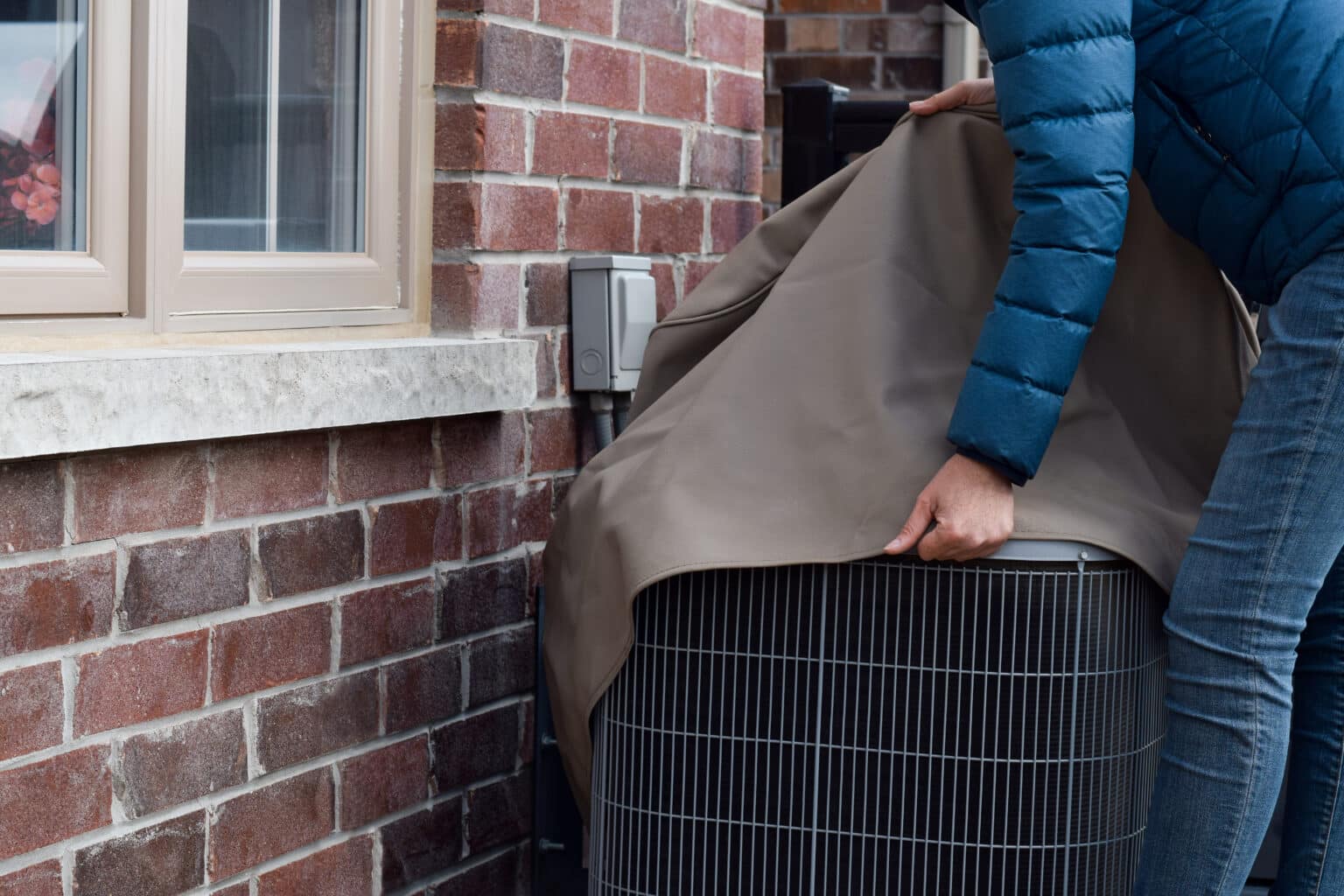
- Clearance: Ensure there is at least an 18-to-24-inch clearance around outdoor condenser units to maintain proper airflow.
Seasonal commercial hvac maintenance tips for businesses before heating and cooling peaks
- Spring Cooling Prep (Pre-Season): Schedule this between February and April. Clean condenser and evaporator coils, check refrigerant charge, inspect blower assemblies, and test the system transition into cooling mode.
- Fall Heating Transition (Pre-Season): Schedule this between August and October. Inspect burners, heat exchangers, ignition systems, and test gas pressure and combustion safety before the cold weather sets in.
Annual commercial HVAC maintenance checklist
Your annual deep-service checklist should include:
- Full ductwork inspection for leaks, dust accumulation, or blockages.
- Airflow balancing across all building zones.
- Calibration of thermostats, sensors, and building automation controllers.
- Testing of all safety controls and limit switches.
- Comprehensive electrical testing (voltage, amperage draw, and connection tightening).
- Lubrication of all motors, bearings, and moving parts.
- Deep chemical cleaning of condenser and evaporator coils.
- Flue gas and combustion analysis for heating units.
What to document after every service visit
To maintain a reliable service history, document the following details after every technician visit:
- Asset ID, model number, serial number, and exact location of the unit.
- Name of the technician and date of service.
- Detailed list of completed tasks and parts replaced.
- System operational readings (refrigerant pressures, electrical draw, temperature drops).
- Before-and-after photos of cleaned coils or replaced components.
- Any identified deficiencies that need to be addressed in the future.
3. Choose the Right Maintenance Strategy: Preventive, Predictive, or Reactive
| Feature | Preventive Maintenance | Predictive Maintenance | Reactive Maintenance |
|---|---|---|---|
| Scheduling | Fixed, calendar-based intervals | Based on real-time sensor data | After a complete breakdown |
| Uptime | High and highly predictable | Maximum; flags issues before failure | Low; subject to sudden outages |
| Planning | Planned, scheduled downtime | Targeted, minimal disruption | Emergency, unplanned downtime |
| Maintenance Focus | Routine inspections and adjustments | Performance monitoring and early alerts | Restoring operation after failure |
To understand why proactive care helps protect comfort and reliability, read about The Importance of Regular HVAC Maintenance.
Preventive maintenance for predictable reliability
Preventive maintenance operates on a fixed schedule (such as quarterly or semi-annual visits) regardless of the system’s current condition. It is a reliable, time-tested approach that ensures filters are changed, coils are washed, and moving parts are lubricated before wear-and-tear turns into a breakdown.
Predictive maintenance with smart controls and monitoring
Predictive maintenance uses advanced sensors and smart controls integrated into a Building Management System (BMS) to monitor performance in real time. By tracking vibration trends, temperature drops, and pressure readings, the system can flag an emerging fault weeks before a physical failure occurs, allowing you to schedule repairs precisely when needed.
Reactive maintenance and when it becomes risky
Reactive maintenance—often called “run-to-failure”—is the practice of only servicing equipment when it breaks down. While this approach may seem simple, it risks major operational disruptions, tenant discomfort, and premature system replacement.
How CMMS and maintenance software improve HVAC performance
A Computerized Maintenance Management System (CMMS) takes the guesswork out of facility management. By tagging equipment with QR codes, facility managers can instantly access service histories, automate recurring work orders, track energy usage trends, and manage multi-site HVAC assets from a single dashboard.
4. Know What Your Team Can Handle In-House and When to Call a Licensed HVAC Professional
A successful commercial maintenance strategy is a partnership between your on-site team and experienced professionals. You can learn how to balance these roles in our guide on How to Maintain Your Heating and Cooling System Like a Pro.
Maintenance tasks businesses can usually handle in-house
Your in-house maintenance staff can easily handle basic, low-risk tasks:
- Performing daily visual inspections of mechanical rooms and rooftop units.
- Checking and replacing standard air filters monthly.
- Clearing debris, leaves, and weeds from around outdoor condenser units.
- Checking thermostat settings and verifying schedules.
- Monitoring the system for unusual noises, odors, or visible water leaks.
Tasks that require a licensed HVAC professional
For technical, high-voltage, or regulated tasks, you must call a licensed professional:
- Any work involving refrigerants, including leak testing, recharging, and recovery.
- High-voltage electrical diagnostics and component replacements.
- Combustion testing, burner adjustments, and heat exchanger inspections for gas furnaces or boilers.
- Deep chemical coil cleaning.
- Controls troubleshooting and building automation system calibration.
Safety and compliance requirements for commercial HVAC systems
Commercial HVAC systems are subject to strict regulatory standards:
- EPA Section 608: Establishes refrigerant handling requirements and strict leak-repair timelines for systems containing over 50 pounds of refrigerant.
- ASHRAE 55 & 62.1: Govern thermal comfort and minimum outdoor air ventilation rates to maintain healthy indoor air quality.
- Local Codes: Standard mechanical codes (IMC and UMC) dictate combustion safety, exhaust requirements, and equipment placement.
How to protect warranties and service records
Most manufacturers require proof of regular, professional maintenance to keep equipment warranties valid. Keeping detailed, dated service logs, technician reports, and parts invoices protects your investment and ensures that any premature component failures are covered under warranty.
5. Match Maintenance to Your Commercial HVAC System Type
Different types of commercial buildings use different mechanical configurations. To see how these systems fit your property, read our main Commercial HVAC page.
Rooftop units and packaged systems
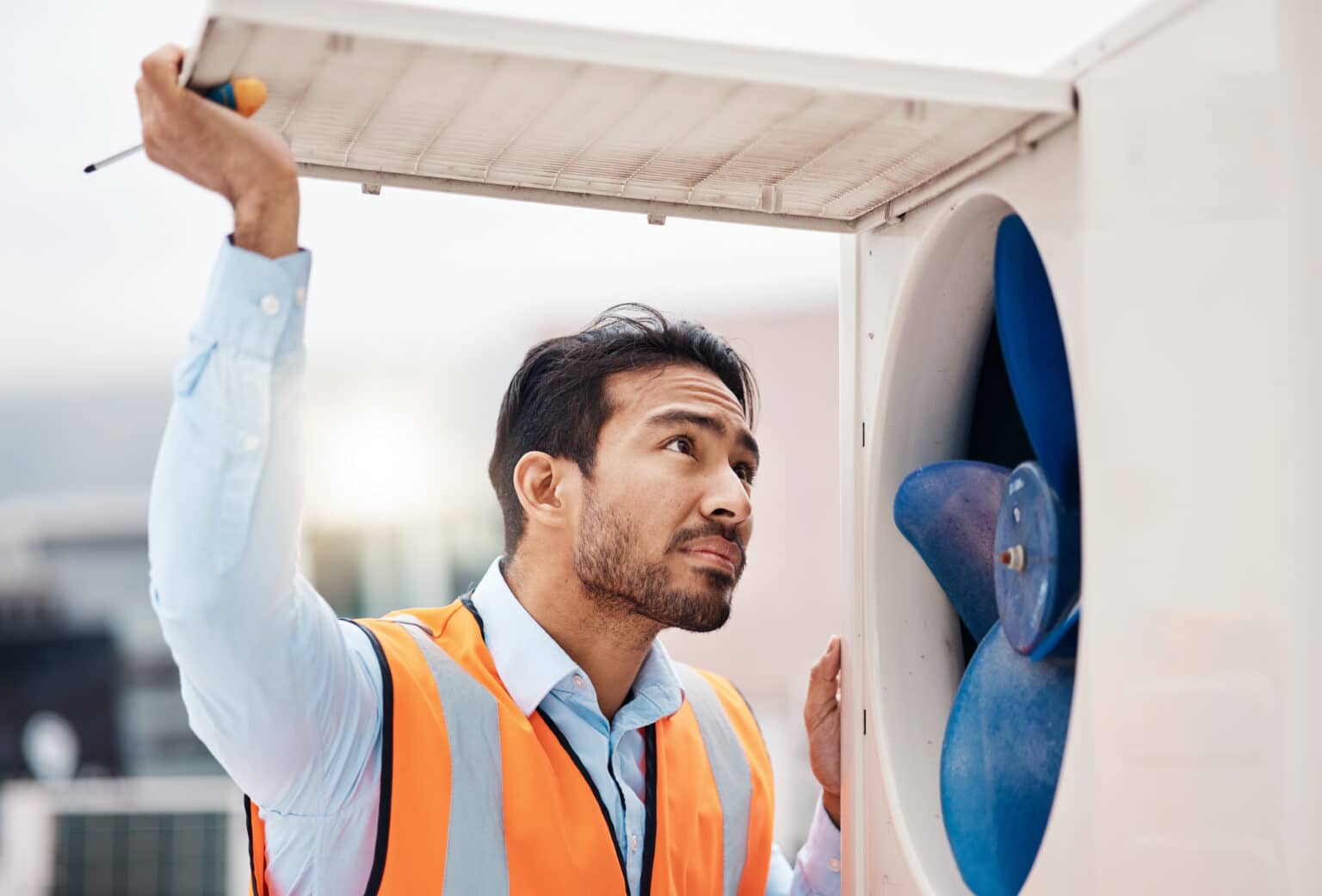
Rooftop Units (RTUs) are highly popular but face constant exposure to Western Washington’s weather. Maintenance must focus on keeping condenser coils free of dirt and pollen, checking economizer dampers for proper operation, inspecting rooftop curb seals for water leaks, and ensuring the electrical cabinets remain completely weatherproof.
Chillers and large cooling systems
Chillers require specialized chemical water treatment to prevent scale and corrosion in the condenser and evaporator tubes. Technicians must monitor the “evaporator approach temperature” (the difference between the refrigerant temperature and the leaving water temperature) to track heat transfer efficiency and perform regular compressor oil analysis to detect internal wear.
VRF, heat pump, and split systems
Variable Refrigerant Flow (VRF) and split systems are highly efficient but feature complex refrigerant piping and communication wiring. Maintenance focuses on checking branch controllers, cleaning individual indoor unit filters, testing condensate mini-pumps, and ensuring the outdoor defrost cycle functions correctly during damp Puget Sound winters.
Boilers, furnaces, and combustion-based heating
Heating systems that burn natural gas require diligent safety checks. Annual maintenance must include combustion analysis, burner cleaning, checking ignition systems, testing safety shutoff valves, and inspecting the heat exchanger for cracks to prevent carbon monoxide leaks.
6. Measure the Business Value of Commercial HVAC Maintenance
A proactive maintenance program is a smart operational decision that supports comfort, reliability, and long-term system performance. To understand the best times of year to capture these benefits, read about The Seasonal Cycle: When to Schedule Your Next HVAC Service.
How regular maintenance affects energy use
Because HVAC systems account for approximately 39% of a commercial building’s energy footprint, even minor efficiency improvements can make a meaningful difference. Routine maintenance tasks like cleaning coils, replacing filters, and calibrating airflow can improve system efficiency by 10 to 40% compared to neglected systems.
How maintenance extends equipment lifespan
A poorly maintained 20-ton RTU typically fails after just 9 years of service, leading to premature replacement. Regular maintenance reduces compressor strain, keeps heat transfer surfaces clean, and extends the operational life of the unit to 14 or 15 years—and often up to 20 years with consistent care.
How maintenance improves indoor air quality
High-quality, clean air filters and properly calibrated ventilation dampers ensure your building complies with ASHRAE 62.1 standards. This reduces airborne dust, controls indoor humidity, prevents mold growth in ductwork, and creates a healthier, more productive environment for your employees and customers.
How smart controls improve maintenance results
Pairing regular maintenance with smart thermostats, occupancy sensors, and demand-controlled ventilation can deliver an additional 20 to 50% reduction in energy use. These systems reduce runtimes during unoccupied hours and alert your team to performance issues before they escalate.
Frequently Asked Questions About Commercial HVAC Maintenance for Businesses
How often should commercial HVAC filters, coils, and belts be inspected or replaced?
Inspect air filters monthly and replace them every 1 to 3 months. Condenser and evaporator coils should be professionally cleaned at least once a year (or twice in high-dust or coastal environments). Inspect belts and pulleys quarterly, and replace belts annually before they suffer a physical failure.
What should be included in a seasonal commercial HVAC maintenance visit?
A professional seasonal visit includes replacing filters, cleaning condenser and evaporator coils, checking refrigerant levels, testing electrical connections, calibrating thermostats, clearing condensate drains, inspecting belts, and verifying combustion safety on heating systems.
Is a commercial HVAC maintenance plan important for small businesses?
Yes. A structured maintenance plan helps reduce emergency interruptions, supports more consistent indoor comfort, improves system efficiency, and extends the lifespan of your mechanical systems.
Conclusion: Build a Reliable Commercial HVAC Maintenance Plan for Your Business
Managing a commercial facility in Western Washington requires a dependable mechanical partner. At Ares Comfort Systems, we bring decades of commercial experience to businesses throughout King County, Pierce County, Thurston County, and Kitsap County.
Our professional Comfort Service Agreements are designed to take the stress out of commercial facility management. We provide comprehensive seasonal tune-ups and priority scheduling—all backed by our 100% Satisfaction Guarantee and our Fixed Right Promise. Whether you manage an office building in Tacoma, a retail space in Lakewood, or an industrial facility in Kitsap County, our licensed technicians (WA LIC # ARESCCS766CA) are ready to keep your business running smoothly.
Contact us today to set up a commercial consultation and learn more about our comprehensive Commercial HVAC services.