



How Many Zones Do I Need for My Mini Split? A Quick Answer
If you’ve been wondering how many zones do I need for my mini split, the short answer depends on your home’s size, layout, and how many rooms you want to control independently. Here’s a quick reference to get you started:
| Home Size | Typical Zones Needed |
|---|---|
| Under 1,200 sq ft | 1 – 3 zones |
| 1,200 – 1,800 sq ft | 2 – 4 zones |
| 1,800 – 2,500 sq ft | 3 – 5 zones |
| 2,500 – 3,500 sq ft | 4 – 6 zones |
| 3,500 – 4,500 sq ft | 5 – 7 zones |
| Over 4,500 sq ft | 6 – 8 zones |
Quick rules of thumb:
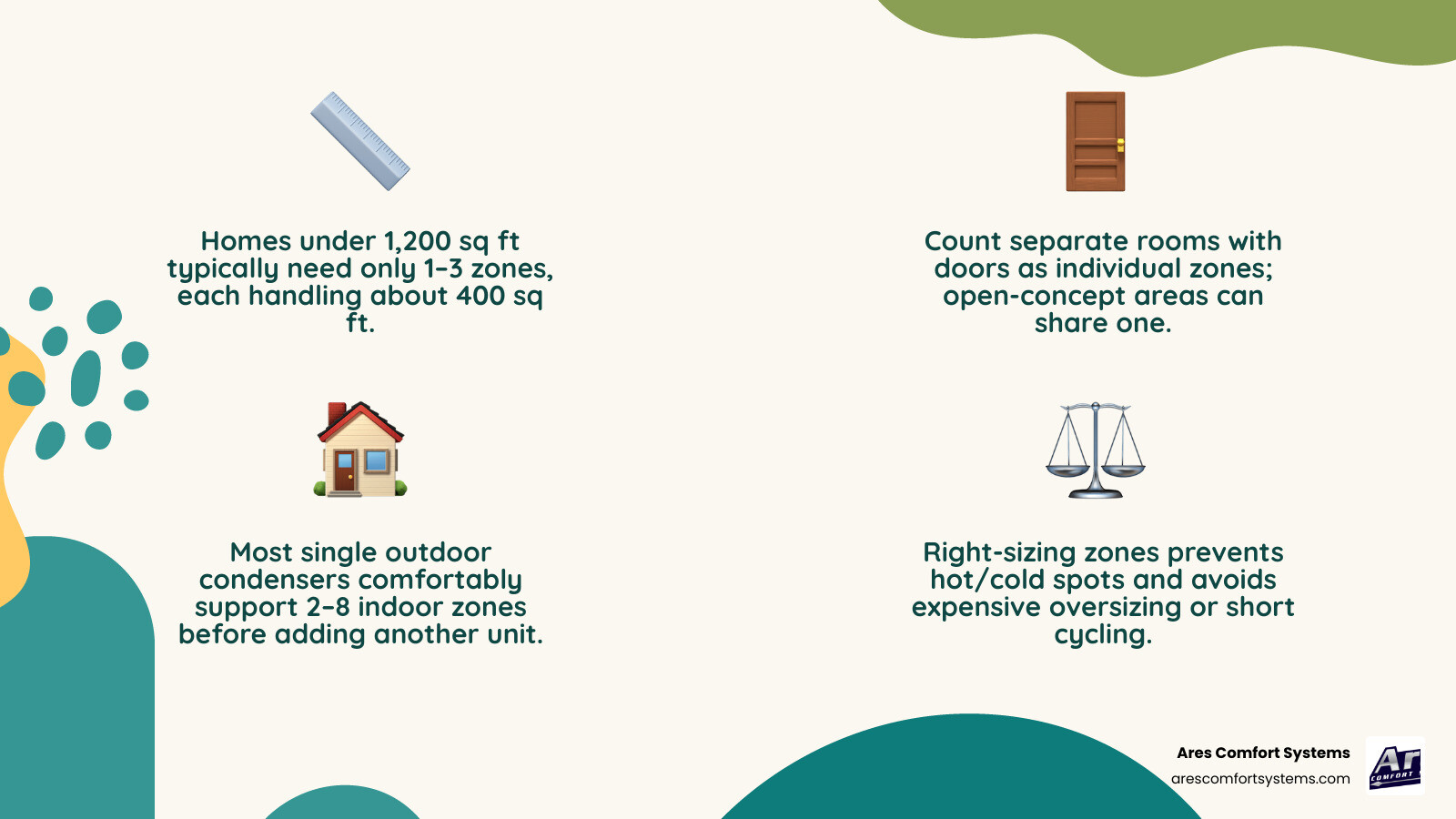
- One zone per room separated by a door
- Open-concept spaces can often share a single zone
- Bathrooms, hallways, and closets typically don’t need their own zone
Getting the zone count right from the start is one of the most important decisions you’ll make when planning a mini split installation. Too few zones and you’ll have hot and cold spots you can’t fix. Too many and you’re spending more than you need to.
Most residential mini split systems support anywhere from 2 to 8 zones off a single outdoor unit, so there’s plenty of flexibility — but that flexibility also means there’s real room for error if you’re not sure what you’re doing.
In this guide, we’ll walk you through exactly how to figure out the right number of zones for your home, how to size each indoor unit, and what mistakes to avoid before you buy.
What is a Mini Split Zone and How Does It Work?
To understand how many zones your home requires, it helps to understand what a “zone” actually is. In the HVAC world, a zone is an independent area of your home with its own dedicated thermostat control.
A ductless mini split system achieves this zoning by splitting the heating and cooling duties between two main components:
- The Indoor Unit (Air Handler): Mounted on your wall, ceiling, or floor, this unit delivers conditioned air directly into the room. Each indoor unit represents one zone.
- The Outdoor Condenser: Installed outside your home, this unit pumps refrigerant to the indoor units.
Instead of relying on bulky, leaky ductwork to push air through the entire house, mini splits use small, insulated refrigerant lines, communication cables, and a condensate drain line to connect the outdoor unit to the indoor air handlers. Because each indoor air handler operates independently, you can set your kitchen to 68°F while keeping an unused guest bedroom at 62°F.
This localized approach is incredibly efficient. If you want to dive deeper into the mechanics of these systems, check out our comprehensive guide on How Ductless Air Conditioners Work and Why You Might Want One.
Single-Zone vs. Multi-Zone Mini Split Systems
When designing your home’s climate control, you will choose between a single-zone configuration and a multi-zone setup.
- Single-Zone Systems: These consist of exactly one outdoor condenser connected to one indoor air handler. They are perfect for targeted comfort in a single room, such as a newly added sunroom, a detached garage workshop, or a stubborn attic bedroom that never gets cool enough in the summer.
- Multi-Zone Systems: These connect a single, highly efficient outdoor condenser to multiple indoor air handlers (typically anywhere from 2 to 8 zones). This allows for whole-home climate control with a minimal outdoor footprint.
While multi-zone systems offer incredible flexibility, they do require careful planning. The outdoor unit must have a high enough BTU capacity to support the combined heating and cooling loads of all the indoor heads connected to it.
| Feature | Single-Zone System | Multi-Zone System |
|---|---|---|
| Outdoor Footprint | Requires one outdoor condenser per indoor unit | Uses a single outdoor condenser for up to 8 indoor units |
| Best For | Single-room additions, garages, or localized problem areas | Whole-home heating and cooling, multi-story layouts |
| Temperature Control | Independent control of one specific space | Independent control for each individual room/zone |
| System Redundancy | If the unit fails, only one room is affected | If the outdoor unit fails, all connected zones lose climate control |
Determining which option is right for your home often comes down to your layout and budget. To see how these systems stack up against traditional ducted heating and cooling, read our article: Is a Mini Split Better Than Central Air for Your Wallet and Comfort?.
How Many Zones Do I Need for My Mini Split?

When deciding how many zones do I need for my mini split, you have to look beyond simple square footage. You must evaluate your room count, home layout, and daily occupancy patterns.
For example, a home with four bedrooms and a closed floor plan will require a completely different setup than a modern, open-concept home of the exact same square footage. Ask yourself:
- Which rooms have doors that remain closed most of the day?
- Are there areas of the home that are rarely used (like a formal dining room or a basement guest suite)?
- Does your home have multiple levels? (Heat rises, meaning upstairs rooms almost always require their own dedicated zones to stay comfortable).
For a deep dive into planning a full-house conversion, we recommend reading Going Ductless for the Whole House: A Sizing Guide for Homeowners.
Determining how many zones do i need for my mini split based on square footage
While room layout is the ultimate deciding factor, square footage provides an excellent baseline. Here is how typical zone requirements break down by home size:
- Under 1,200 sq ft: 1 to 3 zones. A small bungalow, cottage, or studio apartment can often be kept perfectly comfortable with a single well-placed unit in the main living space and perhaps a second unit in the primary bedroom.
- 1,200 to 1,800 sq ft: 2 to 4 zones. A typical 1,500 sq ft home in Western Washington usually requires 4 to 5 zones if you want complete, room-by-room control.
- 1,800 to 2,500 sq ft: 3 to 5 zones. A standard 2,000 sq ft home typically requires 4 to 6 zones to handle the living room, kitchen, and multiple bedrooms.
- 2,500 to 3,500 sq ft: 4 to 6 zones. Larger multi-level homes need dedicated zones for upstairs bedrooms and main floor living areas.
- 3,500 to 4,500 sq ft: 5 to 7 zones.
- Over 4,500 sq ft: 6 to 8 zones. A massive 5,000 sq ft home typically requires 6 to 8 zones, which may require installing two separate outdoor condensers to handle the total capacity.
How many zones do i need for my mini split with an open vs. closed floor plan
Air flows like water—it moves easily through open spaces but is completely blocked by walls and closed doors.
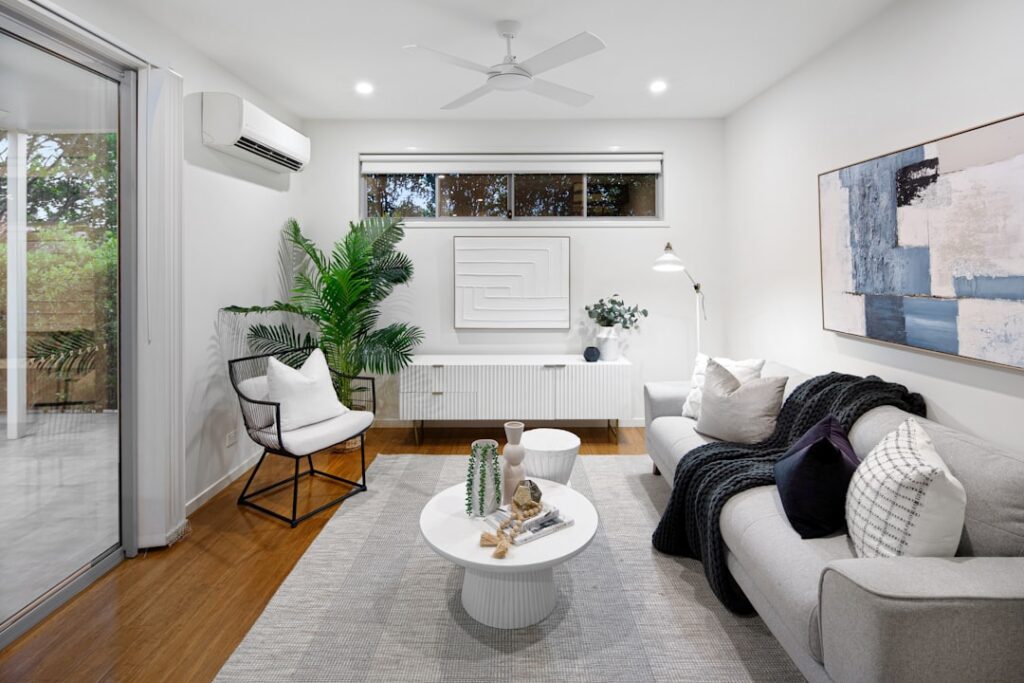
- Open Floor Plans: If your living room, dining area, and kitchen flow seamlessly into one another without interior walls, you can easily cool or heat the entire space with a single, properly sized indoor unit.
- Closed Floor Plans: If your home has traditional hallways and rooms separated by doors, a single unit will not be able to condition the adjacent spaces. If you put an air handler in a central hallway hoping it will cool three closed bedrooms, you will end up with a freezing hallway and hot bedrooms. Each closed room requires its own dedicated air handler.
This distinction is especially crucial for older, historic homes in the Puget Sound region, which often feature highly closed layouts. To learn more about retrofitting older properties, read our guide on Ductless AC Pros and Cons for Older Homes: A Modern Solution for Vintage Spaces.
Sizing Your Indoor Units and Outdoor Condenser (BTUs)
Once you know how many zones you need, the next step is determining the heating and cooling capacity—measured in British Thermal Units (BTUs)—for each individual zone, as well as the outdoor condenser.
As a general rule of thumb, most homes require about 20 to 30 BTUs per square foot of living space. However, this baseline must be adjusted for real-world conditions:
- Ceiling Height: Rooms with vaulted ceilings have more air volume and require higher BTU capacities.
- Insulation Quality: Older homes with drafty windows in King or Pierce County will need more heating capacity than a brand-new, tightly sealed home in Lakewood.
- Sun Exposure: Rooms with large, south-facing windows get incredibly warm in the summer and require extra cooling power.
- Room Usage: Kitchens generate significant heat from cooking appliances, meaning they often require a larger indoor air handler than a bedroom of the same size.
To understand the fundamentals of matching BTU capacity to your spaces, check out Ductless 101: Everything You Need to Know About Mini Splits.
Frequently Asked Questions About Mini Split Zones
Can one indoor unit cool or heat multiple rooms?
Yes, but only if the floor plan is highly open and the total square footage does not exceed the unit’s capacity. If you have two small, adjacent rooms connected by a wide, permanently open archway, a single indoor unit can comfortably manage both.
However, if the rooms are separated by standard doors, a single unit will not work. Air cannot circulate effectively through standard doorways to maintain a consistent temperature. For spaces like this, dedicated units are always the superior choice. If you are currently using window air conditioners to get by, see why it is time to upgrade: Ductless AC vs Window Units: Why Your Windows Deserve a Break.
What is the maximum number of zones a single outdoor unit can support?
Most standard residential multi-zone outdoor units are designed to support between 2 and 5 indoor air handlers. However, advanced systems can support up to 8 or 9 zones on a single outdoor condenser.
For very large homes requiring more than 8 zones, we typically recommend installing two separate outdoor units. This not only provides the necessary capacity but also gives you system redundancy—if one outdoor unit ever needs maintenance, only half of your home loses climate control. You can explore your options further on our dedicated Mini Splits page.
What are common mistakes when choosing the number of zones?
- Undersizing the System: Trying to stretch a single indoor unit across too many closed rooms, resulting in massive temperature inconsistencies.
- Oversizing the System: Installing an indoor unit with too many BTUs for a small room. This leads to “short cycling,” where the unit turns on and off rapidly. Short cycling wears out the compressor prematurely and fails to properly dehumidify the air, leaving your home feeling damp and clammy.
- Ignoring Future Needs: Not choosing an outdoor unit that allows for future expansion. If you plan to finish your basement or attic in a few years, it is smart to install an outdoor unit that can support an extra zone later.
Conclusion
Determining the perfect number of zones for your mini split is a balancing act of square footage, architectural layout, and personal lifestyle. When designed correctly, a zoned mini split system delivers unparalleled comfort and energy savings, making it one of the best investments you can make for your home.
At Ares Comfort Systems, we bring decades of local HVAC experience to homeowners across King County, Pierce County, Thurston County, and Kitsap County. We understand the unique heating and cooling demands of the Pacific Northwest climate. Our work is backed by our 100% satisfaction guarantee and our Fixed Right Promise, ensuring your system is sized and installed perfectly the first time.
Ready to find the ideal ductless solution for your Western Washington home? Contact us today to schedule a professional layout consultation, and explore our Ductless ACs page to learn more! (WA LIC # ARESCCS766CA)