




Is a Single-Zone or Multi-Zone Mini Split Right for Your Home?
The single zone vs multi zone mini split comparison comes down to one core question: how many spaces do you need to heat or cool independently? Here’s a quick breakdown to help you decide:
| Feature | Single-Zone | Multi-Zone |
|---|---|---|
| Outdoor units needed | One per room | One for all rooms |
| Independent temperature control | Yes (one room) | Yes (per room) |
| Best for | 1 room, garage, addition | 2+ rooms, whole home |
| Installation complexity | Simple | More complex |
| Highest efficiency ratings | Yes (up to 28.5 SEER2) | Slightly lower per zone |
| System redundancy | High | Lower (shared compressor) |
| Outdoor unit clutter | More units | One unit |
| All zones same mode? | N/A | Yes (all heat or all cool) |
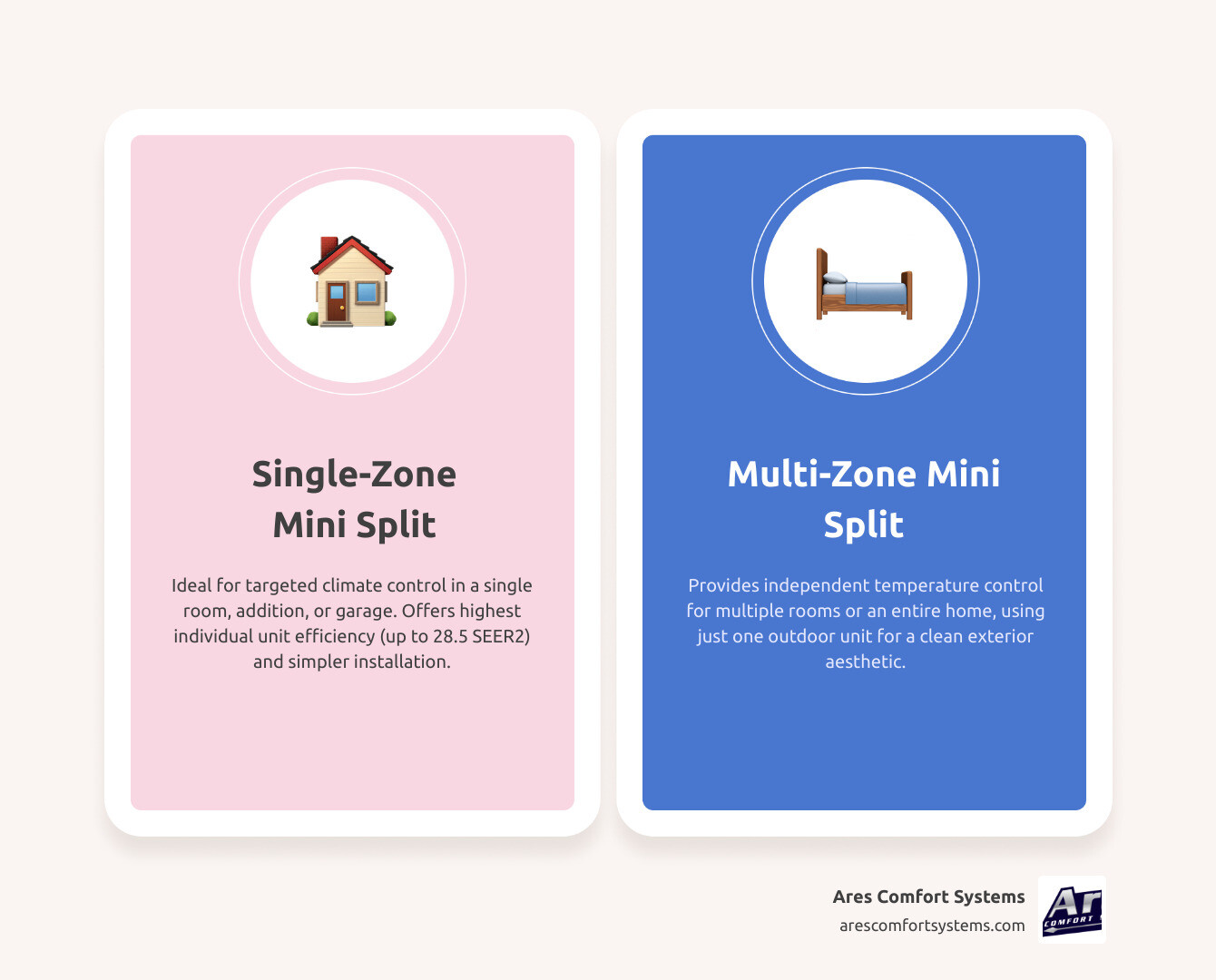
If you need to condition one room or a new addition, a single-zone system is typically the simpler and most efficient choice. If you want whole-home comfort with individual control in multiple rooms, a multi-zone system using one outdoor unit is usually the smarter path.
Choosing the wrong system can mean higher energy bills, uneven comfort, or a costly upgrade down the road. In Washington State, where weather can shift quickly across King, Pierce, Thurston, and Kitsap Counties, getting this decision right matters even more. Whether you’re adding comfort to a sun-baked bonus room or retrofitting an older craftsman home without ductwork, the choice between these two systems shapes everything from installation day to your monthly utility bill.
Understanding the Single Zone vs Multi Zone Mini Split Comparison
At its heart, a mini split system is a ductless heat pump designed to move heat rather than create it. This makes it incredibly efficient for our Pacific Northwest climate. Unlike traditional central HVAC systems that lose up to 30% of their energy through leaky or uninsulated ductwork, mini splits deliver conditioned air directly into the room.
Every system consists of two primary parts: an outdoor compressor (the condenser) and at least one indoor air handler. These are connected by refrigerant lines, electrical wiring, and a drain line. By understanding how ductless air conditioners work and why you might want one, you can see how they offer a level of precision that central air simply can’t match.
What is a Single-Zone System?
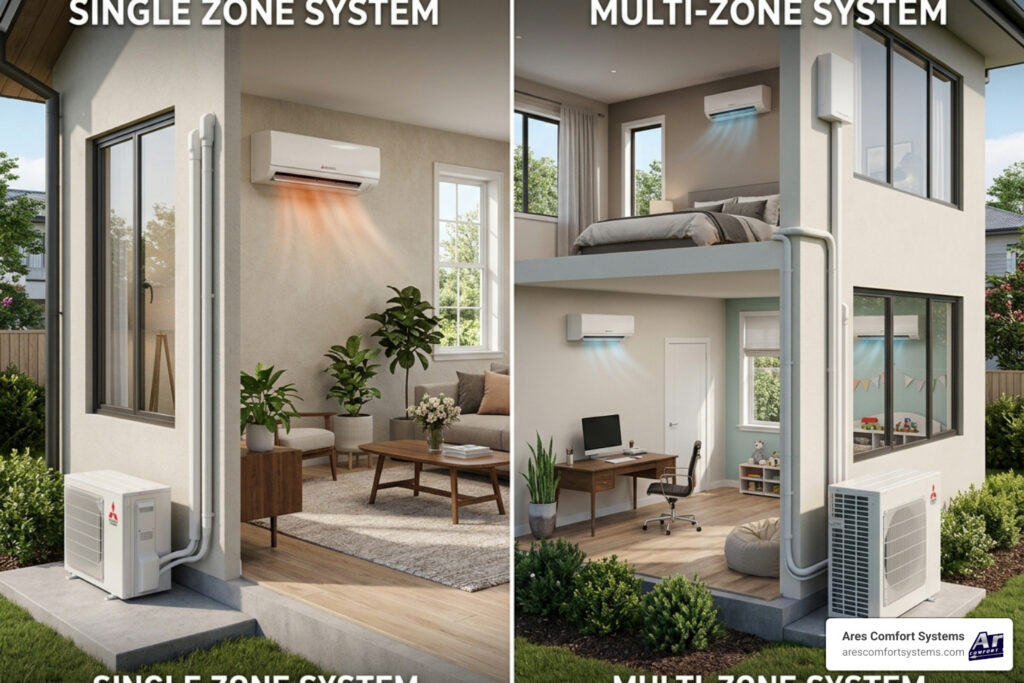
A single-zone setup is a “one-to-one” configuration. You have one outdoor unit dedicated to powering exactly one indoor air handler. This is the gold standard for dedicated cooling in a specific area. Because the outdoor compressor is sized perfectly for that one indoor head, these systems often achieve the highest efficiency ratings in the industry. If you are looking at ductless ACs for a small office or a master bedroom, a single-zone system provides targeted comfort without the complexity of a larger network.
What is a Multi-Zone System?
A multi-zone system is a “one-to-many” solution. One powerful outdoor compressor connects to multiple indoor units—sometimes up to 8 or 10 depending on the model. This allows for whole-home climate control while maintaining a single outdoor footprint. Each room gets its own thermostat (usually a remote or a smartphone app), allowing for independent temperature control. If you’re exploring the different types of mini splits for a multi-story home in King County, the multi-zone approach keeps your exterior walls from being cluttered with multiple compressors.
Pros and Cons of Single-Zone Mini Splits
Single-zone systems are the workhorses of the ductless world. One of their biggest advantages is system redundancy. If you have three separate single-zone units and one has a mechanical issue, the other two keep running. In a multi-zone setup, if the outdoor unit fails, the entire house loses climate control.
These units are also incredibly efficient. Some premium single-zone models reach up to 28.5 SEER2 and 18 HSPF2, which are among the highest ratings available as of April 2026. When you realize why your windows deserve a break from noisy, inefficient window units, a single-zone mini split becomes the obvious upgrade for permanent comfort.
Efficiency in a Single Zone vs Multi Zone Mini Split Comparison
The secret to the single-zone’s efficiency is load matching. Because the inverter-driven compressor is only communicating with one indoor head, it can ramp up or down with extreme precision to maintain the exact temperature of that room. Multi-zone systems are also efficient, but because the outdoor unit is often sized for the “total” potential load of the house, it may use slightly more energy when only one small bedroom unit is turned on. When asking is a mini-split better than central air for your wallet and comfort?, the answer is almost always “yes,” but single-zone units take that savings even further by eliminating standby power waste.
Ideal Scenarios for Single-Zone Units
We often recommend single-zone systems for:
- Home Additions: If you’ve added a new room that your existing furnace can’t reach.
- Garage Workshops: Perfect for year-round projects in Pierce or Thurston County.
- Sunrooms: These glass-heavy rooms often need extra cooling power that central air can’t provide.
- Problem Areas: That one bedroom at the end of the hall that is always five degrees too hot.
If you are adding cooling to a home without ductwork, starting with a single-zone unit in the main living area is a fantastic way to experience the technology.
Pros and Cons of Multi-Zone Mini Splits
Multi-zone systems are designed for flexibility. They allow you to mix and match indoor unit styles—like a wall-mounted head in the kitchen, a floor-mounted unit in the living room, and a slim-duct unit hidden in the ceiling of the master bedroom.
| Advantage | Multi-Zone Benefit |
|---|---|
| Aesthetics | Only one outdoor unit to hide in your landscaping. |
| Zoning | Turn off units in empty guest rooms to save energy. |
| Control | No more “thermostat wars” between family members. |
| Ductless Savings | Eliminates the 30% energy loss typical of traditional ducts. |
Managing Multiple Rooms with a Single Zone vs Multi Zone Mini Split Comparison
Managing a whole home requires careful planning of line set lengths and refrigerant distribution. Some systems use branch boxes to split the refrigerant to different parts of the house. This is ideal for multi-generational living where Grandma might want her room at 75 degrees while the teenagers want their rooms at 68. By going ductless for the whole house, you gain a level of granular control that was previously impossible.
Limitations of Multi-Zone Connectivity
There are two main limitations to keep in mind. First, all indoor units must be in the same mode. You cannot have one room in “heating” and another in “cooling” at the same time. If the outdoor compressor is in cooling mode, every indoor head must be set to cool or off. This is rarely an issue during Washington’s peak summer or winter, but it can be a minor annoyance during the mild spring and fall transitions.
Second, the installation is more invasive. Running multiple line sets through walls to a single outdoor point requires more labor and materials. For older homes in vintage spaces, this can sometimes be more challenging than installing two or three independent single-zone units.
Choosing the Right System for Your Washington Home
Living in the Puget Sound region means dealing with unique humidity and temperature swings. A professional load calculation is essential because an oversized unit will “short-cycle,” turning on and off too quickly, which fails to remove humidity and wears out the compressor.
Factors Influencing Your Decision
When we visit homes in Kitsap or Pierce County, we look at several factors:
- Home Layout: Open-concept homes might only need one or two large units, while “choppy” older homes need more heads.
- Occupancy Patterns: Do you use every room every day, or are there “dead zones” like guest rooms?
- Future Expansion: If you plan to finish the basement next year, we can install a multi-zone outdoor unit with extra ports now, making the future addition easy.
- Insulation: Older homes in King County often have varying levels of insulation, which changes the BTU requirements for each room.
Frequently Asked Questions about Mini Split Zoning
Can a single-zone system cool multiple rooms effectively?
Generally, no. Mini splits rely on “line-of-sight” airflow. While a powerful single-zone unit in a central hallway might spill a little cool air into adjacent bedrooms, it won’t provide consistent comfort if doors are closed. For true multi-room comfort, you need a multi-zone system or multiple single-zone units.
Do all zones in a multi-zone system have to be in the same mode?
Yes. Because they share a single compressor, they must all be in either heating or cooling mode. If someone switches a bedroom unit to heat while the living room is cooling, the system will usually trigger an error code or simply not respond until the modes match.
How many indoor units can one outdoor unit support?
Most residential multi-zone compressors support between 2 and 5 zones. However, high-capacity systems like those we install at Ares Comfort Systems can support up to 10 indoor units on a single outdoor footprint for larger residential or light commercial applications.
Conclusion
Whether you choose a single-zone or a multi-zone system, going ductless is a major step toward a more comfortable, energy-efficient home. At Ares Comfort Systems, we bring decades of experience to every installation across King, Pierce, Thurston, and Kitsap Counties.
We stand behind our work with a 100% Satisfaction Guarantee and our “Fixed Right Promise.” We know that every home in Washington is different, and we are here to help you navigate the single zone vs multi zone mini split comparison to find the perfect fit for your lifestyle and budget. If you’re ready to upgrade your comfort, explore our options for ductless ACs and let us help you design a system that works for you.