
What Is an HVAC Inspection? A Quick Answer Before We Dive In
What is an HVAC inspection is one of the most common questions homeowners ask when they notice their system isn’t quite right — or when they want to stay ahead of problems before they get expensive.
Here’s the short answer:
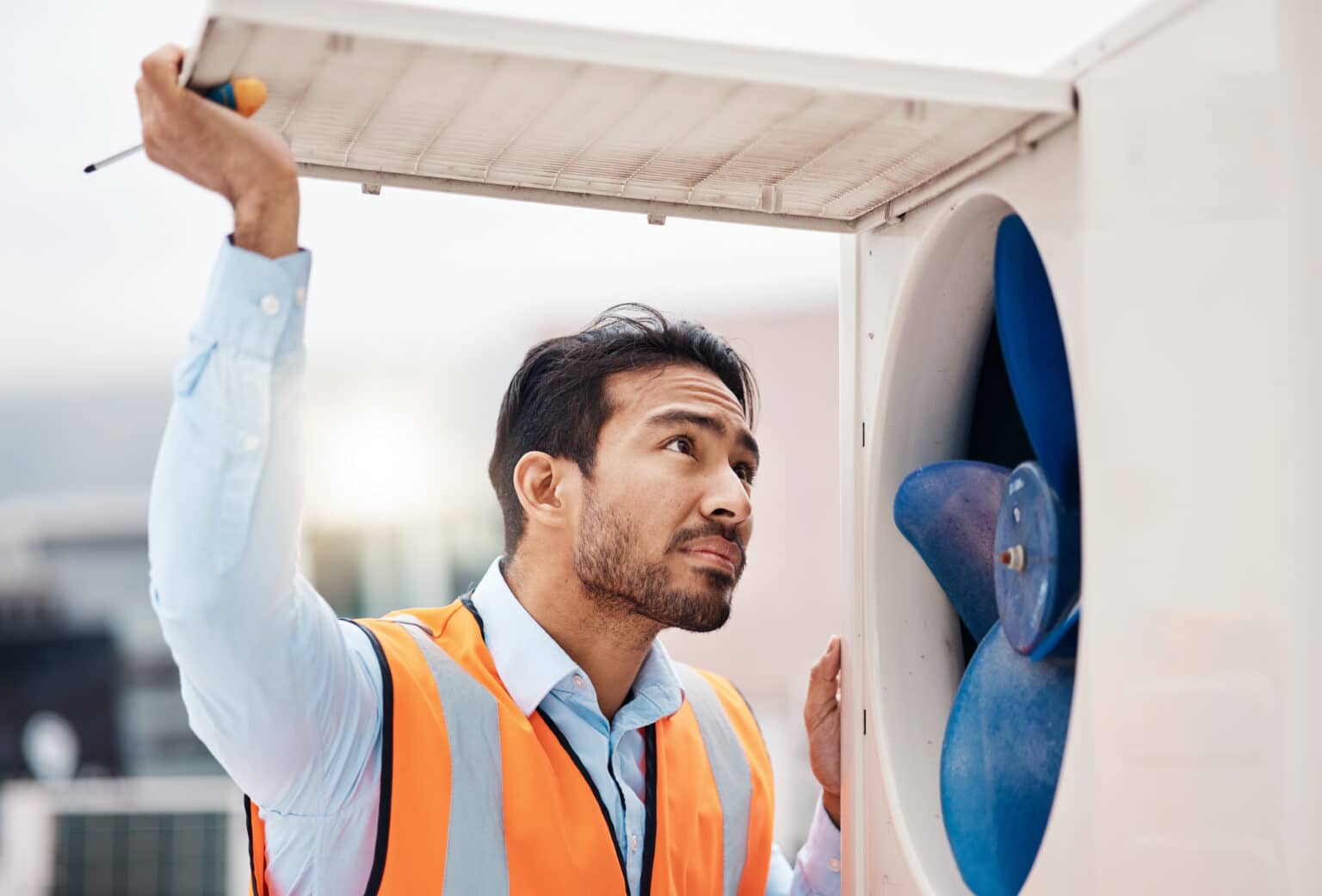
An HVAC inspection is a thorough, professional evaluation of your heating, ventilation, and air conditioning system. A certified technician checks every major component — from your thermostat and electrical connections to refrigerant levels and ductwork — to confirm the system is running safely and efficiently.
Key things an HVAC inspection covers:
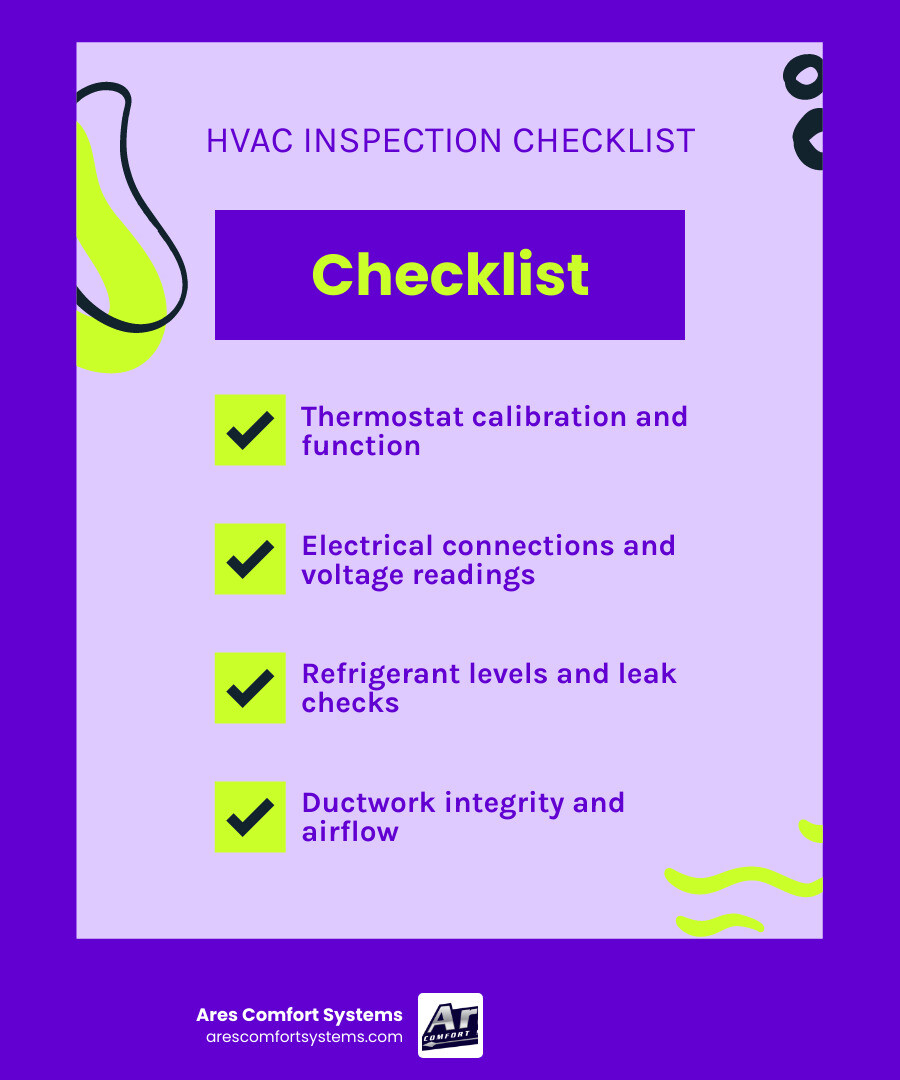
- Thermostat calibration and function
- Electrical connections and voltage readings
- Refrigerant levels and leak checks
- Evaporator and condenser coils
- Blower motor and fan operation
- Condensate drain lines
- Ductwork integrity and airflow
- Safety controls and carbon monoxide checks
- Air filters and ventilation pathways
Most inspections take 60 to 90 minutes, and experts recommend scheduling one at least once a year — ideally twice, once in spring before cooling season and once in fall before heating season.
Whether your system has been making strange noises, your energy bills are creeping up, or you just want peace of mind, a professional HVAC inspection is one of the smartest investments you can make as a homeowner.
In the Pacific Northwest, where heating and cooling demands shift significantly between seasons, staying on top of your system’s health is especially important. At Ares Comfort Systems, we serve homeowners and small businesses throughout King, Pierce, Thurston, and Kitsap Counties in Washington State — and we see how routine inspections prevent costly, inconvenient breakdowns.
In this guide, we’ll walk you through exactly what happens during a professional HVAC inspection, what gets checked, why it matters, and how to know when it’s time to schedule one.
Defining the Process: What is an HVAC Inspection?
When we talk about a professional HVAC Inspection, we are referring to a documented assessment of your system’s condition, performance, and safety. Unlike a quick visual “once-over,” this is a technical deep dive that follows strict safety protocols and industry performance benchmarks.
For many homeowners in the Puget Sound region, the need for an inspection arises during a real estate transaction. Home buyer assessments are a critical part of the closing process. However, it is important to note that a general home inspector usually only performs a basic functional check—essentially making sure the unit turns on and off. A specialized HVAC inspection, on the other hand, involves opening the cabinet to inspect the heat exchanger for cracks, measuring refrigerant pressures, and testing safety limits.
By performing this evaluation, we can help you understand the true equipment lifespan of your units. Most furnaces in Western Washington last 15 to 20 years, while air conditioners and heat pumps typically see a 10 to 15-year service life. Regular inspections ensure your system hits those milestones rather than failing early.
Standard Home Inspection vs. Specialized HVAC Inspection
| Feature | General Home Inspection | Specialized HVAC Inspection |
|---|---|---|
| Scope | Visual check of all home systems | Deep dive into heating/cooling only |
| Tools Used | Flashlight, basic thermometer | Manifold gauges, combustion analyzers, multimeters |
| Internal Components | Rarely opened | Fully disassembled for internal check |
| Safety Testing | Smoke/CO detector check | Heat exchanger and gas line leak testing |
| Performance Data | “Working” or “Not Working” | Static pressure, subcooling, and temperature rise data |
The Core Components Evaluated During a Professional Visit
When our technicians arrive at your home in Lakewood, Tacoma, or Olympia, they follow a comprehensive checklist to ensure no stone is left unturned. This is part of our commitment to providing top-tier HVAC Services.
The process begins with thermostat calibration. We verify that your thermostat is accurately reading the room temperature and communicating correctly with the equipment. A thermostat that is off by even a few degrees can cause your system to work harder than necessary, leading to higher bills.
Next, we move to the “wet” side of the system: condensate drains and refrigerant levels. In our humid Washington climate, clogged drain lines are a leading cause of water damage in attics and crawlspaces. We clear these lines and ensure the pump is functioning. For cooling systems, we measure refrigerant levels. If levels are low, it indicates a leak that needs addressing, as running a system low on “juice” can burn out the compressor.
Finally, we assess the blower motor health and the evaporator coils. Dust buildup on these coils acts like an insulating blanket, preventing the system from absorbing or releasing heat efficiently.
Mechanical and Electrical Checks in an HVAC Inspection
A major part of avoiding HVAC Repairs is catching electrical degradation before it causes a total shutdown. During an inspection, we perform:
- Voltage and Ampere Readings: We check that motors are drawing the correct amount of power. High amperage often signals a motor that is beginning to seize.
- Capacitor Health: Capacitors are like small batteries that give your motors the “kick” they need to start. These are the most common parts to fail during a heatwave or cold snap.
- Fan Blade Balance: We check for wobbles or debris that can cause vibration and noise.
- Lubrication: We apply oil to moving parts to reduce friction and heat, which are the enemies of mechanical longevity.
Air Distribution and Quality Standards
Your HVAC system is only as good as the air it moves. We don’t just look at the boxes; we look at the “veins” of your home—the ductwork.
We check for ductwork integrity, looking for disconnected sections, crushed pipes, or leaks that allow conditioned air to escape into your crawlspace. We also evaluate your air filters. While you should change these every 90 days, we check for proper fit and signs of bypass (where air leaks around the filter).
Our technicians also look for airflow obstructions. Sometimes, furniture or rugs blocking vents can cause the system to “short cycle,” which means it turns on and off too frequently, wearing out the components. By ensuring proper ventilation pathways, we improve your indoor air quality and overall comfort.
The Benefits of Regular Maintenance and Proper Timing
Why bother with all this? The primary driver is energy efficiency. A well-maintained system uses significantly less electricity and gas to achieve the same temperature. Following The Importance of Regular HVAC Maintenance can lead to noticeable drops in your monthly utility costs.
Beyond the wallet, there is the issue of warranty compliance. Did you know that most major manufacturers (like Lennox, Carrier, or Trane) require proof of annual professional maintenance to honor a parts warranty? If your compressor fails in year five but you haven’t had an inspection, you might be stuck paying the full replacement cost.
Most importantly, we look for safety hazards. For gas-fired furnaces, a cracked heat exchanger can leak carbon monoxide into your home. This is a colorless, odorless gas that can be fatal. Our specialized tools detect these leaks long before a standard home CO alarm would go off.
Maximizing Efficiency with a Seasonal HVAC Inspection
Timing is everything. We recommend a HVAC Maintenance schedule that aligns with the changing seasons in Western Washington.
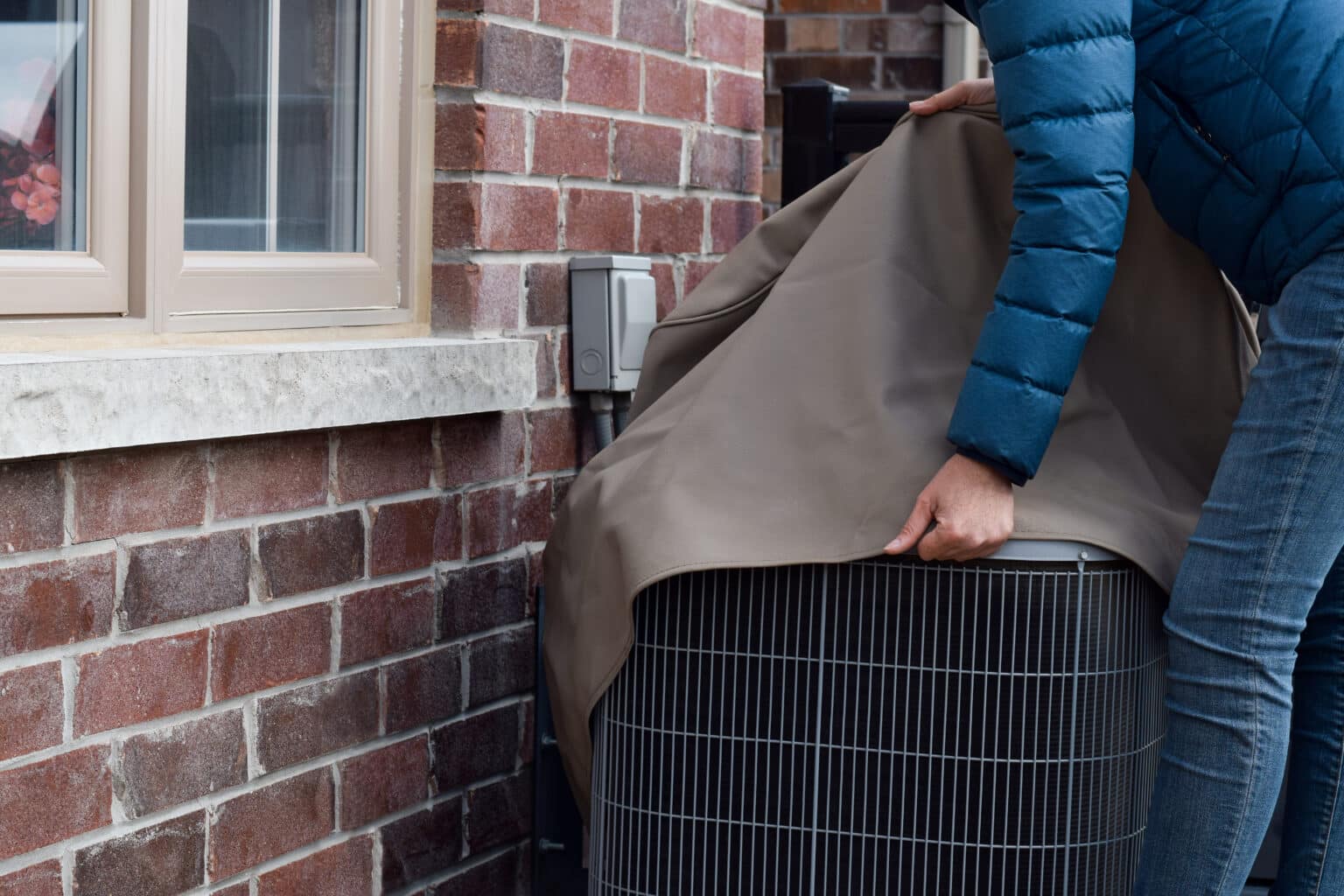
- Spring AC Preparation: In April or May, we focus on the cooling side. We clean the outdoor condenser of cottonwood seeds and debris, check refrigerant, and ensure you’re ready for those sudden July heatwaves.
- Fall Furnace Checks: In September or October, we pivot to heating. We test the ignition system, clean the burners, and verify that the venting system is clear of bird nests or debris before the first frost hits King County.
This seasonal approach ensures performance optimization. You don’t want to find out your heater is broken on the first snowy night in Pierce County!
Frequently Asked Questions about HVAC Inspections
Homeowners often have a few lingering questions when they call us to schedule. We believe in transparency, so here is what you can expect when one of our Ares Comfort Systems technicians arrives.
How long does a standard inspection take?
A standard, thorough inspection typically takes 60 to 90 minutes. If you have a very large home with multiple systems (like two furnaces or a separate mini-split in the garage), it may take longer. If we find that your refrigerant is low, adding and testing the new charge can add an additional 30 to 45 minutes to the visit.
How often should I have my system checked?
At a minimum, you should have an inspection once a year. However, for the best results and the longest equipment life, twice-yearly inspections are the industry gold standard. This allows us to prep the AC in the spring and the furnace in the fall, ensuring neither system is caught off guard by the extreme weather we sometimes see in the Pacific Northwest.
What are the signs that I need an inspection immediately?
If you notice any of the following, don’t wait for your seasonal appointment:
- Unusual Noises: Banging, screeching, or whistling.
- Strange Odors: A “burning” smell or a musty, moldy scent.
- Uneven Temperatures: One room is an icebox while another is a sauna.
- Rising Energy Bills: A sudden spike in usage without a change in weather.
- Frequent Cycling: The system turns on and off every few minutes.
Conclusion
Understanding what is an hvac inspection is the first step toward a more comfortable, safer, and more affordable home. At Ares Comfort Systems, we bring decades of Western Washington expertise to every job. Whether you are in Lakewood, Seattle, Tacoma, or Olympia, our team is dedicated to keeping your air clean and your temperatures perfect.
We stand behind our work with a 100% satisfaction guarantee and our Fixed Right Promise. We don’t just find problems; we provide lasting solutions that give you peace of mind. Our Comfort Service Agreements make it easy to stay on schedule with seasonal tune-ups and exclusive discounts for our neighbors in King, Pierce, Thurston, and Kitsap Counties.
Don’t wait for a breakdown to leave you in the cold (or the heat). Schedule your professional HVAC Inspection today and let us take care of the “heart” of your home.