
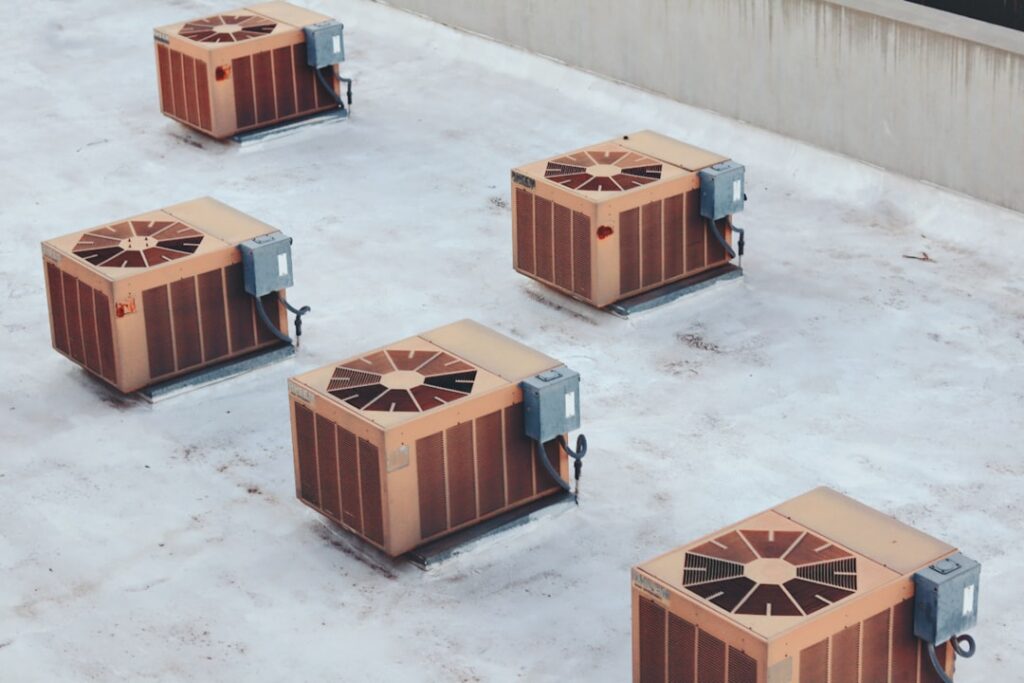
Why Every Washington Homeowner Should Know How to Protect Their HVAC During a Power Outage
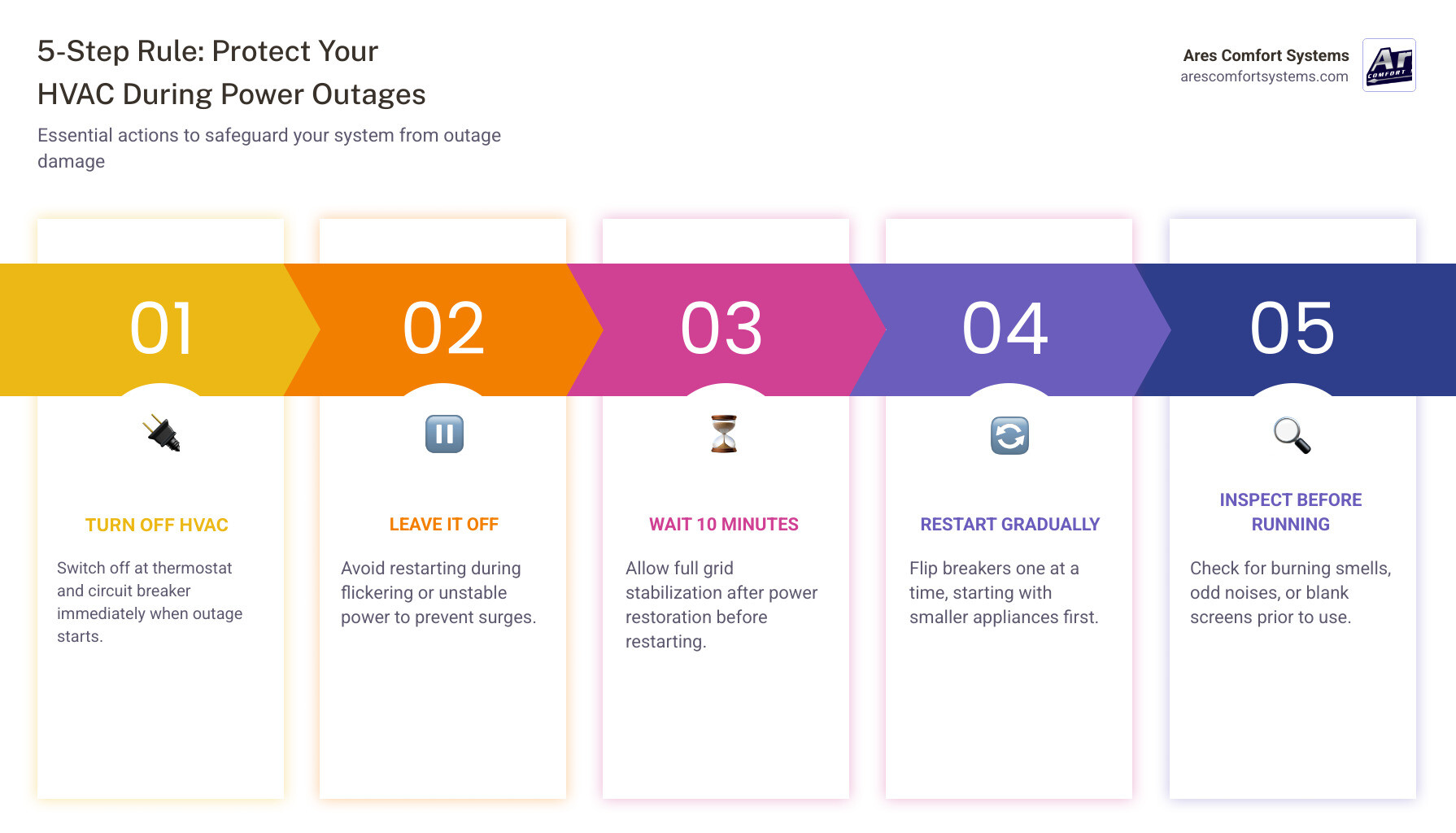
How to protect your HVAC during a power outage comes down to a few key actions you can take before, during, and after the lights go out:
- Turn off your HVAC system at both the thermostat and the circuit breaker as soon as an outage occurs.
- Leave it off — do not attempt to restart your system while power is flickering or unstable.
- Wait at least 10 minutes after power is fully restored before turning anything back on.
- Restart gradually — flip breakers one at a time, letting the grid stabilize before powering up major appliances.
- Inspect before running — check for burning smells, unusual sounds, or a blank thermostat screen before resuming normal operation.
- Install surge protection at your electrical panel to guard against voltage spikes during restoration.
Washington State’s Puget Sound region is no stranger to powerful windstorms, heavy rain, and downed power lines. When a storm knocks out the grid, most homeowners worry about the food in the fridge or losing Wi-Fi. But there’s something else in your home that’s just as vulnerable — and far more expensive to fix.
Your HVAC system runs entirely on electricity. Every component, from the compressor to the control board, depends on a clean, stable power supply. When that supply cuts out suddenly — or surges back unpredictably — the damage can be swift and costly.
Nearly 70 million Americans experience power outages every year, and the Pacific Northwest sees its fair share. The threat isn’t just the outage itself. It’s what happens the moment the power comes back. Voltage spikes during restoration are one of the leading causes of HVAC damage, and most homeowners don’t realize the risk until something stops working.
The good news? A few simple steps can protect your system and save you from an expensive repair call.
Why Power Outages are a Threat to Your HVAC System
It might come as a surprise, but standard HVAC systems are 100 percent dependent on electricity. Whether you have a gas furnace that needs power for the blower motor or a high-efficiency heat pump, no power means no climate control. In the middle of a Washington winter or a rare summer heatwave, this creates immediate health risks. Indoor temperatures can become uncomfortably warm in as little as 30 to 60 minutes in humid conditions, potentially leading to heat exhaustion for vulnerable family members.
However, the physical threat to the machinery is just as serious. When power is lost or fluctuates, your system faces several technical dangers:
- Voltage Fluctuations: Before a total blackout, power often “browns out” or dips. Low voltage forces motors to pull more current to compensate, which can lead to motor winding damage.
- Compressor Failure: The compressor is the heart of your cooling system. Sudden stops and starts can cause mechanical stress or “short cycling,” where the system tries to restart before pressures have equalized.
- Electrical Surges: This is the most common culprit. A surge is a massive spike in voltage that can fry sensitive electronic control boards and blow capacitors instantly.
If your system has already taken a hit from a recent storm, you may need professional AC Repairs to get things back in order.
The Danger of Power Restoration Surges
The moment electricity returns is actually the most dangerous time for your equipment. As the utility grid struggles to stabilize, power often flickers or “stutters.” These rapid-fire voltage spikes can cause extreme thermal expansion in electrical components. Imagine a lightbulb flickering before it finally stays on—now imagine that happening to a multi-thousand-dollar piece of machinery. Without proper Air Conditioning Services, these surges can significantly shorten the lifespan of your unit.
Economic Impact of Outage Damage
The financial consequences of a power-related failure are steep. Replacing a compressor is one of the most expensive repairs in the industry. Beyond the compressor, modern units rely on sophisticated circuit boards that act as the system’s “brain.” If a surge fries this board, your entire system becomes a very expensive paperweight until parts are replaced. We often see homeowners facing HVAC Repairs that could have been avoided with a simple flip of a switch during the outage.
How to Protect Your HVAC During a Power Outage: Immediate Steps
When the lights go out in Lakewood or anywhere across Pierce County, your first instinct might be to find a flashlight. Your second instinct should be to head to your thermostat and electrical panel. Taking manual control of your system is the best way to ensure it doesn’t try to restart prematurely when the grid is unstable.
If you have window AC units, unplug them entirely. A surge can literally melt the plug or the outlet if the voltage spike is high enough. For central systems, the goal is to “air-gap” the connection by turning off the power source. This ensures that even if the neighborhood’s power flickers twenty times in ten minutes, your system stays safely disconnected. If you encounter issues with your system failing to start later, you may need Heating Repairs to diagnose electrical faults.
Should You Turn Off the Thermostat?
Yes, absolutely. You should turn your thermostat to the “OFF” position immediately. Many modern thermostats have built-in delays, but they aren’t foolproof against major grid instability. By turning it off, you prevent the system from short cycling—a process where the compressor tries to kick on immediately after a power flicker. Waiting for grid stabilization protects the sensitive electronics inside your HVAC unit. This is a core part of our Heating Services advice for winter storm preparedness.
Managing Indoor Temperatures Without Power
Once the system is safe, your focus shifts to preserving the air you already paid to heat or cool. Did you know that about 38% of the heat in your home escapes through tiny cracks and gaps? To keep your home comfortable:
- Close all drapes and blinds: This creates an extra layer of insulation.
- Isolate rooms: Close doors to unused rooms to keep the “conditioned” air in the areas you are actually using.
- Seal drafts: Use rolled-up towels at the base of doors to prevent air seepage. For more tips on keeping your home resilient, check out our guide on Maximizing Energy Efficiency in Your Washington Home.
Managing Your System While Away from Home
What happens if a windstorm hits King County while you’re at work or on vacation? This is where technology becomes your best friend. If you aren’t there to flip the breaker, you need a system that can look out for itself. Many homeowners in the Puget Sound area are now opting for Air Conditioning setups that include smart connectivity for this very reason.
How to protect your HVAC during a power outage when you aren’t home
If you have a smart thermostat, it may lose Wi-Fi during an outage, but many models have battery backups that preserve your settings. Some advanced systems offer “dealer diagnostics,” which allow us to see if your system suffered an error code during a power event.
In The Complete Guide to Ares Heating and Cooling, we emphasize that being proactive is key. If you know a storm is coming and you’ll be away, it’s actually safer to turn the system off at the thermostat before you leave. This eliminates the risk of the system trying to restart while you aren’t there to monitor it.
Safely Restarting Your System After Power Returns
Once the lights stay on for more than a minute or two, you might be tempted to crank the AC or heat immediately. Resist that urge! We recommend the “10-Minute Rule.” Wait at least ten minutes after the power seems stable before you touch your HVAC system. This gives the utility company time to balance the load on the grid.
When you are ready, follow this sequence:
- Ensure the thermostat is still “OFF.”
- Flip the HVAC circuit breaker to “ON.”
- Wait another 5 minutes.
- Finally, turn the thermostat back to your desired setting. If the system doesn’t respond, it’s time for a professional HVAC Inspection to ensure no internal fuses were blown.
Signs of HVAC Damage After an Outage
Sometimes, the damage isn’t immediate. Keep your senses sharp during the first few hours of operation. Watch for these red flags:
- Odd Smells: A “burnt” or electrical odor is a sign of a fried wire or control board.
- Strange Noises: Buzzing, humming, or grinding sounds can indicate a damaged capacitor or motor winding.
- Blank Screens: If your thermostat won’t turn on despite the power being back, it may have lost its internal fuse or suffered a surge.
- Short Cycling: If the unit turns on and off every few minutes, it’s struggling to maintain a cycle. Our AC Maintenance Services can help identify these “hidden” issues before they lead to a total system breakdown.
When to Call a Professional Technician
If you’ve reset your breakers and your system still won’t kick on, or if it trips the breaker again immediately, do not try to force it. Repeatedly resetting a tripped breaker can cause a fire. If you notice smoke, sparks, or persistent electrical faults, Contact us immediately. Dealing with high-voltage components and refrigerants is dangerous work that should only be handled by licensed experts.
Long-Term Resilience for Washington Homeowners
Living in the Pacific Northwest means accepting that outages will happen. Instead of reacting to every storm, you can build a more resilient home. The most effective tool is a whole-home surge protector. Unlike a simple power strip, these are installed directly into your electrical panel and can divert thousands of volts safely into the ground before they ever reach your Heat Pumps.
For those who want zero interruptions, a standby generator with a properly installed transfer switch is the gold standard. These systems detect a power loss and automatically switch your home to backup power, ensuring your HVAC never skips a beat.
How to protect your HVAC during a power outage with professional maintenance
Regular maintenance is your best defense against outage-related damage. During a Lakewood AC Tune-Up: Why Your System Needs a Seasonal Checkup, our technicians do more than just clean coils. We:
- Inspect Capacitors: Weak capacitors are much more likely to fail during a power surge.
- Tighten Connections: Loose electrical connections create heat and resistance, making your system vulnerable to voltage drops.
- Check Safety Controls: We ensure your system’s internal “fail-safes” are ready to shut the unit down if power becomes unstable.
Winter Outage Protection and Pipe Safety
In Washington, a power outage in January often means a risk of frozen pipes. If your Heating system is down for more than a few hours, you need to take action. Shut off the main water valve and open your faucets to a trickle. This prevents pressure buildup if the water inside the pipes begins to freeze. Open cabinet doors under sinks to allow what little heat is left in the house to reach the plumbing.
Frequently Asked Questions about HVAC Power Outages
Why is my thermostat blank after the power came back on?
A blank thermostat screen often means the 24-volt transformer inside your furnace or air handler has blown a fuse or failed due to a surge. It could also simply be that the batteries in the thermostat died. Try replacing the batteries first; if that doesn’t work, a technician will need to check the internal fuse on the HVAC control board.
How long should I wait to turn my AC back on after an outage?
We recommend waiting at least 10 to 15 minutes after the power is fully restored and stable. This prevents your system from being part of the massive “inrush” of current that happens when an entire neighborhood’s appliances all try to start at the exact same time, which can cause another local outage or a damaging voltage dip.
What is the difference between a power strip and a surge protector?
A power strip is essentially just an extension cord with multiple outlets; it offers little to no protection against voltage spikes. A surge protector is designed to sense excess voltage and divert it away from your electronics. For HVAC systems, you need a dedicated surge protector with a high Joule rating installed specifically for the unit or at the main panel.
Conclusion
At Ares Comfort Systems, we’ve seen how a single storm in King County or Pierce County can wreak havoc on home comfort systems. Whether you’re in Thurston County or Kitsap County, the principles of how to protect your HVAC during a power outage remain the same: stay proactive, disconnect during the dark, and restart with caution.
Don’t wait for the next windstorm to test your system’s limits. From professional surge protector installation to seasonal tune-ups that keep your components strong, our team is here to ensure your home remains a sanctuary, rain or shine. Explore our full range of Services today and find out how our Comfort Service Agreements can give you peace of mind all year long. When it comes to your home’s most expensive appliance, an ounce of prevention is worth a pound of cure.