
The Real Cost of Skipping an HVAC Inspection Before Buying a Home
If you’re wondering do I need an HVAC inspection before buying a home, the short answer is yes — and it matters more than most buyers realize.
Quick Answer: Do You Need an HVAC Inspection Before Buying a Home?
- Yes. A standard home inspection rarely goes beyond confirming the system turns on.
- A dedicated HVAC inspection checks components a general inspector will miss — coils, refrigerant levels, heat exchangers, ductwork, and more.
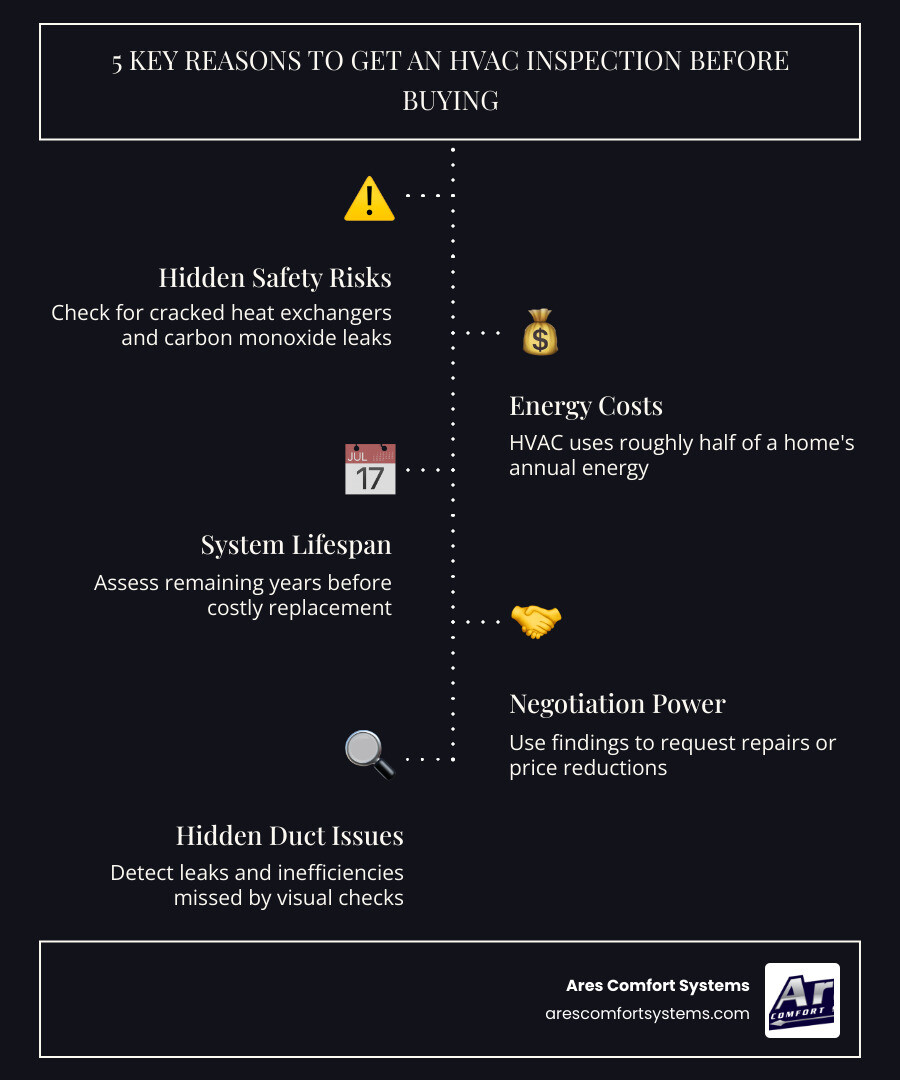
- HVAC systems account for roughly half of a home’s annual energy costs.
- Replacing a full system can run into the thousands of dollars.
- Findings from an inspection give you real negotiating power before you close.
Buying a home in Western Washington is already a major financial commitment. The last thing you want is to move in and discover the furnace is failing, the ductwork is leaking, or the air conditioner is one hot summer away from giving out. Over 50% of Western Washington homeowners who purchased an existing home reported at least one issue that surprised them after closing — and the HVAC system is one of the most commonly overlooked culprits.
A general home inspector will typically set the thermostat, confirm the system blows warm or cool air, and move on. That tells you almost nothing about the actual health of the equipment, its remaining lifespan, or hidden safety risks. A professional HVAC inspection goes much deeper — and what it uncovers can save you from a very expensive surprise.
Why a Standard Home Inspection Falls Short for Heating and Cooling
When you hire a general home inspector, they provide an excellent overview of the property’s structural and cosmetic health. However, their evaluation of the heating and cooling system is strictly a surface-level check. They will perform basic visual checks, test the thermostat to make sure the furnace turns on, and verify that the air conditioner blows cool air.
Unfortunately, a system that is “alive” is not necessarily healthy. A general home inspector does not have the specialized tools, licensing, or training required to run advanced diagnostic tests. They will not open up the furnace cabinet to check for a cracked heat exchanger, measure electrical amp draw, or pressure-test the refrigeration lines.
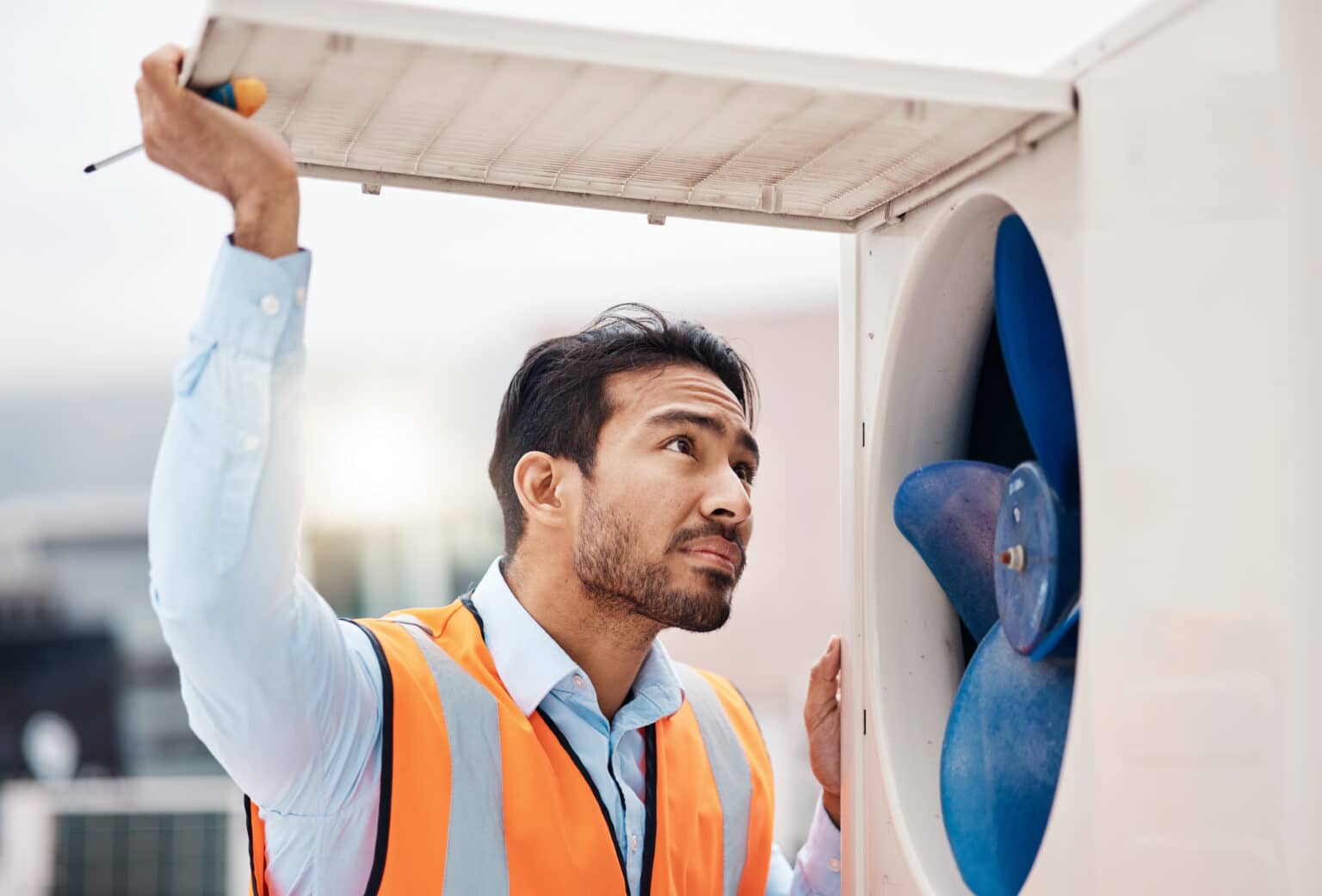
To truly understand what is happening inside the system, you need a specialized HVAC Inspection. Professional technicians use advanced diagnostic equipment—such as combustion analyzers, thermal imaging cameras, and static pressure gauges—to assess the actual performance and safety of the equipment.
| Inspection Feature | Standard Home Inspection | Specialized HVAC Inspection |
|---|---|---|
| Thermostat Operation | Yes (Basic On/Off check) | Yes (Calibration & signal testing) |
| Air Temperature Split | Yes (Basic check) | Yes (Detailed static pressure & airflow) |
| Heat Exchanger Integrity | No | Yes (Camera inspection for cracks & safety) |
| Refrigerant Levels & Leaks | No | Yes (Pressure checks & leak detection) |
| Electrical Component Testing | No | Yes (Amp draw on motors & capacitor checks) |
| Ductwork Assessment | No (Visual only) | Yes (Integrity, leakage, & airflow balance) |
Do I Need an HVAC Inspection Before Buying a Home?
When evaluating a potential home purchase, financial protection should be your top priority. So, do i need an hvac inspection before buying a home? Absolutely. Your heating and cooling system is the most expensive appliance in the entire house. If the system fails shortly after you move in, you are looking at a massive, unexpected capital expense.
Getting a specialized inspection protects your budget in several key ways:
- Negotiation Leverage: If an inspection reveals that the heat pump or furnace is near the end of its life or requires immediate repairs, you can use the official report to negotiate a price reduction, request a seller credit, or ask the seller to replace the system before closing.
- Energy Efficiency Insights: Heating and cooling make up about half of the average household’s annual energy bill. An inefficient system will cost you significantly more to operate every single month.
- Safety Assurance: A malfunctioning gas furnace can leak carbon monoxide into your living space, presenting a silent, life-threatening hazard.
In Western Washington, our unique climate brings cool, damp winters and increasingly warm summers. Homeowners in King County, Pierce County, Thurston County, and Kitsap County rely heavily on consistent heating and, increasingly, modern heat pump systems for summer cooling. Because of our local humidity, understanding The Importance of Regular HVAC Maintenance is critical. Skipping an inspection means risking major surprise issues in a climate where you absolutely need reliable indoor climate control.
Key Components Evaluated During a Specialized HVAC Inspection
During a dedicated pre-purchase inspection, our licensed technicians perform a forensic evaluation of the entire system. We look beyond the surface to assess the health of several critical areas:
- Outdoor Condenser or Heat Pump: We inspect the outdoor unit to ensure it is level, free of debris, and has adequate clearance. In coastal areas of Kitsap County and regions near the Puget Sound, salt air and moisture can accelerate corrosion on condenser fins. We check for salt pitting and structural wear.
- Indoor Air Handler and Evaporator Coil: We open the cabinet to check the evaporator coil for dirt buildup, rust, or microscopic pinhole leaks. A rusted or dirty coil severely limits heat transfer and forces the system to work harder.
- Ductwork Integrity: Leaky ductwork is a silent budget drain that can quietly reduce your system’s efficiency by 20 to 30 percent. We check for disconnected joints, falling insulation, and air leaks in unconditioned spaces like attics and crawlspaces.
- Refrigerant and the 2025/2026 Rule Change: The HVAC industry is currently transitioning away from older refrigerants like R-410A to more environmentally friendly options like R-32 and other A2L refrigerants. If the home has an older system utilizing phased-out refrigerants like R-22, finding replacement refrigerant for repairs will be incredibly difficult and expensive. Knowing what refrigerant the system uses is vital for understanding The Long and Short of How Long Your HVAC System Really Lasts.
- Safety Controls: We test the safety limit switches, verify the gas connections are secure, and check for proper venting to ensure carbon monoxide is being safely funneled out of your home.
Warning Signs and Red Flags to Watch For During Home Showings
While you should always rely on a professional to perform the final diagnostic check, you can keep an eye out for warning signs during your initial home walkthroughs. If you notice any of the following red flags, it is a strong indicator that you need a professional technician to step in:
- Uneven Temperatures: Do you notice that the upstairs rooms feel incredibly stuffy while the main floor is freezing? This can point to improper system sizing, failing blowers, or severely damaged ductwork.
- Strange Noises: Listen closely when the system cycles on. Loud banging, rattling, squealing, or buzzing sounds are not normal and usually indicate failing mechanical parts.
- Musty or Burning Smells: Damp, musty odors coming from the vents can point to mold growth inside the evaporator coil or ductwork. A burning smell could signal electrical problems or a struggling motor.
- Rust and Corrosion: Take a look at the furnace in the basement or garage. If you see visible rust on the heat exchanger, cabinet, or flue pipes, damp Western Washington air has likely taken its toll, indicating a high risk of system failure.
- Clogged, Filthy Filters: A heavily neglected air filter suggests that the current homeowners have skipped basic maintenance. This means the system has likely been operating under high stress, which accelerates wear on internal components.
Spotting these signs early allows you to plan ahead. If the home has been neglected, scheduling a professional checkup is the best way to determine if the system can be saved or if it needs immediate replacement. For existing homeowners, keeping up with The Strategic Advantage of Spring HVAC Checkups is the best way to prevent these issues from developing in the first place.
Frequently Asked Questions About Pre-Purchase HVAC Inspections
Do I need an hvac inspection before buying a home with an older system?
Yes, this is when an inspection is most critical. Most furnaces and air conditioners have a service life of 10 to 20 years (though some well-maintained electric furnaces or boilers can last longer). If the home’s heating system or heat pump is over 10 to 12 years old, its efficiency is likely much lower than modern units, and it is approaching the end of its reliable lifespan. An inspection will help you determine the exact age of the equipment, assess its current wear, and help you plan for a future replacement rather than being caught off guard.
Do I need an hvac inspection before buying a home if the seller has recent service records?
While service records are incredibly valuable and show that the seller cared for the property, you should still get an independent inspection. Service records show past maintenance, but they do not guarantee the system’s current state on the day you buy. Furthermore, you will want to verify if any existing manufacturer warranties are active and if they are legally transferable to a new owner, as some warranties expire upon the sale of the home. Reviewing these details is a key part of finding peace of mind, and using The Ultimate Checklist for Finding Your Perfect Local HVAC Partner will help you find a trusted team to guide you through this process.
What is the difference between a standard home walkthrough and a professional HVAC assessment?
A standard walkthrough is purely visual and functional (checking if the system turns on). A professional HVAC assessment uses diagnostic tools to measure internal performance. Technicians measure the electrical amp draw on motors to see if they are pulling too much power (a sign of imminent failure), test the static pressure to ensure proper airflow throughout the home, and use specialized cameras to look inside the dark, inaccessible corners of the furnace for dangerous heat exchanger cracks that could leak carbon monoxide.
Conclusion
When you are purchasing a home in King County, Pierce County, Thurston County, or Kitsap County, you deserve absolute confidence in your investment. Skipping a dedicated heating and cooling inspection can lead to unexpected, expensive repairs right after you move in.
At Ares Comfort Systems, we help Western Washington homebuyers make informed decisions. Our highly trained, licensed technicians (WA LIC # ARESCCS766CA) will thoroughly evaluate the home’s heating and cooling systems, providing you with a detailed, transparent report to guide your negotiations. Backed by our Fixed Right Promise and 100% satisfaction guarantee, we are dedicated to keeping your new home comfortable for years to come.
Protect your budget and your family’s comfort. Schedule your professional HVAC inspection today before you sign the closing papers.