


What an HVAC Maintenance Plan Includes
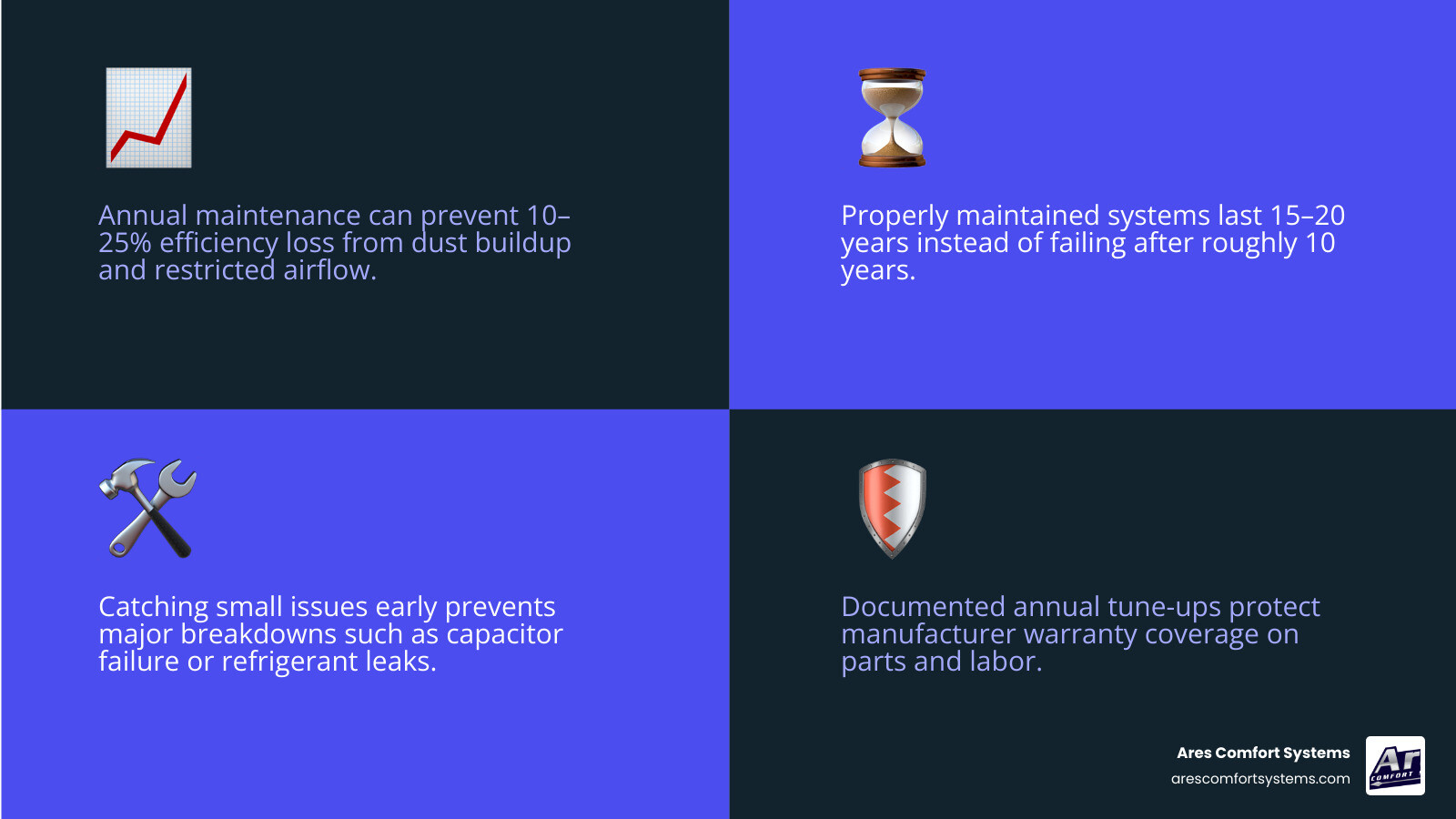
Annual HVAC maintenance is it worth it for most homeowners — and the short answer is yes. A well-maintained system can last 15–20 years, while a neglected one may fail in as little as 10. Regular tune-ups also help prevent efficiency losses of 10–25%, which translates directly to higher utility bills every month you skip service.
Quick answer for homeowners evaluating HVAC maintenance:
- Extends system life from roughly 10 years (neglected) to 15–20 years (maintained)
- Lowers energy bills by keeping efficiency losses from dust and wear to a minimum
- Prevents costly breakdowns by catching small problems like failing capacitors or refrigerant leaks early
- Protects your warranty — most manufacturers require documented annual service to honor parts coverage
- Improves indoor air quality by keeping coils, filters, and drains clean
Think of it the same way you think about oil changes for your car. Skip them long enough and you’re not saving money — you’re borrowing trouble. The same logic applies to your heating and cooling system, especially in the Pacific Northwest where systems work hard through damp winters and warm summers.
Whether you have a furnace and AC combo or a heat pump that runs year-round, proactive care is almost always cheaper than reactive repairs. The sections below break down exactly what maintenance includes, how often you need it, what it costs versus what it prevents, and how to decide if a service plan makes sense for your home.
An HVAC maintenance plan is a service agreement that bundles scheduled tune-ups and inspections into a predictable routine. In most homes around King, Pierce, Thurston, and Kitsap Counties, that means one visit focused on cooling performance and another focused on heating performance.
A typical visit may include:
- Thermostat testing and calibration
- Inspection of electrical connections and components
- Cleaning of indoor and outdoor coils where accessible
- Refrigerant level and performance checks
- Condensate drain inspection and clearing
- Blower and motor inspection
- Safety control testing
- Filter inspection or replacement guidance
For a deeper look at why this matters, see The Importance of Regular HVAC Maintenance.

What is an HVAC maintenance plan and what does it typically include?
Think of the plan as a checklist plus a schedule. Instead of waiting for your system to complain loudly in the middle of July or during a cold snap, maintenance helps us catch wear early.
Many plans also include homeowner-friendly perks such as:
- Priority scheduling during busy seasons
- Discounts on covered repairs or replacement parts
- Documented service records
- Seasonal reminders so maintenance does not slip through the cracks
For Washington homeowners, this is especially useful because damp weather, debris, and long heating seasons can all add strain to equipment.
What homeowners can do themselves between professional visits
Homeowners absolutely can handle some basic upkeep safely. The best DIY tasks are simple, low-risk, and repeatable:
- Change or check air filters every 1 to 3 months
- Keep supply vents and return grilles unobstructed
- Replace thermostat batteries if your model uses them
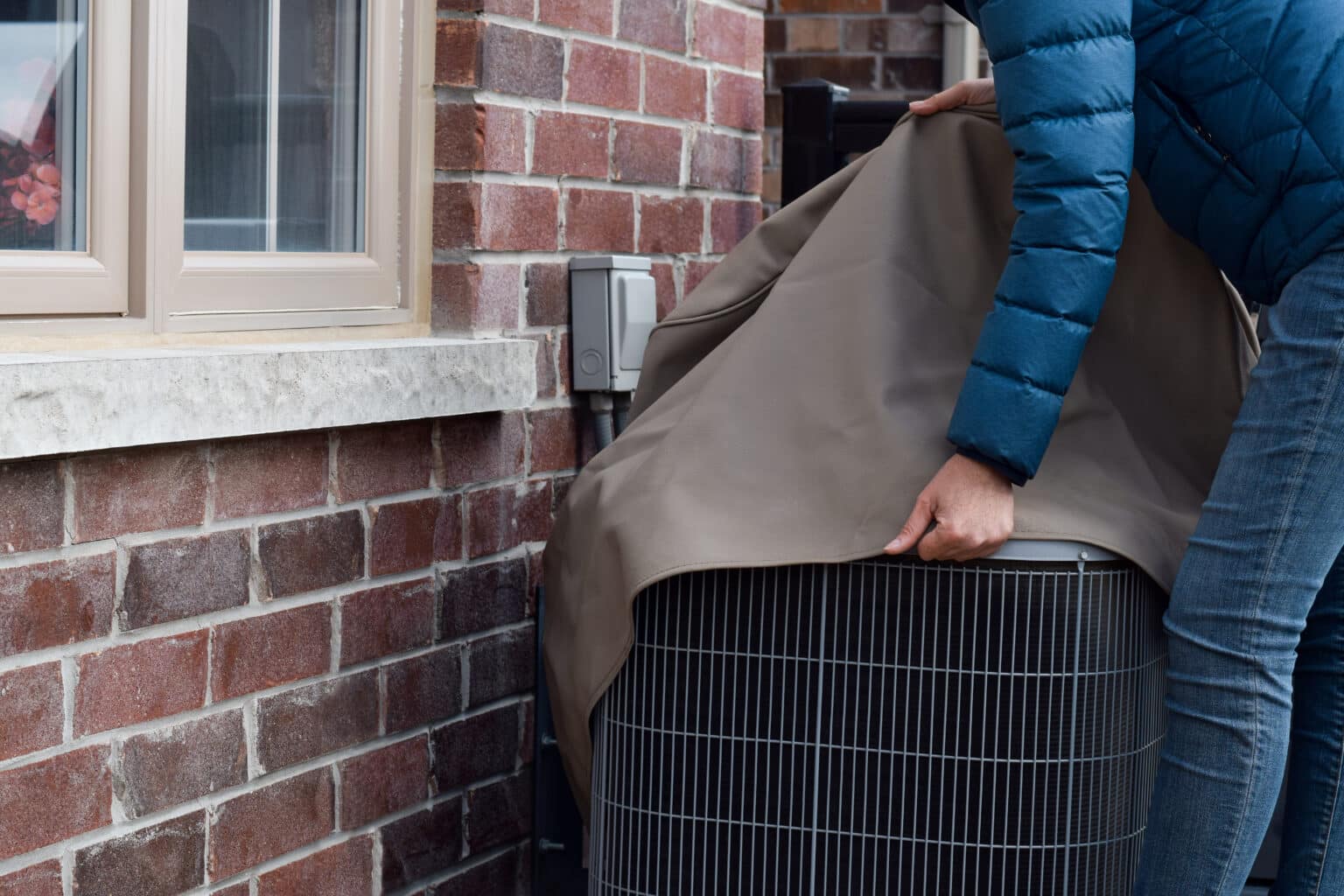
- Keep leaves, grass, and debris away from the outdoor unit
- Maintain about 2 feet of clearance around the condenser
- Watch for unusual sounds, odors, or water around the system
If you want practical between-visit tips, read How to Maintain Your Heating and Cooling System Like a Pro.
What should always be left to a professional
Some tasks look simple from the outside but are not DIY-friendly. We recommend leaving these to a trained technician:
- Refrigerant pressure checks and leak diagnosis
- Electrical testing
- Capacitor and contactor testing
- Heat exchanger inspection
- Combustion and carbon monoxide safety checks
- Motor amperage testing
- Opening sealed equipment cabinets
In short: changing a filter is homeowner territory. Testing live electrical components is not.
Annual HVAC Maintenance Is It Worth It for Efficiency, Lifespan, and Fewer Repairs?
Yes, because HVAC systems do not usually fail all at once. They decline in small, expensive steps. Dirt builds up. Airflow drops. Parts run hotter. Run times get longer. Bills creep up. Then one day the system quits when you need it most.
A neglected system can lose 10% to 25% of its efficiency from basic dust and debris buildup alone. That is a big penalty for something preventable.
Why annual hvac maintenance is it worth it for lower energy bills?
When filters clog or coils get dirty, your system has to run longer to move the same amount of air and deliver the same comfort. That means:
- More electricity used
- Longer cycles
- More wear on motors and compressors
- Higher monthly utility bills
A clean, properly adjusted system runs closer to its intended efficiency. In plain English, maintenance helps your equipment stop working overtime just to do a normal job.
Why annual hvac maintenance is it worth it for system lifespan?
Regular maintenance helps systems last longer because it reduces stress on the most expensive components. Research consistently shows that maintained systems often reach 15 to 20 years, while neglected ones may struggle to make it to 10.
Why the difference?
- Dirty coils force the compressor to work harder
- Airflow problems strain the blower
- Loose wiring creates heat and shortens component life
- Small refrigerant issues grow into major failures
- Poor drainage can lead to shutdowns and water damage
Maintenance will not make an HVAC system immortal. We wish it would. But it can help your equipment age gracefully instead of dramatically.
Common issues regular maintenance helps prevent
Routine maintenance often catches or helps prevent:
- Failing capacitors
- Refrigerant leaks
- Frozen evaporator coils
- Clogged condensate drains
- Loose electrical connections
- Uneven temperatures
- Short cycling
- Weak airflow
- Safety issues related to combustion equipment
These are exactly the kinds of small issues that are cheaper, safer, and less stressful to address early.
How Often HVAC Systems Should Be Serviced
For most homes, twice-yearly professional maintenance is the best standard: once in spring before cooling season and once in fall before heating season. That schedule lines up with how HVAC systems are actually used in Western Washington.
For timing guidance, visit The Seasonal Cycle: When to Schedule Your Next HVAC Service.
Annual vs bi-annual maintenance: which homes need more frequent service?
Bi-annual service is usually best if you have:
- A heat pump that works nearly year-round
- Older equipment
- Pets that increase filter loading
- Allergy concerns
- Heavy system usage
- A home exposed to moisture, cottonwood, pollen, or outdoor debris
Newer systems may sometimes do fine with one comprehensive annual visit, especially if usage is lighter. But even new equipment benefits from regular inspections, especially for warranty documentation.
Best timing for spring and fall maintenance
The best time to schedule service is before peak demand starts, not after your system is already struggling.
- Spring maintenance helps prepare your AC or heat pump for summer
- Fall maintenance prepares your furnace or heating side of the system for winter
That timing gives us a chance to spot worn parts, drainage issues, airflow restrictions, or safety concerns before extreme weather arrives.
Helpful reading:
When Maintenance Plans Are Worth It — and When They May Not Be
Maintenance itself is usually worth it. A maintenance contract depends on the details.
Some homeowners love the convenience of automatic reminders, priority scheduling, and service records. Others prefer one-time tune-ups as needed. Both approaches can work if the system is actually being maintained.
Are maintenance plans worth it for new versus older systems?
For new systems, maintenance is often about:
- Protecting warranty coverage
- Establishing a performance baseline
- Catching installation-related issues early
- Keeping efficiency where it should be
For older systems, maintenance becomes even more valuable because:
- Parts are more likely to be worn
- Breakdowns are more common
- Efficiency drops are more noticeable
- Small issues can quickly become replacement decisions
In other words, newer systems need maintenance to stay new. Older systems need maintenance to stay alive.
Potential drawbacks of HVAC maintenance contracts
Not every plan is automatically a great deal. Homeowners should watch for:
- Exclusions that leave out important repairs
- Vague promises about priority service
- Limited visit scopes
- Overlapping coverage you may already have through a warranty
- Cancellation rules hidden in the fine print
This does not mean plans are bad. It means the details matter. A good plan should be clear about what is included, what is not, and what benefits you actually receive.
What to look for when comparing maintenance plans
When comparing options, focus on value and clarity rather than just the headline offer.
Look for:
- Two seasonal visits if your system needs them
- A detailed maintenance checklist
- Clear repair or diagnostic discounts
- Written service records
- Reasonable response-time expectations
- Flexible terms
- Support for warranty documentation
Warranty Coverage, Records, and Smart Homeowner Decisions
Many manufacturers require proof of regular professional maintenance to keep parts warranties valid. If a major component fails and there is no service history, warranty claims can become much harder.
That is one reason we recommend keeping a simple maintenance log with:
- Service dates
- What was inspected or cleaned
- Any repairs recommended or completed
- Filter replacement dates
You can also learn more about ongoing care on our HVAC Maintenance page.
How maintenance plans impact warranty coverage
Maintenance plans can help with warranty protection by creating a paper trail. That matters if you ever need to show that the system was cared for properly.
Questions worth asking include:
- Does the manufacturer require annual professional service?
- Do I need written invoices or service reports?
- Is labor covered, parts covered, or both?
- What homeowner maintenance is still my responsibility?
Skipping service may not always void a warranty automatically, but it can create problems when you need coverage most.
Signs your system is overdue for maintenance
Your HVAC system may be asking for help if you notice:
- Higher utility bills
- Weak airflow
- Uneven temperatures between rooms
- Strange noises
- Musty or burning odors
- Frequent cycling
- Water near the unit
- Trouble keeping up with the thermostat setting
If your system is showing these signs, it is probably overdue for a tune-up, not just a pep talk.
Frequently Asked Questions About Annual HVAC Maintenance
Can homeowners handle any HVAC maintenance safely on their own?
Yes. Safe DIY tasks include:
- Changing filters
- Keeping vents open and clear
- Cleaning around the outdoor unit
- Checking thermostat settings
- Watching the condensate drain for obvious overflow issues
Anything involving refrigerant, gas combustion, or internal electrical components should be left to a pro.
How often should a heat pump, furnace, or AC be professionally serviced?
A good rule of thumb is:
- Heat pump: twice a year
- Furnace: once in fall
- AC: once in spring
- Older systems: often best checked twice yearly
Because heat pumps handle both heating and cooling, they usually benefit most from bi-annual service.
Does regular maintenance really pay off over time?
For most homeowners, yes. The payoff usually shows up in four ways:
- Better efficiency and lower energy waste
- Fewer surprise breakdowns
- Longer system life
- Better odds of protecting warranty coverage
It is not flashy. It is just practical. Kind of like buying good rain gear in Washington.
Conclusion
So, is annual HVAC maintenance worth it? For most homeowners in Lakewood, King County, Pierce County, Thurston County, and Kitsap County, yes. Regular service helps your system run better, last longer, and surprise you less often.
At Ares Comfort Systems, we believe preventive care should feel straightforward, not mysterious. Our team provides maintenance, repair, and installation backed by our 100% satisfaction guarantee and Fixed Right Promise, along with Comfort Service Agreements for homeowners who want scheduled tune-ups and added convenience.
If you want to protect your comfort, reduce breakdown risk, and keep your system performing the way it should, learn more about our HVAC Maintenance services.