


Why Knowing How Often Should You Change Your HVAC Air Filter Matters for King County Homes
Knowing how often should you change your HVAC air filter is one of the simplest — and most overlooked — ways to keep your home comfortable and your energy bills in check. In King County, Washington, where seasons shift from rainy winters to dry summers (and wildfire smoke can roll in without warning), your filter works harder than you might think. A clogged filter doesn’t just mean dusty air — it means your entire HVAC system is fighting against itself, driving up costs and shortening equipment life.
Here’s a quick answer based on filter type:
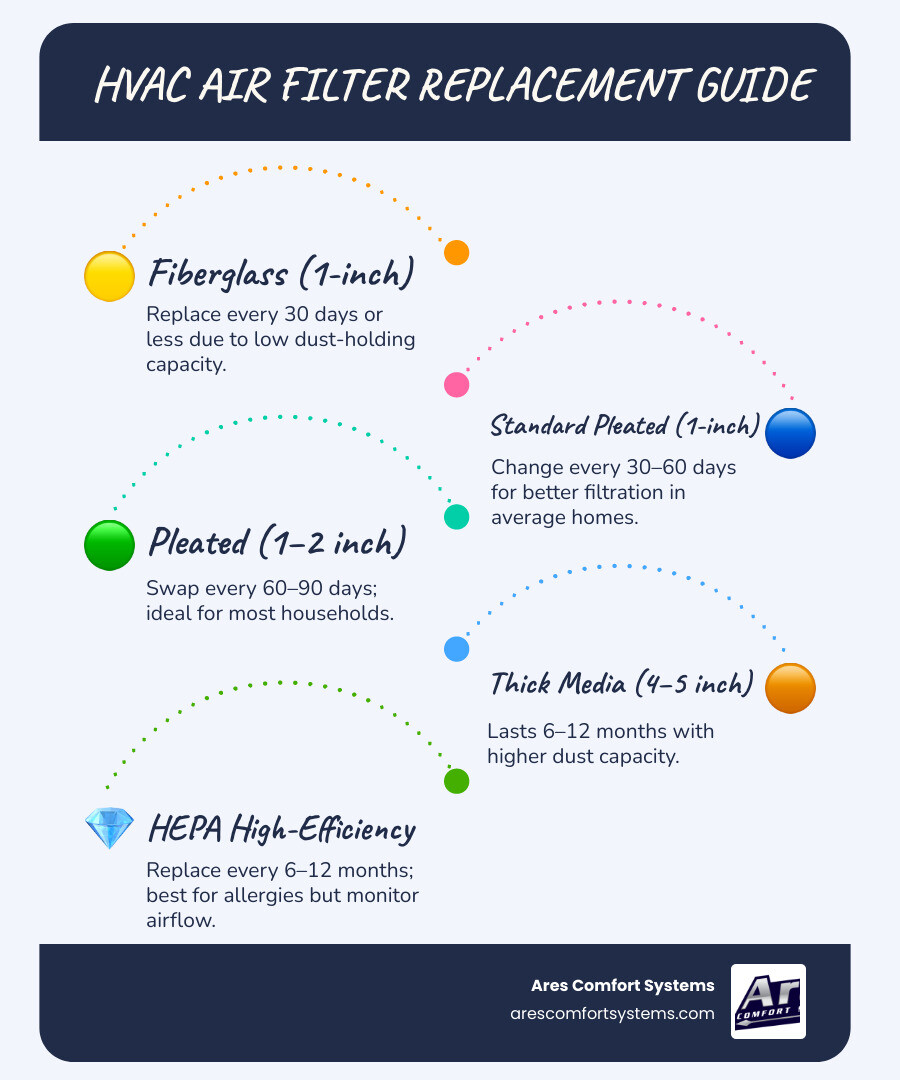
| Filter Type | Typical Replacement Frequency |
|---|---|
| Fiberglass (1-inch) | Every 30 days or less |
| Standard pleated (1-inch) | Every 30–60 days |
| Pleated (1–2 inch) | Every 60–90 days |
| Thick media filter (4–5 inch) | Every 6–12 months |
| HEPA-style high-efficiency | Every 6–12 months |
Adjust sooner if you have:
- Pets (especially heavy shedders)
- Allergy or asthma sufferers in the home
- Recent construction or renovation work
- Poor outdoor air quality or wildfire smoke events
At a minimum, most filters should be swapped out every 90 days — but many King County households need changes every 30–60 days depending on their specific conditions.
General Guidelines: How Often Should You Change Your HVAC Air Filter?
While the table above provides a solid baseline, the “real-world” answer depends heavily on the material of the filter and the demands of your household. In our experience serving the Puget Sound region, we’ve found that many homeowners treat their air filter as a “set it and forget it” component. However, the Department of Energy notes that replacing a dirty, clogged filter can increase your system’s efficiency by 5% to 15%.
Fiberglass Filters
These are the most basic, budget-friendly options. They are designed to protect the system’s internal components from large debris, but they aren’t great for air quality. Because they have very little surface area, they clog quickly. If you use these, you should change them every 30 days or less to maintain proper HVAC Maintenance.
Pleated Filters
Most modern homes in Lakewood and King County use pleated filters. These are made of polyester or cotton folds that provide more surface area to trap dust and allergens. A standard 1-inch pleated filter can last up to 90 days in a vacation home with little activity, but for an average occupied home, we recommend a 60-day check.
During peak seasons — the height of a chilly January or a record-breaking July heatwave — we suggest 30-day checks. Your system is running almost constantly during these times, meaning it is processing the entire volume of your home’s air dozens of times a day. This is why The Importance of Regular HVAC Maintenance cannot be overstated; a clean filter ensures your system doesn’t overheat during the days you need it most.
Key Factors: Pets, Allergies, and King County Air Quality
Living in Washington means we enjoy beautiful landscapes, but those landscapes come with environmental factors that impact your air filter. High pollen counts in the spring and the increasing frequency of wildfire smoke in late summer can turn a brand-new filter gray in just a few weeks.
If you are using our Air Conditioning Services during a smoky August, your filter is acting as the primary barrier between outdoor pollutants and your lungs. Once the smoke clears, you should inspect your filter immediately, as the fine particulate matter from wildfires is notorious for clogging filters much faster than standard household dust. Our full range of Services often starts with this simple check to ensure your indoor air remains breathable.
How Often Should You Change Your HVAC Air Filter with Pets or Allergies?
Pets are often called “filter killers” in the HVAC industry. One dog or cat can add roughly 30 days of “wear” to a filter’s lifespan due to fur shedding and dander. If you have multiple pets, your filter can become “carpeted” in fur in as little as three weeks.
For households with pets or residents suffering from asthma and allergies, the 90-day rule does not apply. We recommend 20-45 day intervals for filter changes. Using a high-MERV filter is essential here to capture triggers, and regular AC Maintenance Services can help ensure that dander isn’t bypassing the filter and settling into your ductwork.
Home Size and Occupancy Impacts
The size of your home also dictates how often should you change your hvac air filter. A large home with a powerful system circulates a massive volume of air. More air moved equals more dust trapped. Similarly, a household of five people will generate significantly more skin cells, lint, and dust than a single person living alone. If you have a high-occupancy home, you should lean toward the 30-to-60-day replacement window to keep your Heating Services running efficiently.
Understanding Filter Types, MERV Ratings, and Thickness
When you go to the store, you’ll see a MERV (Minimum Efficiency Reporting Value) rating on the packaging, usually ranging from 1 to 16. This rating tells you how well the filter captures small particles.
- MERV 1-4: Basic protection for the HVAC unit; low air quality benefits.
- MERV 8-11: The “sweet spot” for most King County homes. It balances high-quality filtration with good airflow.
- MERV 13-16: Hospital-level filtration. While great for air quality, these can be very restrictive.
Learning How to Maintain Your Heating and Cooling System Like a Pro involves finding a filter that captures pollutants without causing too much airflow resistance. If a filter is too “thick” in terms of its weave, your blower motor has to work twice as hard to pull air through it, which can lead to premature failure.
Does Filter Thickness Affect How Often Should You Change Your HVAC Air Filter?
Thickness is different from the MERV rating. A 1-inch filter has very limited surface area. However, many modern systems are designed with 4-inch or 5-inch media cabinets. These deep-pleat filters have a massive surface area, allowing them to hold a high volume of dust without restricting airflow.
These thicker filters are fantastic for longevity. While a 1-inch filter might need a swap every two months, a 4-inch media filter can often last 6 to 12 months. However, you cannot simply put a 4-inch filter into a 1-inch slot. If you’re interested in upgrading your filtration capacity to reduce maintenance frequency, our team can assist with HVAC Repairs and cabinet modifications to accommodate these high-capacity filters.
Signs and Consequences of a Clogged Filter
If you aren’t sure if it’s time for a change, use the “light test.” Hold your filter up to a bright light or a window. If the light doesn’t pass through the material easily, it is clogged with microscopic debris and needs to go.
Neglecting this task is one of the Essential HVAC Tasks to Do Every Spring that homeowners often skip, leading to serious consequences:
- Frozen Evaporator Coils: When airflow is restricted, the coils in your AC or heat pump can become too cold and actually freeze over into a block of ice.
- Blower Motor Strain: The “heart” of your system has to work harder to move air, leading to a burnt-out motor.
- Energy Bill Spikes: A system with a dirty filter has to run longer cycles to reach the temperature set on your thermostat.
- Musty Odors: Dirty filters can trap moisture and organic material, leading to a “dirty sock” smell throughout your home.
Following The Seasonal Cycle: When to Schedule Your Next HVAC Service ensures that a professional is checking these components, but the filter is your first line of defense between scheduled visits.
Frequently Asked Questions about Air Filter Maintenance
How can I tell if my filter needs replacing right now?
Beyond the light test, look for physical signs like dust buildup around your air vents, a noticeable decrease in airflow from your registers, or if your allergies seem to flare up specifically when you are indoors. If your energy bills have spiked unexpectedly, a dirty filter is often the first culprit to check.
Is it okay to wash a disposable pleated filter?
No. Disposable filters are made of paper and specialized fibers that degrade when they get wet. Washing them can lead to mold growth and will destroy the filter’s ability to trap small particles. Only filters explicitly labeled as “washable” or “permanent” should be cleaned with water.
Do high-efficiency filters need to be changed more often?
Usually, yes. Because high-efficiency filters (like those with a MERV 13 rating) have a tighter weave to catch smaller particles, they tend to “fill up” faster than lower-rated filters. If you switch to a higher MERV rating, monitor it weekly for the first month to see how quickly it accumulates dust in your specific environment.
Conclusion
Determining how often should you change your hvac air filter doesn’t have to be a guessing game. By considering your filter type, the number of pets you have, and the unique air quality challenges of King County, you can create a schedule that keeps your home healthy and your system happy.
At Ares Comfort Systems, we are dedicated to providing the Puget Sound region with expert care. Whether you need a quick repair or a comprehensive maintenance plan, we back all our work with a 100% satisfaction guarantee and our “Fixed Right Promise.” We’ve spent decades helping our neighbors in Lakewood and beyond breathe easier.
Don’t wait for your system to struggle. Schedule your professional HVAC Maintenance today and let our experienced technicians ensure your home stays comfortable all year long.