

Why How Heat Pumps Work and Why They Matter Is Worth Understanding
How heat pumps work and why they matter comes down to one simple idea: instead of burning fuel to create heat, a heat pump moves existing heat from one place to another using electricity. That single difference makes them dramatically more efficient than traditional heating and cooling systems.
Here is a quick breakdown:
- What they do: Heat and cool your home using one electric system
- How they work: They extract heat from outdoor air (or the ground) and move it inside in winter — then reverse the process in summer
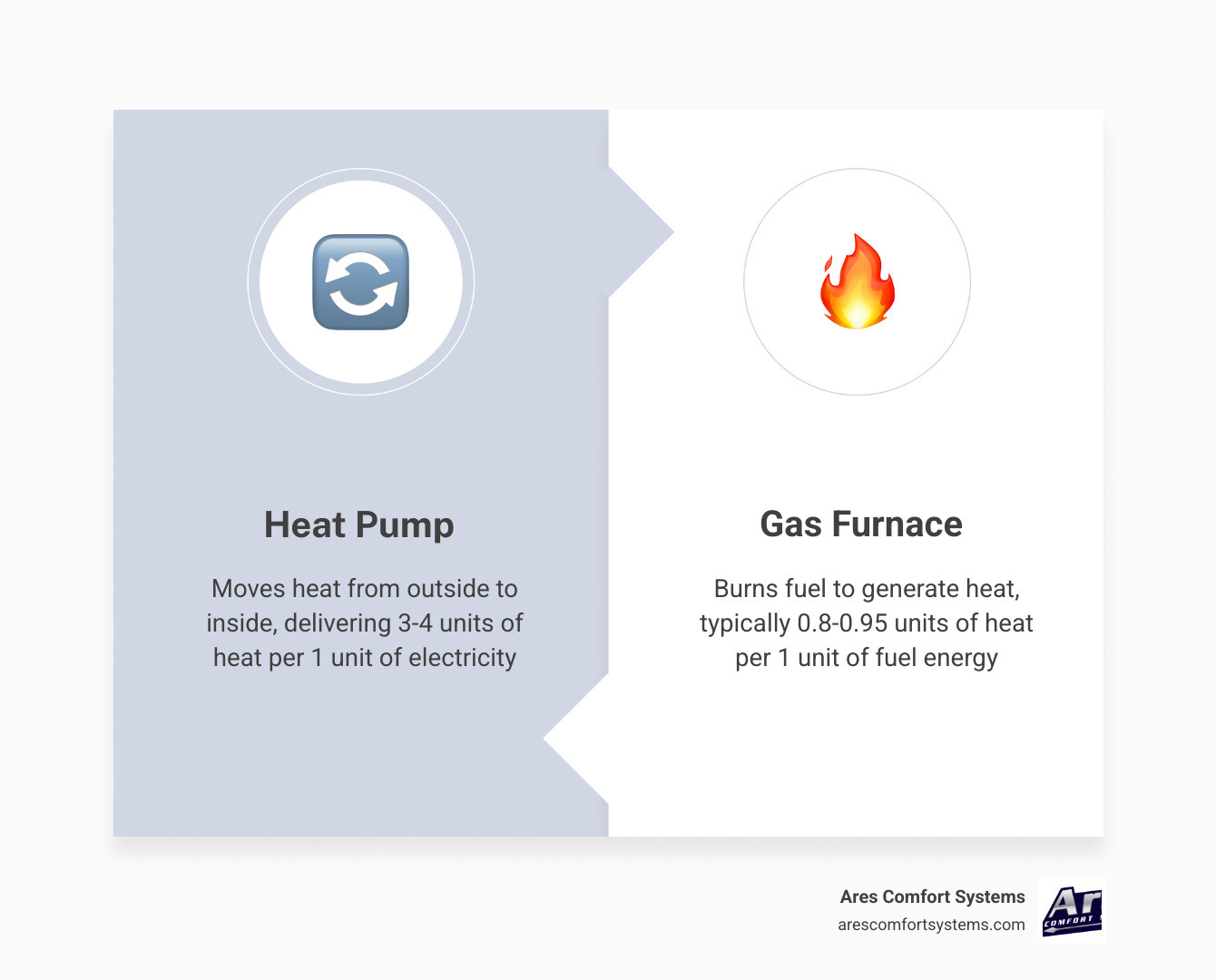
- Why they’re efficient: They move heat rather than generate it, delivering up to 3–4 units of energy for every 1 unit of electricity used
- Why they matter: They can cut home heating energy use by 60–70% and reduce carbon dioxide emissions by up to 75% compared to gas furnaces
If your heating and cooling system is aging, or your energy bills keep climbing, understanding heat pumps is a smart first step toward a better solution.
Understanding How Heat Pumps Work and Why They Matter
At its core, a heat pump is a heat transporter. While a furnace creates heat by burning natural gas or using electric resistance (think of a giant toaster), a heat pump simply shifts heat from where it is to where you want it to be. This is based on the second law of thermodynamics, which tells us that heat naturally flows from hotter areas to colder ones. By applying a little bit of work—via an electricity-powered compressor—we can reverse that flow.
The magic happens through the refrigeration cycle. This is the same technology that keeps your milk cold in the fridge or your car chilly in July. In a heat pump, a special fluid called refrigerant circulates through a closed loop of pipes. This refrigerant has a very low boiling point, allowing it to change from a liquid to a gas even at low temperatures.
When we talk about more info about heat pumps, we often emphasize that they are “all-in-one” systems. They replace both your air conditioner and your furnace, providing year-round comfort. Because they move heat rather than generating it from scratch, they can achieve efficiencies that seem to defy the laws of physics—often putting out three to four times as much energy as they consume in electricity.
The Science of How Heat Pumps Work and Why They Matter in Winter
You might wonder: “If it’s 35 degrees outside in Lakewood, how can a machine find heat to bring indoors?” It sounds counterintuitive, but even “cold” air contains a significant amount of heat energy. In scientific terms, absolute zero (where there is zero heat) is -459 degrees Fahrenheit. Anything warmer than that has heat that can be extracted.
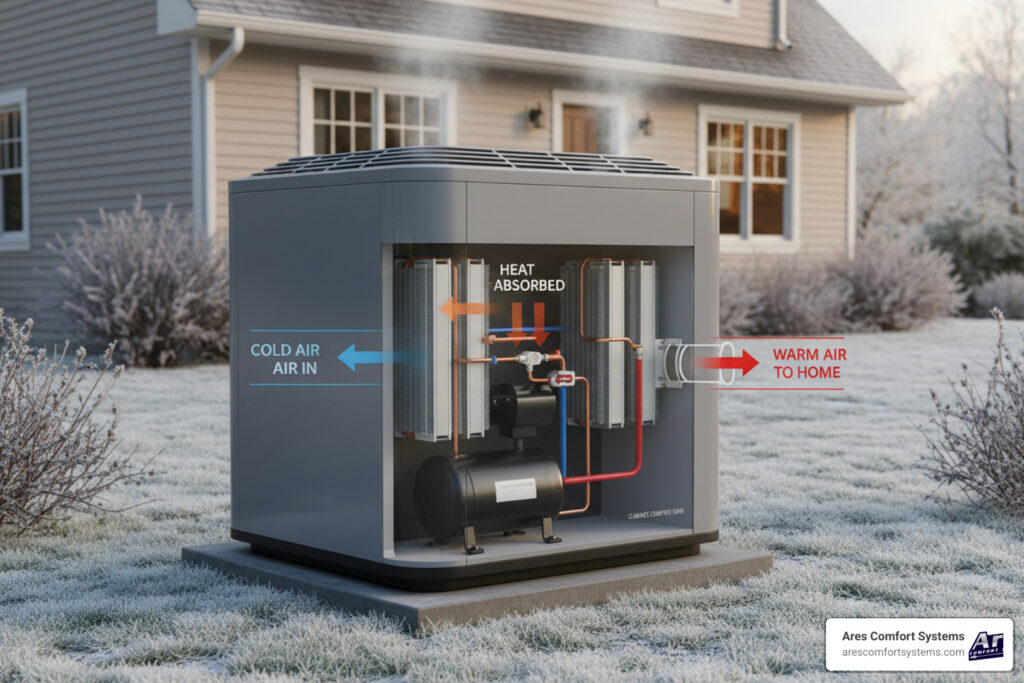
In the winter, the outdoor unit acts as an evaporator. The cold liquid refrigerant absorbs heat from the outdoor air, causing it to evaporate into a gas. This gas is then compressed, which causes its temperature to spike—much like how a bike pump gets hot when you use it quickly. This hot gas is then sent to the indoor unit, where it releases its warmth into your home.
For homes in our neck of the woods—from Pierce County up to King County—modern advancements have made these systems incredibly reliable. We often recommend ductless mini-split options for homes that don’t have existing ductwork. These systems use individual indoor heads to provide targeted warmth exactly where you need it, ensuring that even on a brisk Washington morning, your living room stays perfectly cozy.
How Heat Pumps Work and Why They Matter for Summer Cooling
When the summer sun hits the Puget Sound region, a heat pump doesn’t need to take a break. It simply flips a switch—literally. A component called a reversing valve changes the direction of the refrigerant flow. Now, the system acts exactly like a traditional air conditioner.
It “soaks up” the excess heat from inside your home and pumps it outdoors. During this process, the system also provides excellent dehumidification. As warm, humid indoor air passes over the cold indoor coils, moisture in the air condenses into water droplets, which are then drained away. This leaves your home feeling crisp and comfortable rather than sticky and muggy.
If you are looking for ductless AC services, a heat pump is often the most logical choice because it gives you that powerful cooling in the summer while remaining ready to switch back to heating the moment the autumn rains arrive.
The Mechanics: Key Components and the Refrigeration Cycle
To understand the “how,” we have to look at the “what.” A heat pump system relies on four primary components to keep the cycle moving:
- The Compressor: The “heart” of the system. It squeezes the refrigerant gas, raising its pressure and temperature.
- The Outdoor Coil: In winter, this acts as an evaporator (absorbing heat). In summer, it acts as a condenser (releasing heat).
- The Indoor Air Handler (or Coil): This is where the magic enters your home. Fans blow air across these coils to either pick up or drop off heat.
- The Expansion Valve: This acts as a regulator, lowering the pressure of the refrigerant so it can start the cycle all over again.
When we look at heating system services, we often compare these components to traditional setups to show homeowners the efficiency gap.
| Feature | Heat Pump | Gas Furnace | Electric Baseboard |
|---|---|---|---|
| Energy Source | Electricity | Natural Gas/Propane | Electricity |
| Operation | Moves Heat | Burns Fuel | Creates Resistance Heat |
| Efficiency | 300% – 400% | 80% – 98% | 100% |
| Carbon Emissions | Very Low | High | Moderate to High |
| Dual Function | Heats & Cools | Heating Only | Heating Only |
Exploring the Main Types of Heat Pump Systems
Not every home in Washington is built the same, which is why there are several configurations of heat pump technology available.
- Air-Source Heat Pumps: The most common type. They exchange heat between your indoor air and the outdoor air. They come in ducted versions (using your existing vents) and ductless versions.
- Geothermal (Ground-Source) Heat Pumps: These systems use the stable temperature of the earth (usually 50-60°F) as a heat source. They are incredibly efficient because the ground temperature doesn’t fluctuate as wildly as the air, though they require more intensive installation.
- Water-Source Heat Pumps: Similar to geothermal, but they use a nearby body of water (like a lake or well) to exchange heat.
- Hybrid (Dual-Fuel) Systems: These pair an electric heat pump with a gas furnace. The system automatically switches to the furnace during extreme cold snaps, though modern “cold climate” heat pumps have made this less necessary for many.
Regardless of the type, keeping these systems running smoothly is vital. We’ve put together a specialized maintenance guide to help local homeowners understand the unique needs of these high-tech machines.
Why Heat Pumps Are the Most Efficient Choice for Modern Homes
The statistics are hard to ignore. Residential heat pumps can reduce carbon dioxide emissions by up to 75% compared to gas furnaces. When heating buildings accounts for roughly 10% of global emissions, making the switch is one of the most impactful things a homeowner can do for the environment.
From a financial perspective, the 300% to 400% efficiency translates directly to lower utility bills. Because you are using one unit of electricity to “move” three or four units of heat, you are effectively getting “free” energy from the environment. A heat pump can cut your energy use for heating by 60 to 70% compared to traditional electric radiators or older furnaces.
To keep that efficiency at its peak, regular check-ups are a must. For those nearby, our Tacoma maintenance tips provide a lighthearted look at why skipping service can lead to a very chilly (and expensive) winter.
Frequently Asked Questions about Heat Pumps
We hear a lot of questions from our neighbors in Kitsap and Thurston Counties about whether this technology is truly ready for “prime time.” The short answer is: yes, and it has been for decades. However, the technology has improved significantly in the last five to ten years.
Modern systems now feature variable-speed compressors (also known as inverter technology). Unlike older units that were either “on” or “off,” these units can ramp up or down to meet the exact heating or cooling demand of the home. This prevents the “blast of hot air” followed by a cold draft, creating a much more consistent and comfortable indoor environment.
Understanding why maintenance is essential is the key to protecting this investment. A well-maintained system can last 15 to 25 years, providing reliable comfort through every Washington season.
Do heat pumps work well in cold climates?
This is perhaps the biggest myth we encounter. People often think heat pumps “quit” when it gets below freezing. While older models did struggle, modern cold climate heat pumps are designed specifically for northern regions. Many units can provide 100% of their heating capacity down to 5°F and continue operating efficiently even at -5°F or -13°F. In places like Norway and Sweden, heat pumps are the primary heating source for the majority of homes. Here in Western Washington, our relatively mild winters are actually the “sweet spot” for heat pump performance.
What are the environmental benefits of heat pumps?
Because they run on electricity, heat pumps get “greener” as our electrical grid moves toward renewable sources like wind, solar, and hydro. Unlike a gas furnace, which will always burn fossil fuels, a heat pump allows for a path to zero-emissions heating. Furthermore, they use 60-70% less energy overall, which reduces the total load on our power infrastructure.
How long do heat pump systems typically last?
An air-source heat pump typically lasts about 15 to 20 years, while the indoor components of a geothermal system can last 25 years or more (with the ground loops lasting 50+ years). The key to longevity is professional installation and regular maintenance. Much like a car, a heat pump has moving parts—fans, compressors, and valves—that need to be inspected and cleaned to prevent premature wear and tear.
Conclusion
At Ares Comfort Systems, we believe that how heat pumps work and why they matter is a conversation every homeowner should have. We are proud to serve Lakewood, King County, Pierce County, Thurston County, and Kitsap County with expert HVAC solutions backed by our 100% satisfaction guarantee and our “Fixed Right Promise.”
With decades of experience and our specialized Comfort Service Agreements, we make it easy to transition to the future of home comfort. We don’t just fix heaters; we help our neighbors build more efficient, comfortable, and sustainable homes.
Ready to see the difference for yourself? Upgrade to an energy-efficient heat pump today and start saving on your energy bills while enjoying the best indoor climate technology has to offer. (WA LIC # ARESCCS766CA)