



Why Your Spring HVAC Maintenance Checklist Can’t Wait
A spring hvac maintenance checklist is a set of seasonal tasks — both DIY and professional — that prepare your heating and cooling system for the demands of summer. Here’s a quick overview of the essential steps:
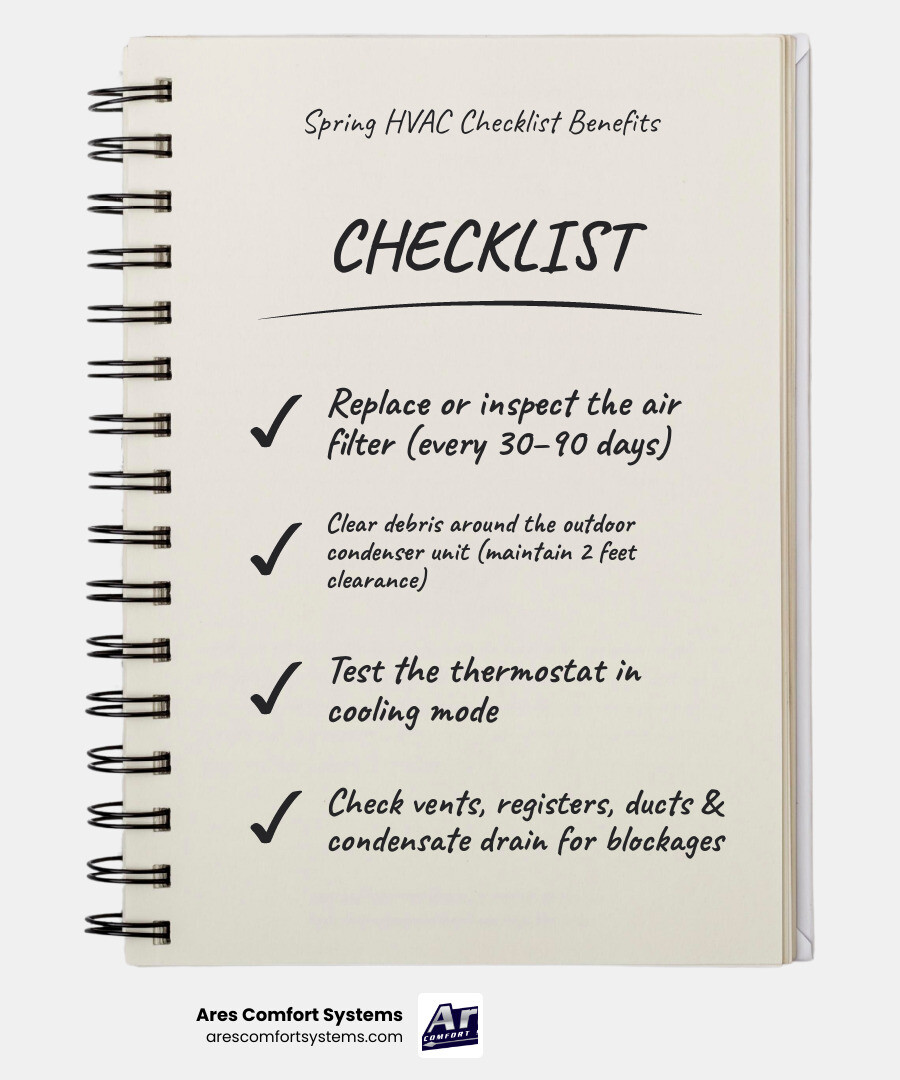
- Replace or inspect the air filter (every 30–90 days)
- Clear debris around the outdoor condenser unit (maintain at least 2 feet of clearance)
- Test the thermostat in cooling mode
- Check vents and registers for blockages or dust buildup
- Inspect visible ductwork for gaps or leaks
- Clear the condensate drain line to prevent clogs and water damage
- Schedule a professional tune-up for refrigerant checks, coil cleaning, and electrical testing
Most homeowners shift their attention to outdoor projects as temperatures rise — but the HVAC system quietly sitting in the background deserves attention too. After months of winter dormancy, your air conditioner can develop issues like clogged drain lines, worn capacitors, and dirty coils that only reveal themselves once the heat arrives. By then, HVAC technicians are booked weeks out, and a minor problem can turn into a costly breakdown on the hottest day of the year.
The good news? A little proactive care in spring goes a long way. In the average home, 20–30% of conditioned air escapes through duct cracks alone — and a dirty filter can quietly drive up energy bills while straining your equipment. Catching these issues early keeps your system running efficiently and your home comfortable all summer long.
Why Spring is the Best Time for Your Spring HVAC Maintenance Checklist
In the Pacific Northwest, we know that spring weather can be a bit of a rollercoaster. One day it’s “big coat” weather in Lakewood, and the next, you’re opening the windows to catch a breeze. This “shoulder season” is actually the perfect window of opportunity for your spring hvac maintenance checklist.
Why now? For starters, the mild weather allows you to test your cooling system without the pressure of a triple-digit heatwave. If something isn’t working quite right, you have plenty of time to address it before the summer rush. By late May, most reputable HVAC companies are booked two to four weeks out. Scheduling your service in March or April ensures you get a technician at a time that works for you, rather than waiting in a sweltering house for an emergency repair.
Furthermore, The Importance of Regular HVAC Maintenance cannot be overstated when it comes to post-winter wear. During the damp Washington winters, debris like pine needles, sodden leaves, and even small pests can find their way into your outdoor unit. If left unaddressed, these can cause airflow problems that reduce system efficiency by up to 15 percent. Why Puyallup Homeowners Need Regular AC System Maintenance often comes down to this: a system that is cleaned and tuned in the spring uses less energy, which translates directly to lower utility bills when the cooling season hits its peak.
Essential DIY Steps for Your Spring HVAC Maintenance Checklist
While some tasks require a pro, there is plenty you can do yourself to keep things humming. Before you start, safety is the top priority. Always turn off the power to your HVAC system at the thermostat and the breaker box before performing any physical maintenance. Having a few basic tools on hand—like a screwdriver, a soft-bristle brush, and a garden hose—will make the process much smoother. Keeping up with HVAC Maintenance doesn’t have to be a chore if you tackle it one step at a time.
Replacing Air Filters for Better Airflow
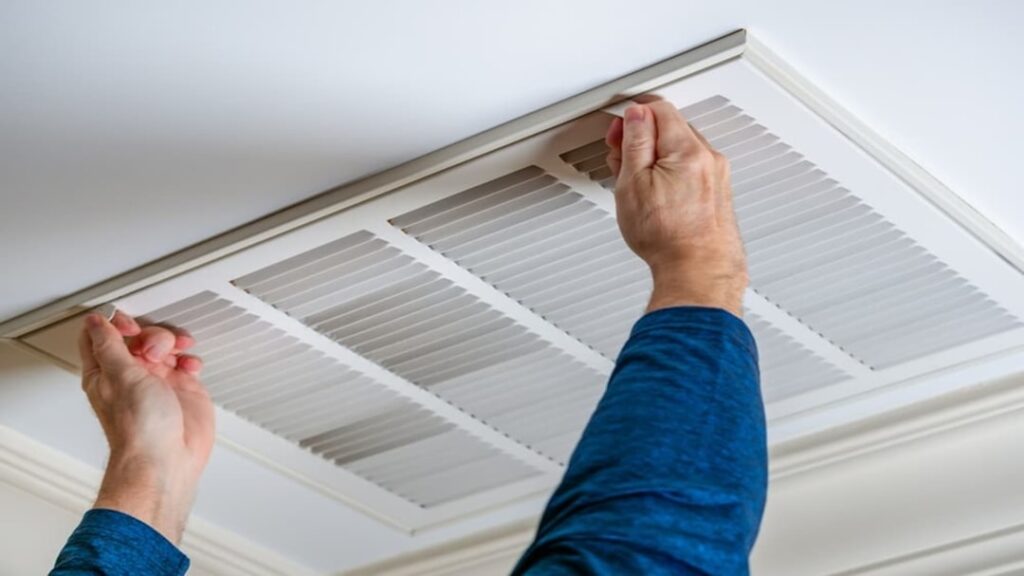
The single most important DIY task on your spring hvac maintenance checklist is checking your air filter. In the average home, filters should be replaced every 30 to 90 days. However, if you have pets that shed or family members with allergies, you might need to swap them out every month.
When choosing a filter, look at the MERV (Minimum Efficiency Reporting Value) rating. For most residential systems in our area, a MERV 8 to 11 provides an excellent balance between trapping dust and allowing proper airflow. A filter that is too “thick” (high MERV) can actually strain your blower motor if the system isn’t designed for it. Seasonal AC Maintenance Tips for Puyallup’s Changing Weather emphasize this because Washington’s spring pollen can quickly clog a filter, leading to restricted airflow and higher energy costs. A simple trick: hold your filter up to a light. If you can’t see light passing through it, it’s time for a new one.
Cleaning and Preparing the Outdoor Condenser Unit
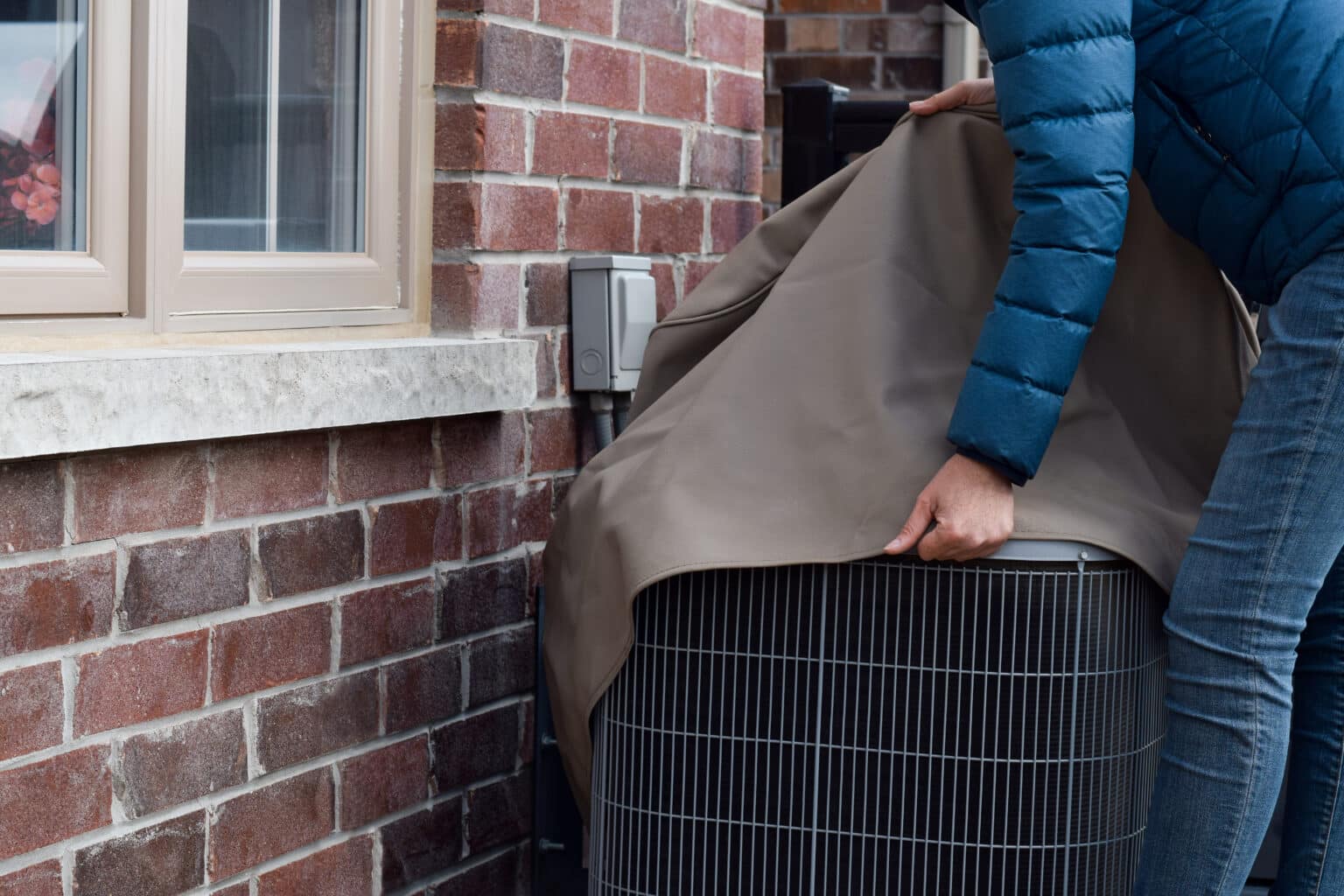
Your outdoor unit (the condenser) has been sitting out in the rain and wind all winter. To ensure it can “breathe” properly, start by clearing away any tall grass, weeds, or fallen branches. You should maintain at least a two-foot clearance around the entire unit.
Next, check the aluminum fins on the sides of the unit. These can get clogged with dirt and pollen. You can gently rinse them with a garden hose—but never use a pressure washer, as the high-pressure stream can bend the delicate fins and ruin the unit. If you see bent fins, a “fin comb” from a hardware store can help straighten them out. Ensuring this unit is clean is a core part of AC Maintenance Services. If you find significant damage or a pest infestation inside the cabinet, it’s time to call in the experts. Your Local Guide to Finding a Reliable AC Maintenance Contractor can help you find someone to handle the heavy lifting.
Testing the Thermostat and Clearing Vents
Testing your thermostat early is a great way to avoid a “no-cool” surprise in July. Switch your thermostat to “Cool” mode and set the temperature about five degrees below the current room temperature. You should hear the indoor blower kick on and, shortly after, feel cool air coming from the registers.
While you’re walking through the house, check every vent and return air register. Make sure they aren’t blocked by furniture, curtains, or “dust bunnies” that may have hibernated under the couch. Lakewood AC Tune-Up: Why Your System Needs a Seasonal Checkup often highlights that blocked vents cause uneven cooling and put unnecessary pressure on your ductwork.
| Thermostat Type | Efficiency Level | Key Benefit |
|---|---|---|
| Manual | Low | Low upfront cost, but easy to forget to adjust. |
| Programmable | Medium | Can save up to 10% on energy bills with pre-set schedules. |
| Smart | High | Learning algorithms and remote control for maximum savings. |
If your thermostat still uses batteries, spring is the perfect time to replace them to prevent a mid-summer system shutdown.
Professional Services Included in a Spring HVAC Maintenance Checklist
While DIY steps are great for day-to-day care, a comprehensive spring hvac maintenance checklist requires a professional eye at least once a year. Modern HVAC systems are complex machines with high-voltage electrical components and pressurized refrigerants. A professional HVAC Inspection goes deep into the parts of the machine that homeowners shouldn’t touch. Staying on top of your Category: Maintenance ensures your warranty remains valid and your system reaches its full 10–15 year lifespan.
Refrigerant Levels and Electrical Component Testing
One of the most critical parts of a pro tune-up is checking the refrigerant charge. Refrigerant doesn’t “get used up” like gas in a car; if it’s low, that means there is a leak. A technician will use specialized gauges to ensure the levels are exactly where the manufacturer intended. Too much or too little refrigerant can drastically increase energy bills and eventually kill your compressor—a part that can cost thousands to replace.
Technicians also focus on the electrical “heart” of your system. They check the capacitor (which helps the motor start) and tighten all electrical connections. In our damp climate, Why Your Lakewood Heat Pump is Begging for Maintenance often comes down to preventing corrosion on these vital wires. A loose connection can cause a short circuit or even become a fire hazard.
Deep Coil Cleaning and System Lubrication
The indoor evaporator coil and the outdoor condenser coil are where the actual heat exchange happens. If these coils are coated in a layer of dust or grime, your system has to work twice as hard to move heat out of your home. Professionals use specialized chemical cleaners to dissolve this buildup safely.
They will also inspect and clear the condensate drain line. As your AC runs, it pulls gallons of water out of the air every day. This water needs to flow out of the house. If the line is clogged with algae or sludge, it can back up and cause massive water damage to your floors or ceiling. The Lakewood Guide to Specialized Heat Pump Maintenance includes flushing these lines to keep your home dry and mold-free. Finally, the technician will lubricate all moving parts, such as motor bearings and fan blades. This reduces friction, which lowers energy consumption and stops those annoying squeaks and rattles. After all, Tacoma Heat Pump Maintenance: Because Shivering is Not a Hobby, and neither is listening to a noisy, struggling machine!
Recognizing Signs Your System Needs Immediate Service
Even with a solid spring hvac maintenance checklist, sometimes things go wrong. It’s important to know when a DIY fix isn’t enough and you need to call for backup. If you notice any of the following, turn off your system and call a professional immediately:
- Warm Airflow: If the air coming out of your vents is lukewarm even when the thermostat is set to “Cool,” you likely have a refrigerant leak or a failed compressor.
- Ice on the Lines: Seeing frost or ice on the copper refrigerant lines (even when it’s hot outside) is a major red flag. This usually indicates a serious airflow restriction or low refrigerant.
- Unusual Noises: Grinding, squealing, or loud banging sounds mean a part has come loose or a motor is failing.
- Frequent Cycling: If your AC turns on and off every few minutes (short-cycling), it’s under extreme stress and will likely break down soon.
- Burning Smells: Any metallic or burning odor coming from the vents could indicate an electrical problem.
- Tripped Breakers: If your HVAC system is repeatedly tripping the circuit breaker, it is drawing too much power and needs an urgent safety inspection.
- Water Leaks: Standing water around your indoor unit means the condensate drain is blocked and could lead to mold growth.
Frequently Asked Questions About Spring HVAC Care
How often should air filters be replaced?
For most homes in King and Pierce County, we recommend checking your filter once a month. You should replace disposable filters every 1 to 3 months. If you have multiple pets, live near a construction site, or have severe allergies, you should lean toward the 30-day mark. A clean filter is the easiest way to improve indoor air quality and protect your equipment.
What are the risks of skipping annual maintenance?
Skipping your spring hvac maintenance checklist is a bit like never changing the oil in your car. In the short term, you’ll see higher energy bills as the system struggles to perform. In the long term, you risk expensive emergency repairs—like a $2,000 compressor replacement—that could have been avoided with a $100 tune-up. Furthermore, many manufacturer warranties require proof of annual professional maintenance to honor claims.
When should I schedule my professional tune-up?
The best time is “now.” Specifically, March and April are the ideal months for the Pacific Northwest. By scheduling before the first real heatwave hits in late May or June, you avoid the seasonal rush, ensure better technician availability, and can rest easy knowing your home is ready for whatever the Washington summer throws at it.
Conclusion
Taking the time to run through a spring hvac maintenance checklist is the smartest move a homeowner can make for their comfort and their wallet. Whether it’s a simple filter swap or clearing away the winter debris from your outdoor unit, these proactive steps ensure your system runs efficiently and lasts for years to come.
At Ares Comfort Systems, we believe that an ounce of prevention is worth a pound of cure. We back our work with a 100% satisfaction guarantee and our “Fixed Right Promise,” drawing on decades of experience serving our neighbors in Lakewood, Tacoma, and throughout the surrounding counties. If you want to take the guesswork out of your seasonal care, our Comfort Service Agreements offer a hassle-free way to stay on schedule while enjoying exclusive discounts.
Don’t wait for the first heatwave to find out if your AC is up to the task. Contact us today to schedule your Spring HVAC Maintenance and step into summer with total peace of mind. (WA LIC # ARESCCS766CA)