



The Real Ductless AC vs Window Unit Comparison: Which One Actually Works Better?
A ductless ac vs window unit comparison comes down to a few key factors: efficiency, noise, installation, and long-term performance. Here’s a quick look at how the two systems stack up:
| Feature | Ductless Mini-Split | Window AC Unit |
|---|---|---|
| Efficiency | 20-35 SEER2 | 8-15 EER |
| Noise Level | 19-35 dB (whisper quiet) | 50-65 dB |
| Lifespan | 15-20 years | 5-10 years |
| Heating Capability | Yes (heat pump) | Rarely |
| Installation | Professional required | DIY-friendly |
| Blocks Window | No | Yes |
| Multi-Room Cooling | Yes (up to 8 zones) | No (single room) |
| Home Security | High (3-inch wall hole) | Lower (removable unit) |
| Best For | Homeowners, long-term use | Renters, temporary setups |
Millions of homes — especially in the Northeast — have relied on window air conditioners for generations. You know the routine: drag the unit out of storage, wedge it into the window, lose your view and your natural light until fall. It works, but it’s far from ideal.
Ductless mini-splits offer a different approach entirely. Instead of blocking your windows and rattling all night, they mount cleanly on your wall, run quietly in the background, and can heat your home in winter too. The tradeoff is the requirement for professional installation.
So which system is actually right for your home? The answer depends on how long you plan to stay, how many rooms you need to cool, and what you value most — simplicity today or long-term efficiency.
Understanding the Systems: How They Work
When we talk about staying cool in King County or Pierce County, we usually look at two main contenders that don’t require massive renovation. Both systems aim to remove heat from your indoor air and dump it outside, but they go about it in very different ways.
What is a Ductless Mini-Split?
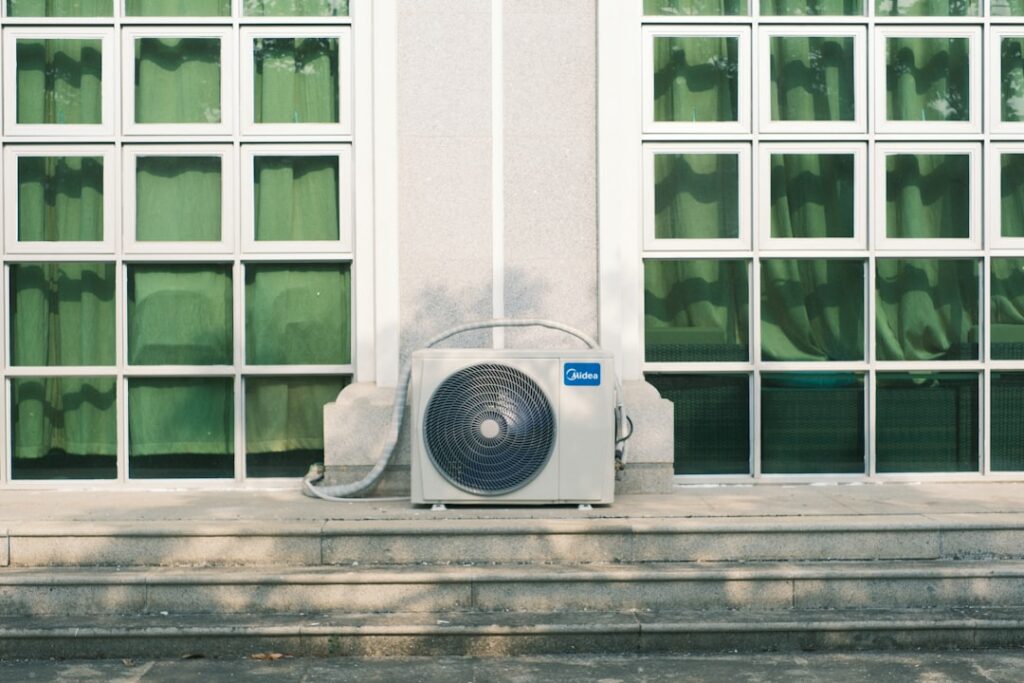
A ductless AC is essentially a “split” system. Unlike a central unit that uses bulky ducts, these systems use an indoor air handler connected to an outdoor condenser via small refrigerant lines.
The “mini” part refers to the compact size of the indoor units, which can be mounted high on a wall, recessed into a ceiling, or even placed near the floor. Because they use inverter technology, the compressor can speed up or slow down based on the exact cooling demand. This is much like a dimmer switch for your lights; instead of being “all on” or “all off,” mini splits provide just the right amount of cooling to maintain a steady temperature.
This technology allows for zoned cooling. You can have one outdoor unit supporting multiple indoor air handlers, each with its own thermostat. If you want the bedroom at 68 degrees but the guest room at 74, a ductless system makes it happen without breaking a sweat.
How Window AC Units Work
Window units are “self-contained” appliances. Everything needed to cool your room—the compressor, the fans, the evaporator coils, and the condenser—is packed into a single box that sits on your windowsill.
They work by pulling in warm indoor air, passing it over cold coils to remove heat and moisture, and then blowing the chilled air back into the room. The heat extracted from your home is blown out the back of the unit into the great outdoors. While they are famous for being portable and easy to buy at a big-box store, they generally use fixed-speed compressors. This means they are either running at 100% capacity or they are off, which often leads to “temperature swings” where the room gets too cold, then too warm, before the unit kicks back on with a loud clatter.
For many air conditioning needs in smaller apartments, these are the go-to choice because they require zero permanent modifications to the structure.
The Ultimate ductless ac vs window unit comparison
Choosing between these two is about more than just the temperature on the thermostat. It’s about how you use your home. When we perform air conditioning services for our neighbors in Lakewood and Thurston County, we often see homeowners frustrated by the limitations of window units.
Performance Metrics in a ductless ac vs window unit comparison
Efficiency is the biggest differentiator here. Most homes with traditional ductwork lose 20-30 percent of their cooling capability through leaks and poor insulation in the ducts themselves. Ductless systems skip the ducts entirely, delivering 100% of the cold air directly into your living space.
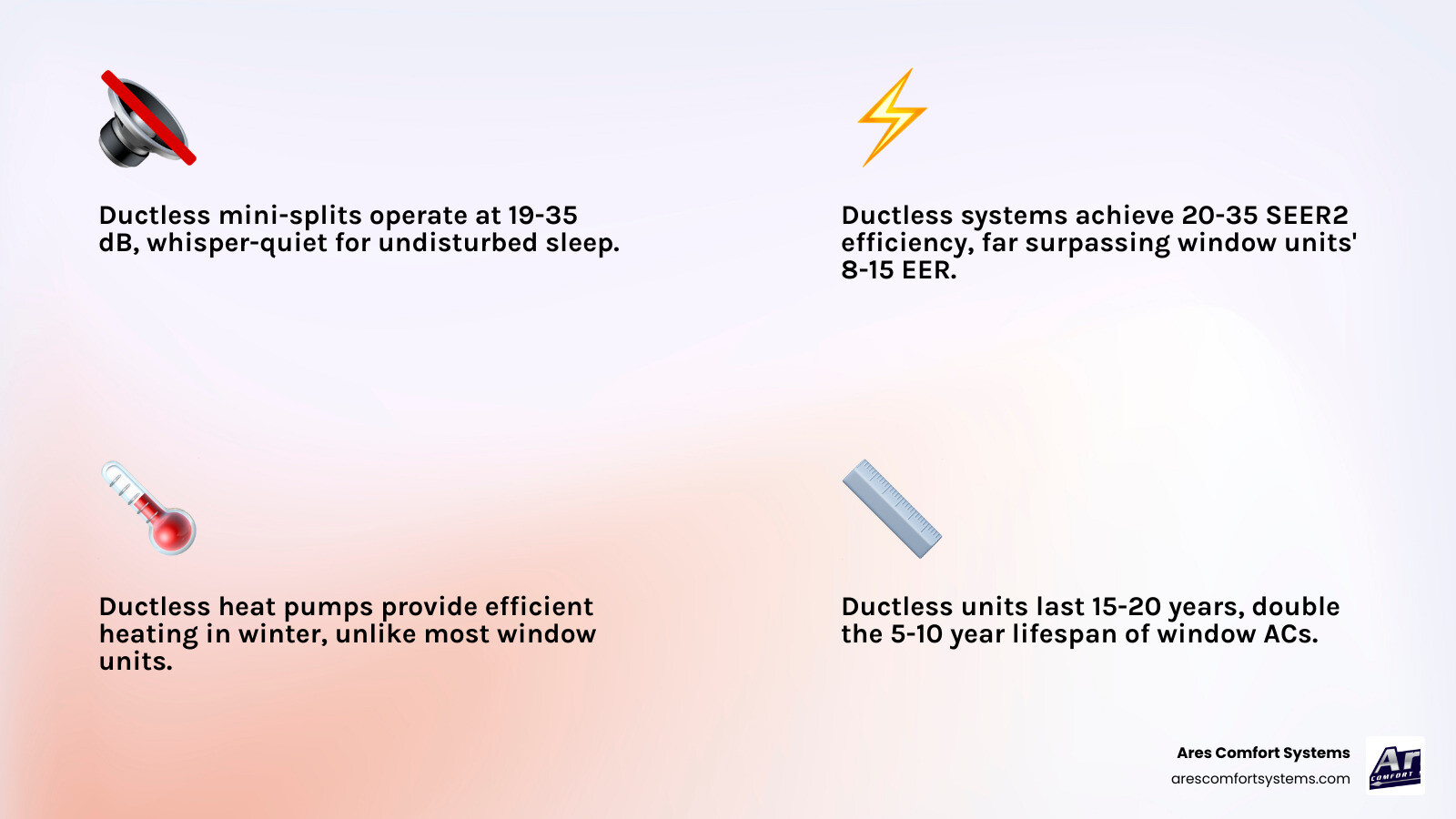
In a head-to-head ductless ac vs window unit comparison, mini-splits consistently come out on top with SEER2 (Seasonal Energy Efficiency Ratio) ratings that can reach as high as 35. Window units typically hover between 8 and 15 EER. Because mini-splits use variable-speed motors, they don’t waste energy with constant “stop-and-start” cycles. Over a decade of ownership, the efficiency gains from a high-performance mini-split can be substantial, making it a highly effective choice for long-term residents.
When you look at AC services, you also have to consider cooling capacity. While a window unit might struggle to cool a large, open-concept living room, a multi-zone ductless system can handle an entire floor with ease.
Noise Levels and Indoor Comfort
If you’ve ever had to turn up the TV volume just to hear over your window AC, you know exactly what we’re talking about. Window units house the compressor—the loudest part of the system—right in your window. This creates noise levels between 50 and 65 decibels, which is roughly equivalent to a loud conversation or a vacuum cleaner running in the next room.
Ductless units move the “noisy bits” (the compressor and condenser) outside. The indoor air handler is whisper-quiet, often operating at 19 to 35 decibels. That is quieter than a library or even a soft whisper. This makes them ideal for bedrooms, home offices, and nurseries where peace and quiet are a priority.
Furthermore, ductless systems are master dehumidifiers. By running at lower speeds for longer periods, they pull more moisture out of the air than a window unit that cycles on and off rapidly. This results in a “crisp” cool feeling rather than the “clammy” cold often associated with cheaper units.
Installation, Maintenance, and Long-Term Performance
How these systems enter your home is just as important as how they run. One is a weekend project; the other is a permanent home upgrade.
Professional Installation vs. DIY
A window unit is the king of DIY. You open the window, lift the heavy box (careful with your back!), slide out the side panels, and plug it in. However, this comes with risks. Improperly secured window units are a safety hazard, and they create a significant security weak point in your home.
AC installation for a ductless system requires a professional touch. We have to handle refrigerant lines, electrical connections, and ensure the outdoor unit is perfectly leveled. The good news? The only modification to your home is a small, 3-inch hole in the exterior wall to pass the conduit through. Your windows remain completely functional, allowing you to enjoy natural light and fresh air whenever you want.
Because mini-splits involve complex electronics and pressurized refrigerant, professional installation is usually required to keep the manufacturer’s warranty intact. At Ares Comfort Systems, we ensure every installation meets local codes and operates at peak efficiency from day one.
Maintenance and System Lifespan
If you treat a window unit well, you might get 5 to 8 years out of it. Most people, however, find that they start to rattle and lose cooling power much sooner. They are also prone to mold growth if not cleaned meticulously, and storing them in a dusty garage over the winter doesn’t help.
Ductless systems are built for the long haul. With proper AC maintenance services, a mini-split can easily last 15 to 20 years. Maintenance is straightforward: homeowners should clean the filters every few weeks, and a professional should perform a deep clean and system check once a year.
If a window unit breaks, it’s usually destined for the recycling center. If a ductless system has an issue, AC repairs are a standard part of HVAC service, allowing you to fix a single component rather than replacing the entire system.
Choosing the Right System for Your Space
Still not sure which way to go? Let’s look at the “Who” and “Where.”
Renter Flexibility vs. Homeowner Investment
If you are renting an apartment in Kitsap County and your landlord won’t budge on HVAC upgrades, a window unit is your best friend. It’s yours, it’s portable, and it goes with you when you move.
However, if you own your home, a ductless system is a true investment. It adds a permanent enhancement to the property, much like a kitchen remodel or a new roof. It’s also the perfect solution for:
- Home Additions: No need to resize your central furnace or add ductwork.
- Garages and Workshops: Turn a sweltering garage into a comfortable workspace.
- Attics and Basements: These areas are notoriously hard to cool with central air but are easily handled by a dedicated ductless zone.
Final Verdict: A ductless ac vs window unit comparison for Your Home
While window units are great for a “quick fix,” they are a temporary solution to a permanent problem. They block your view, invite burglars, and hike up your energy bills with inefficient operation.
A ductless mini-split is a year-round climate solution. Most models we install are actually heat pumps. This means they don’t just cool; they can provide highly efficient heating during our chilly Washington winters. In fact, heat pumps are significantly more efficient than electric baseboard heaters or portable space heaters, providing superior climate control throughout the year.
Frequently Asked Questions about Ductless and Window ACs
Which system is better for home security?
Window units are a significant security risk. A determined intruder can often push the unit into the room or pull it out from the outside, leaving an open window for easy entry. Ductless systems are much more secure. The only connection between the inside and outside is a 3-inch hole that is completely filled with refrigerant lines and cables, making it impossible for someone to use as an entry point.
Do ductless mini-splits provide better air quality?
Yes, significantly so. Window units often pull in a small amount of outside air or struggle with moisture buildup on the internal fans, which can lead to mold and “musty” smells. Ductless systems feature multi-stage filtration that captures dust, pollen, and allergens. Because there are no ducts, you also avoid the accumulation of pet dander and debris that can hide in traditional ventilation systems.
Can ductless systems provide heating in the winter?
Most modern ductless mini-splits are heat pumps. They can reverse the cooling process to pull heat from the outside air and move it indoors. Even in the cold climates of King and Kitsap County, high-performance models (like the Mitsubishi Hyper-Heating series) can provide effective heat even when temperatures drop below zero. This gives you two appliances in one: an air conditioner for the summer and a furnace-alternative for the winter. In fact, heat pumps are significantly more efficient than electric baseboard heaters or portable space heaters, providing superior climate control throughout the year.
Conclusion
At Ares Comfort Systems, we believe your windows should be for looking outside, not for holding up heavy, noisy machinery. Whether you are looking to cool a single room or your entire home, we are here to help you find the perfect fit.
With our Fixed Right Promise and 100% satisfaction guarantee, we bring decades of experience to every home in Lakewood, King, Pierce, Thurston, and Kitsap Counties. We don’t just install equipment; we provide long-term comfort through our Comfort Service Agreements, ensuring your system runs efficiently for its entire 20-year lifespan.
Ready to reclaim your view and upgrade your comfort? Schedule your ductless AC consultation today and let us show you why so many Washington homeowners are making the switch to ductless.