



Why Ductless AC Benefits for Homeowners with Older Properties Are Worth Knowing
Ductless AC benefits for homeowners are changing the way people think about comfort in older homes. If your house was built before central air conditioning became standard, you already know the struggle: rooms that overheat in summer, no good place to run ductwork, and renovation work that could damage the character of your home.
Here’s a quick look at the key benefits:
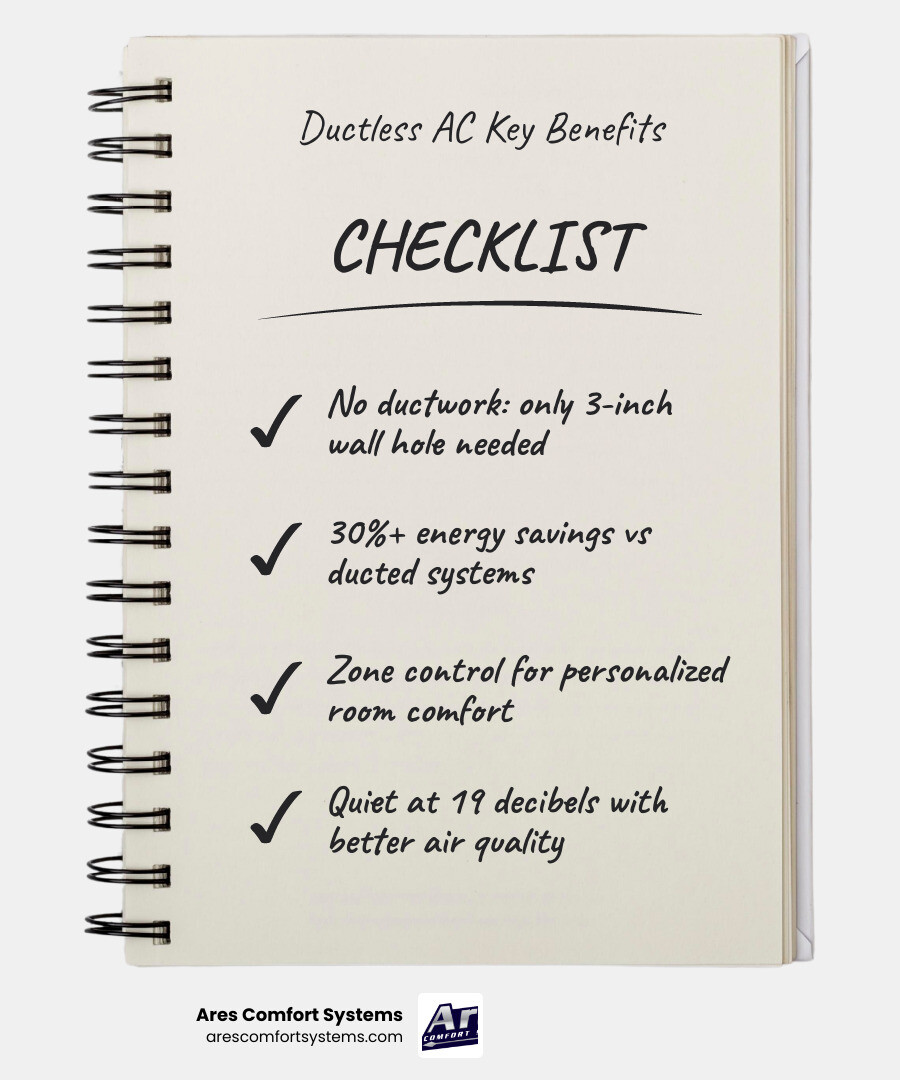
- No ductwork needed – installation requires only a small hole in the wall
- Energy efficient – eliminates the 30%+ energy loss common in ducted systems
- Zone control – heat or cool individual rooms independently
- Quiet operation – indoor units run as low as 19 decibels
- Dual function – provides both heating and cooling year-round
- Longer lifespan – well-maintained systems last 20 to 30 years
- Better air quality – multi-stage filtration removes dust and allergens
- Minimal disruption – preserves original walls, ceilings, and trim
Older homes present a real challenge for HVAC. Tight crawl spaces, plaster walls, and historic woodwork make traditional duct installation costly, invasive, and sometimes impossible without compromising what makes the home special. Ductless mini-split systems offer a path forward that respects the architecture while delivering modern comfort.
Understanding the Ductless Mini-Split System
At its core, a ductless system—often called a mini-split—is a high-efficiency heating and cooling solution that does away with the need for bulky metal ducts. If you’ve ever lived in a classic Lakewood or King County home with baseboard heaters or a noisy window AC, you know that traditional methods often leave much to be desired.
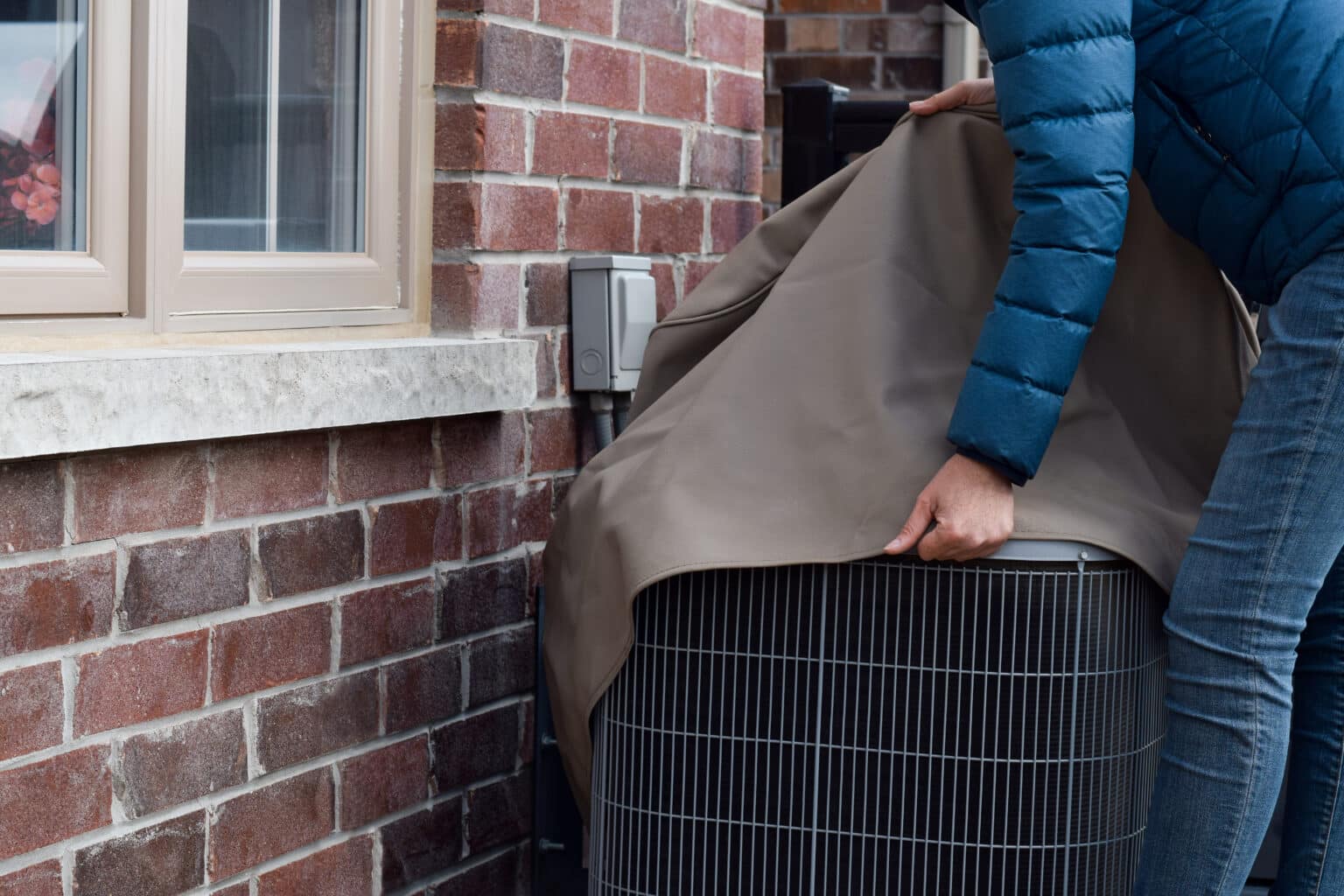
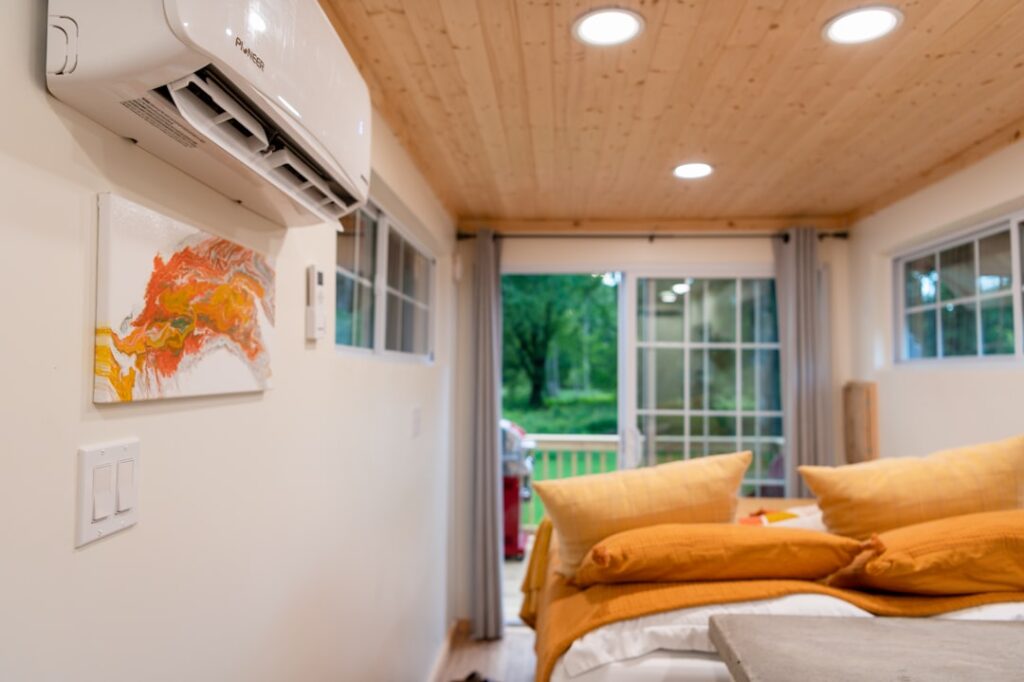
A typical mini-splits setup consists of two primary parts: an outdoor compressor (or condenser) and one or more indoor air-handling units. These are connected by a small conduit that houses the power cable, refrigerant tubing, and a condensate drain.
What makes these systems so for older properties is the technology inside. Modern ductless-acs utilize inverter technology. While a traditional central AC is either “all on” or “all off”—much like a light switch—an inverter-driven system is more like a dimmer switch. It adjusts the compressor speed to meet the exact cooling or heating demand of the room. This avoids the energy-wasting “stop-and-start” cycle and provides much more consistent temperatures.
Furthermore, these systems function as heat pumps. This means they don’t just “create” cold air; they move heat from one place to another. In the summer, they pump heat out of your house; in the winter, they reverse the process to bring warmth inside.
How Ductless AC Benefits for Homeowners Work in Practice
In a vintage home, the air-conditioning process needs to be as non-invasive as possible. Since there is no ductwork to lose energy, the conditioned air is delivered directly into the living space.
Installation typically involves a single three-inch hole in the wall to connect the indoor and outdoor components. This means we don’t have to tear down your lath-and-plaster walls or drop your beautiful high ceilings to hide duct runs. It allows for targeted cooling—you only condition the rooms you are actually using, which is a massive upgrade over cooling an entire three-story Victorian just to sleep comfortably in one bedroom.
Top Ductless AC Benefits for Homeowners with Older Properties
Energy Efficiency and Savings
One of the most significant ductless ac benefits for homeowners is the sheer efficiency of the system. According to Energy Star, traditional ducted systems can lose more than 30% of their energy through leaks and poorly insulated ductwork. By delivering air directly, ductless systems eliminate this waste entirely.
Many modern units boast SEER (Seasonal Energy Efficiency Ratio) ratings as high as 42, which is significantly higher than the 13 to 20 range found in most central hvac systems. This efficiency translates directly to lower monthly utility bills, with some homeowners seeing up to a 40% reduction in energy costs.
Zone Control and Personalized Comfort
Have you ever had a “thermostat war” in your house? In older homes, the upstairs is often sweltering while the basement is a walk-in freezer. With a ductless ac-installation, you gain independent “zones.” Each indoor unit has its own thermostat. You can keep the kitchen cool while you’re cooking, set the nursery to a steady warmth, and turn off the unit in the guest room entirely.
Operational Lifespan
While a standard central AC unit typically lasts about 12 to 15 years, a well-maintained ductless system can last between 20 and 30 years. This long-term durability makes it a smart investment for homeowners looking to stabilize their home’s climate for the next few decades.
Preserving Architectural Integrity with Minimal Disruption
For those of us in the Pacific Northwest who cherish our historic architecture, the biggest fear is the “soffit.” In many central AC retrofits, contractors have to build bulky boxes around the tops of walls to hide ducts, which ruins the crown molding and lowers the ceiling height.
Ductless systems allow you to:
- Keep High Ceilings: No ducts mean no lowered ceilings.
- Protect Original Walls: We only need a 3-inch hole, which is easily sealed and hidden behind the unit.
- Fast Setup: While a full air-duct-installation can take a week or more and leave your house covered in dust, a ductless system can often be installed in just one or two days.
Enhanced Indoor Air Quality and Quiet Operation
Traditional ducts are notorious for collecting dust, pet dander, pollen, and even mold. Every time the air kicks on, those particles circulate through your home. Ductless systems use multi-stage filtration that traps these allergens directly at the source. Plus, the filters are usually washable, making ac-maintenance-services a breeze for the homeowner.
And then there’s the noise—or lack thereof. Older window units can sound like a jet engine taking off. Modern ductless units operate as quietly as 19 decibels. To put that in perspective, a whisper is about 30 decibels. You’ll barely know it’s running, making it the perfect choice for bedrooms or home offices.
Comparing Modern Solutions: Ductless Mini-Splits vs. Central AC
| Feature | Ductless Mini-Split | Central AC |
|---|---|---|
| Installation Speed | 1–2 Days | 3–7+ Days (if adding ducts) |
| Energy Loss | 0% (No ducts) | 25%–30% (Duct leaks) |
| Zoning | Independent per room | Whole-house (mostly) |
| Noise Level | Whisper-quiet (19-24 dB) | Noticeable (Fan/Duct noise) |
| Air Quality | High (Multi-stage filters) | Variable (Depends on duct cleanliness) |
| Space Required | Minimal wall/floor space | Significant (Attic/Crawl space/Soffits) |
Whether you need comprehensive ac-services or a simple seasonal check-up, understanding these differences helps you choose the best fit for your home’s layout. While central AC is great for new builds with plenty of space, the space-saving design of the mini-split is almost always the winner for vintage homes.
Potential Drawbacks and Considerations for Vintage Spaces
While we love these systems, we believe in full transparency. There are a few things to consider before making the switch:
- Visual Impact: Some homeowners find the indoor units (usually mounted high on a wall) to be a distraction from their vintage decor. However, modern units are sleek and compact, and there are floor-mounted or ceiling-recessed options available if wall space is at a premium.
- Regular Maintenance: Because each indoor unit has its own filter, you do need to be diligent about cleaning them (usually once a month). Neglecting this can lead to ac-repairs down the road.
- Professional Sizing: You can’t just “guess” the size you need. A unit that is too large will short-cycle, and one that is too small will run constantly. This is why professional hvac-repairs and installation experts are necessary to perform a proper load calculation for your specific rooms.
- Drainage: Every unit creates condensation that needs to be drained away. In some older homes, this might require a small condensate pump if gravity drainage isn’t an option.
Why Ductless AC Benefits for Homeowners are Ideal for the Pacific Northwest
In regions like Pierce County and Kitsap County, we don’t often deal with the triple-digit heat of the desert, but our humidity and “shoulder seasons” make climate control tricky. The moderate climate of the Pacific Northwest is the “sweet spot” for heat pump technology.
Ductless systems provide year-round comfort, keeping you cool during those smoky August weeks and toasty during the damp January chills. Because they are so sustainable, they align perfectly with the eco-conscious values of Washington homeowners.
At Ares Comfort Systems, we understand the unique needs of homes in Lakewood and the surrounding areas. We offer flexible financing options to make these upgrades accessible, and many of our systems include smart home integration. You can control your home’s temperature from your phone while you’re at the office or heading home from a weekend in the mountains.
Our air-conditioning-services are designed to ensure your vintage home stays comfortable without losing its soul.
Frequently Asked Questions about Ductless AC
How long do ductless mini-split systems last?
With regular ac-maintenance-services, you can expect a lifespan of 20 to 30 years. This is significantly longer than traditional central units. The key is keeping the filters clean and having a professional check the refrigerant levels and outdoor coils annually.
Can a ductless system provide both heating and cooling?
Absolutely. Using heat pump technology, the system can reverse its cycle. In the winter, it extracts heat from the outdoor air (even in cold temperatures) and moves it inside. This is much more efficient than electric baseboard or wall heaters. Many Energy Star-certified units are designed to work effectively even when temperatures drop below freezing.
Is a ductless system quieter than a window unit?
Yes, by a landslide. Because the noisy compressor is located outside the house, the only sound you hear inside is the quiet whir of a small fan. Most units operate between 19 and 24 decibels, making them virtually silent and ideal for sleep-sensitive areas.
Conclusion
Upgrading a vintage home doesn’t have to mean destroying its history. The ductless ac benefits for homeowners provide a perfect balance of modern efficiency and architectural preservation. By choosing a system that offers zone control, whisper-quiet operation, and massive energy savings, you’re not just buying an air conditioner—you’re investing in the long-term value and comfort of your home.
If you’re ready to ditch the window units and inconsistent temperatures, we are here to help. Contact our team today to see how we can bring modern comfort to your classic space.