


Can a Ductless AC Cool Your Whole House? Here’s What You Need to Know
Is a ductless AC good for whole house cooling? Yes — when properly sized and configured with multiple indoor units, a ductless mini-split system can effectively cool an entire home, room by room, without a single foot of ductwork.
Here’s a quick breakdown of what makes that possible:
- Multi-zone capability: One outdoor condenser can support up to eight indoor air handlers, giving you independent control in every room
- No duct losses: Traditional central AC can lose more than 30% of cooling energy through leaky ducts — ductless systems lose none
- Flexible sizing: A single air handler typically covers 450–500 square feet, so most homes can be fully covered with the right number of units
- Year-round use: Most ductless systems are heat pumps, meaning they handle heating too — not just summer cooling
- Best fit for: Homes without existing ductwork, older homes, room additions, or anyone who wants room-by-room temperature control
That said, whole-house ductless cooling works best when the system is properly sized for your home’s layout, insulation, and sun exposure. Get that part wrong, and you’ll end up with an expensive system that underperforms.
The rest of this guide walks you through exactly how to size a ductless system for your home and whether it’s the right fit for your situation.
For many homeowners, the idea of cooling an entire house without ductwork sounds too good to be true. Central air conditioning has been the default for decades, and it’s easy to assume it’s the only way to reliably cool every room under one roof. But ductless mini-split systems have quietly changed that assumption — and for a growing number of homes, they’re not just a workaround, they’re a better solution.
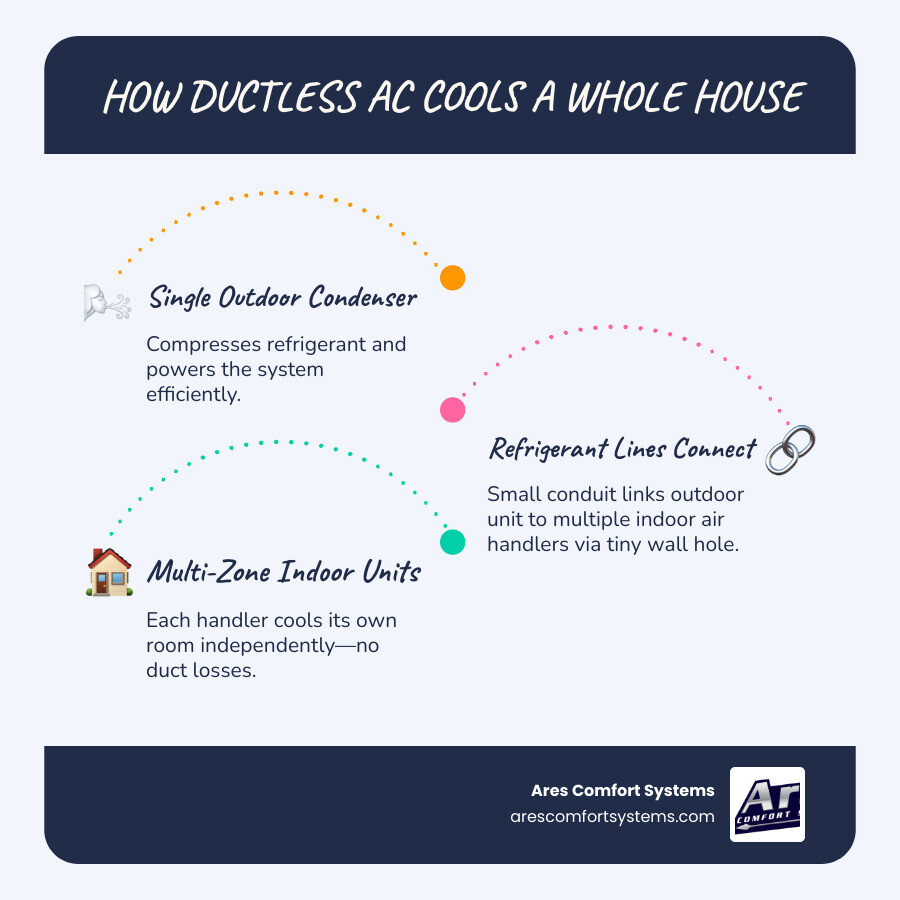
A ductless system consists of two main components: an outdoor compressor unit and one or more indoor air handlers. The two are connected through a small conduit — typically requiring just a three-inch hole in the wall — that carries refrigerant lines, a power cable, and a condensate drain. There’s no need to tear open walls or run ductwork through your attic or crawlspace.
The challenge isn’t whether ductless can cool a whole house — it clearly can. The real question is whether it’s sized correctly for your house. That’s where most homeowners get stuck, and that’s exactly what this guide is here to solve.
Is a Ductless AC Good for Whole House Cooling?
When we look at the efficiency and comfort of modern homes in Pierce and King Counties, the question of whether is a ductless ac good for whole house cooling often comes down to how much control you want over your environment. Traditional central systems are like a single light switch for the whole house; when you turn it on, every room gets the same treatment, regardless of whether someone is actually using that space.
Ductless mini-splits operate on a completely different philosophy: zoning. By installing multiple indoor units connected to a single outdoor condenser, you create independent “zones.” This means you can keep your kitchen crisp and cool while cooking, but leave the guest bedroom at a higher temperature to save energy.
One of the biggest technical advantages we see with ductless-acs is the use of inverter-driven compressors. Unlike traditional units that blast at 100% power and then shut off completely (causing annoying temperature swings), inverter technology allows the system to adjust its speed dynamically. It’s like a dimmer switch for your cooling. This variable speed operation is why ductless systems can achieve a 30% efficiency gain over ducted systems.
Furthermore, you eliminate the “duct tax.” In a standard central AC setup, leaky or poorly insulated ductwork can waste more than 30% of your energy consumption before the air even reaches your living room. With ductless, that cooled air is delivered directly into the room, ensuring 100% of the energy you pay for actually keeps you comfortable.
Sizing Your System: How Many Zones Do You Need?
Determining the right size for your air-conditioning system is the most critical step in the process. If a system is too small, it will run constantly and fail to keep you cool during a Washington heatwave. If it’s too large, it will “short-cycle,” turning on and off so quickly that it fails to properly dehumidify the air, leaving your home feeling clammy.
To get it right, we use what’s called a Manual J load calculation. This isn’t just a guess based on square footage; it takes into account your home’s orientation to the sun, the quality of your insulation, and even the height of your ceilings.
As a general rule of thumb, a single indoor air handler with 12,000 BTUs of cooling power is sufficient for roughly 450 to 500 square feet. However, every home is unique. A sun-drenched living room with vaulted ceilings in Lakewood will require more “oomph” than a shaded, well-insulated basement.
Room Size to BTU Capacity Guide
| Room Square Footage | Recommended BTU Capacity | Common Room Type |
|---|---|---|
| 150 – 250 sq. ft. | 6,000 BTU | Small Bedroom / Home Office |
| 250 – 400 sq. ft. | 9,000 BTU | Standard Bedroom / Dining Room |
| 400 – 550 sq. ft. | 12,000 BTU | Living Room / Master Suite |
| 550 – 700 sq. ft. | 18,000 BTU | Open Concept Kitchen & Den |
| 700 – 1,000 sq. ft. | 24,000 BTU | Large Great Room |
When planning your ac-installation, think about how you use your home. Do you spend all day in the home office and all evening in the living room? You might need air handlers in both. A multi-zone outdoor unit can support up to eight indoor units, allowing you to scale the system to cover every corner of a multi-story home.
Comparing Ductless vs. Central Air for Full-Home Comfort
Choosing between a ductless system and puyallup-central-ac-replacement-the-core-of-home-comfort often depends on the “bones” of your house. If your home was built without ducts—common in many historic Washington residences—installing them from scratch can be a massive, invasive project that requires cutting into ceilings and losing closet space.
Ductless systems offer a much faster installation speed. While a full central AC retrofit might take a week or more, a multi-zone ductless system can often be up and running in just a day or two.
Beyond installation, there’s the question of air quality. Central systems rely on a network of ducts that, over time, can accumulate dust, allergens, and even mold. Because ductless units have individual, washable filters in each room, you are getting cleaner air delivered directly to you. This is a major highlight of our air-conditioning-services, as we focus on both comfort and health.
Is a ductless AC good for whole house cooling in older homes?
Older homes present unique challenges. They often have thick plaster walls or beautiful architectural details that you don’t want to disturb. Ductless systems are the ultimate “no-duct” solution. They preserve the structural integrity of your home because they only require a small, three-inch hole for the refrigerant lines.
If you are looking for an ac-replacement-in-puyallup-wa-a-complete-guide-to-staying-cool, ductless is often the path of least resistance. The compact design of the indoor units means they can be placed high on a wall, hidden in a ceiling, or even mounted near the floor, blending seamlessly into your existing decor without the need for bulky soffits.
Is a ductless AC good for whole house cooling and heating year-round?
One of the best-kept secrets about mini-splits is that they aren’t just for cooling. They are high-efficiency heat pumps. By using a reversing valve, the system can pull heat from the outside air and move it indoors during the winter—even when it’s chilly outside.
Modern cold-climate models are specifically designed to handle the temperatures we see in the Pacific Northwest, with some units providing 100% heating capacity down to -13°F. This makes them a complete, year-round solution for our services, replacing the need for inefficient baseboard heaters or expensive oil furnaces.
Maximizing Performance and Longevity
To keep your system running at peak efficiency, a little TLC goes a long way. Unlike central systems where you might forget about the filter in the attic for six months, ductless units require more frequent, but much easier, maintenance.
We recommend that homeowners clean the reusable mesh filters in their indoor units every two to four weeks. This is especially important if you have pets or live in an area with high pollen. A clean filter ensures the air handler doesn’t have to work harder than necessary, which keeps your energy bills low.
Beyond the DIY basics, annual professional ac-services are vital. We check refrigerant levels, clean the outdoor coils, and ensure the condensate drains are clear to prevent any indoor leaks. With proper care, these systems often last 15 to 20 years, outliving many traditional central AC units.
Choosing Your Style
Ductless doesn’t always mean a white box on the wall. There are several indoor unit styles to choose from:
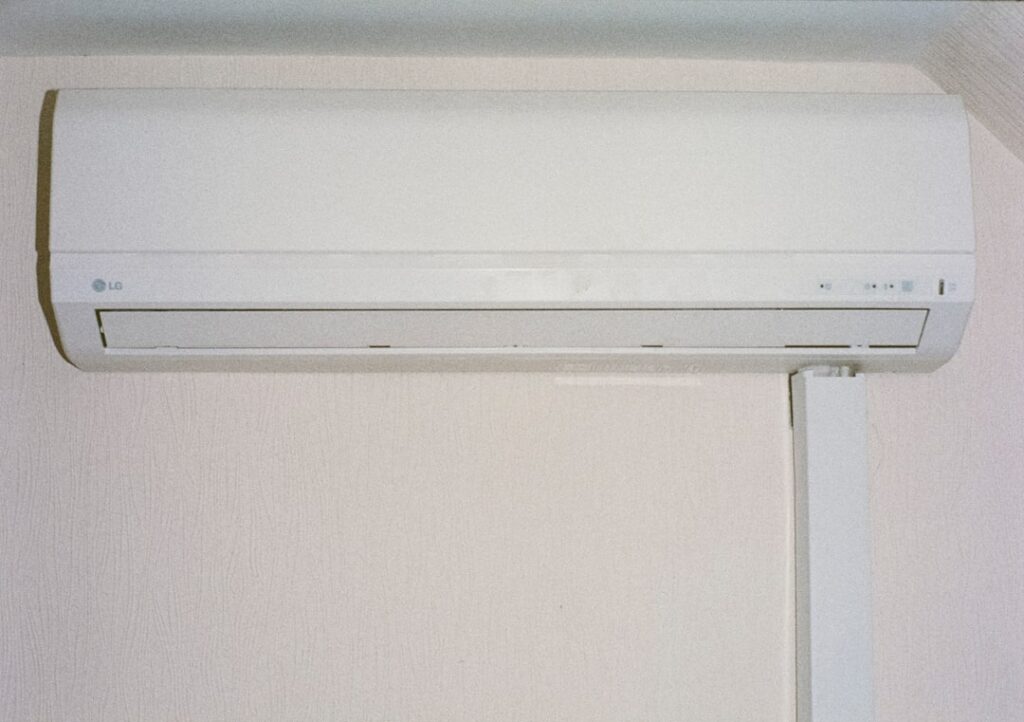
- Wall-Mounted: The most common and cost-effective option.
- Ceiling Cassettes: These sit flush with the ceiling, showing only a decorative grille—perfect for open-concept living areas.
- Floor-Mounted: Great for rooms with low windows or slanted ceilings.
- Horizontal-Ducted: A “hidden” version that uses very short duct runs to cool a small area while remaining completely invisible.
One of the quietest benefits? These units are whisper-quiet. Most indoor units operate in the 19–32 dB range. To put that in perspective, a quiet library is about 40 dB. You’ll barely know it’s running.
Frequently Asked Questions about Whole-House Ductless AC
How many indoor units can one outdoor condenser support?
Most multi-zone outdoor condensers can support between two and eight indoor air handlers. This scalability makes them perfect for everything from a small bungalow to a large two-story family home. If your home is exceptionally large and requires more than eight zones, we simply install a second outdoor condenser to cover the additional rooms.
Are ductless systems quieter than central air?
Absolutely. In a central system, you often hear the “whoosh” of air moving through the ducts and the loud vibration of the large compressor outside. Ductless systems place the noisy components (the compressor) outside, and the indoor units use high-tech fans designed for silent operation. They are significantly quieter than both central air and window units.
Do ductless mini-splits qualify for federal tax credits?
Yes! Because many ductless systems are Energy Star certified and have very high SEER2 (Seasonal Energy Efficiency Ratio) ratings, they often qualify for federal tax credits. Under current programs like the Inflation Reduction Act, homeowners may be eligible for a tax credit of up to $2,000 for qualifying heat pump installations. This, combined with local utility rebates, can make the transition much more accessible.
Conclusion
So, is a ductless ac good for whole house cooling? For many homeowners in the Lakewood and Pierce County areas, the answer is a resounding yes. Between the energy savings, the ability to customize the temperature in every room, and the ease of installation in homes without ducts, it is a modern solution that fits the way we live today.
At Ares Comfort Systems, we bring decades of experience to every project. We understand the local climate and the unique needs of Washington homes. Whether you are looking to cool a historic home or a brand-new addition, we back our work with a 100% satisfaction guarantee and our Fixed Right Promise.
Don’t spend another summer dealing with hot spots and high energy bills. Our Comfort Service Agreements can even help you maintain your new system for years to come with exclusive discounts.
Ready to see if a mini-split is the right fit for your home? Start Your Whole-House Cooling Project with us today and experience a new level of home comfort.